

Avoid This Cabbage Mistake If You Don't Want A Smelly Kitchen
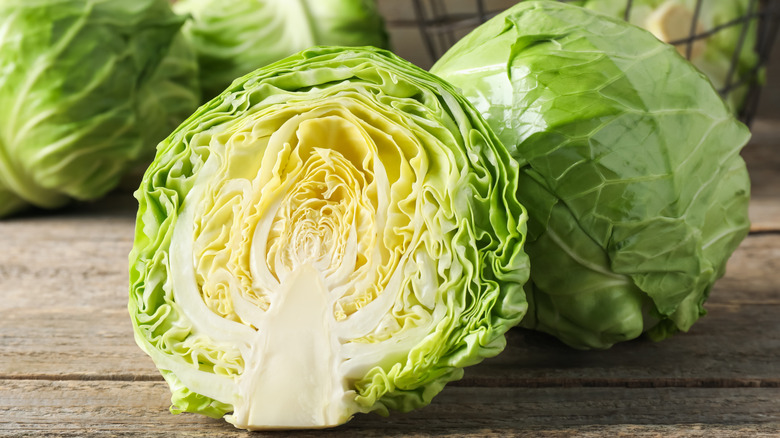
Every few years, a bland and boring ingredient is thrust under the social media spotlight and given a makeover. Most recently, it was cottage cheese (transform it into a low-carb wrap or even turn it into a high-protein ice cream, guys!), but before that, it was good old cabbage. Instead of being boiled to high heaven, this veggie was wedged up and roasted with seasonings or dredged in a creamy garlic and parmesan sauce to showcase its versatility. That said, boiling cabbage in a simple and low-effort fashion still has its place for those moments when you need a quick, nutrient-rich side to serve with baked chicken, corned beef, or sausage. Just be mindful to avoid overboiling it if you don't want a smelly kitchen.
Cabbage and alliums, such as onions, contain sulfurous compounds and enzymes that come together and react when you cut through them, creating a distinctive smell. With alliums, their smell mellows out as you cook them, but the opposite is true for cabbage. Its distinguishing odor is intensified when it's cooked for a prolonged period because those same compounds turn into trisulfides and accumulate. To that end, you definitely don't want to slow-cook cabbage or leave it to boil for a lengthy period on the stove, as doing so will fill every corner of your kitchen with the smell of rotten eggs.
Proper prep and cooking keep cabbage from turning stinky
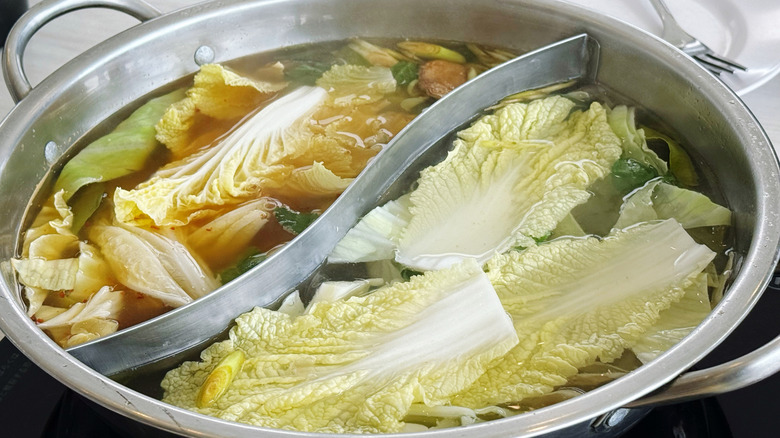
There are several varieties of cabbage, from crunchy green cabbage that's ideal for making coleslaw to frilly Napa cabbage that features in kimchi. However, it's red cabbage and Savoy cabbage that have more aroma compounds, which can make them stinkier when overboiled, much like other members of the brassica family, such as Brussels sprouts.
While boiling cabbage for a shorter period limits the smell, there are plenty of other ways to prepare it to curb its sulfurous odor, too. For instance, you can cut it into wedges, revealing fewer inner leaves and thereby reducing the release of the bitter compounds inside, before giving it a short, sharp roast. Another idea is to saute it with other ingredients that overpower its smell, such as salty and smoky bacon, or add an acid, like lemon juice or vinegar, to the boiling water as it simmers to mask the sulfurous odor. However, if you like to serve cabbage in its simplest form without additions, consider steaming it instead of boiling it, as the former technique reduces the amount of odor it releases.
Other common cabbage-cooking mistakes include failing to season it properly and wasting leftovers. Cooked cabbage can boost the nutritional value of a vegetable soup or upgrade a batch of mashed potatoes with its texture, so repurpose it instead of tossing it out.