

Never Buy Plastic Food Storage Containers From Thrift Stores. Here's Why
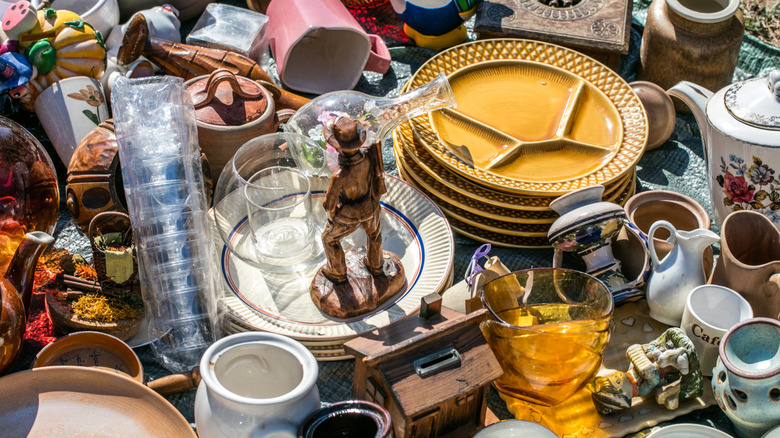
Thrifting kitchen items is an incredible way to save money, reduce waste, and perhaps even discover a cool vintage find that lends your cooking space a quirky and considered character. From retro crockery and copper pans to cast iron cookware and serving dishes, you can kit out your entire kitchen at a fraction of the cost of buying new. However, there are some items that you should never buy from thrift stores, such as plastic food storage containers.
Plastic food containers are awesome for storing leftovers, snacks, and meal prep, which is why you might be tempted to grab a few more pieces from your local secondhand store. If you come across any that are packaged up and look as if they've never been used, go ahead and toss them in your basket. However, any that have scratches or dents, or have a cloudy appearance, should be left on the shelf, as these grooves can harbor bacteria (there can even be very small scratches on the surface that you can't see).
Some older food containers may also contain a chemical called bisphenol A (BPA), which can leach into any food placed inside. BPA is added to plastics to make them more durable. However, if it leaches out, exposure has been linked to health conditions like endometriosis, infertility, and even heart disease because it mimics the effects of the estrogen hormone. Heeding these findings, Tupperware made its products BPA-free in 2010, but not every brand has followed suit.
Old food storage containers can contain BPA and shed microplastics
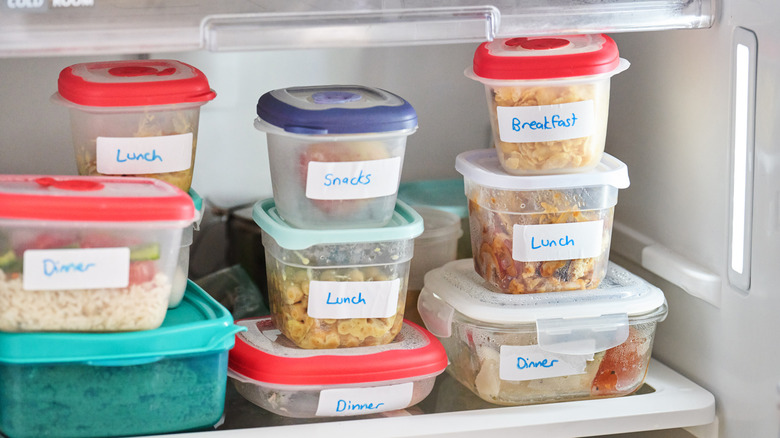
While the dangers of BPA are now known, older plasticware may still contain the chemical, which means you could unknowingly be exposed to it by purchasing poorly labeled thrifted containers. Even modern plastic containers can still contain chemicals called phthalates that have been linked to asthma and decreased fertility, and microplastics that can flake off from repeated use. The bottom line? If you have any damaged or discolored plastic containers at home, the safest move is to discard them and replace them with new ones instead of trawling through the shelves of a thrift store.
You should also avoid microwaving your leftovers while they're inside the containers. Despite them being labelled as microwave-safe, the heating process can cause the chemicals inside to transfer into the food. It's best to decant your meals and snacks into a glass dish before microwaving, or heat your leftovers in the oven.
Meanwhile, it's perfectly acceptable to thrift Pyrex or other glass containers as long as they don't have any chips or cracks. In fact, glass containers are chemically inert, which means they don't react with anything that's placed inside them, so if you're stocking up on containers, consider going for glass long-term instead of plastic.