

8 Old-School KitchenAid Products That Totally Vanished
We may receive a commission on purchases made from links.
It is safe to say there's not a home chef out there that doesn't know the name KitchenAid, a staple in homes for more than 100 years now. The company is mostly known for its KitchenAid stand mixer, establishing itself as the go-to small appliance for food prep. Many of us have fond memories of mixing up classic chocolate chip cookies in a KitchenAid stand mixer. This iconic kitchen appliance truly stands the test of time. But over the years, KitchenAid has created more than just stand mixers home chefs love. It created small appliances, large appliances, and many unusual attachments for their famous mixer. Some of its products were more popular than others, and that's why there are many KitchenAid products that seem to have vanished with time.
If it wasn't for the invention of many common small electric kitchen appliances we would still be shelling peas by hand, using a wooden spoon and elbow grease to whip up a batch of cookies, and kneading bread by hand until your arms fall off. Some may say innovations from companies like KitchenAid have made us lazy — that might be partially true, but these products have made us more willing to be creative in the kitchen by giving us our time back and making cooking and baking fun instead of laborious. Over the years, trends in food and cooking techniques have changed what types of tools are needed, and that's why so many of KitchenAid's products have become obsolete and disappeared from the market. But it's always interesting to see these old cooking tools and get a little peek into the kitchens of the past. It's almost like being a kitchen archaeologist.
Silverware buffer attachment for your stand mixer
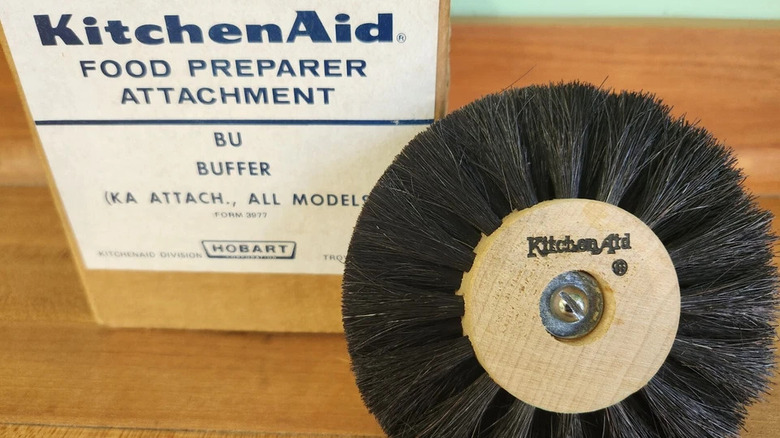
Back in the day, people took out their fancy silverware for special occasions, and the one drawback to owning such finery was that real silver needed to be polished often. Thankfully, KitchenAid had just the solution for this time-consuming chore — the buffer attachment released in the 1950s for your stand mixer, to make buffing your silverware a snap. The need for this attachment dissipated with the decline of fancy dinnerware being used at gatherings in the average home, and it was discontinued.
Pelican head 7-inch vegetable slicer stand mixer attachment
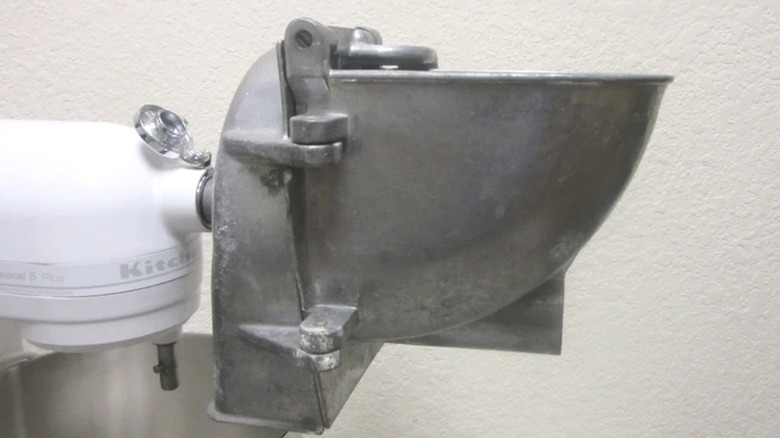
The "Pelican head" (so nicknamed because of the shape) 7-inch vegetable slicer attachment for KitchenAid stand mixers appears to have been available since the earliest models, but it was certainly used with the Model G stand mixers. Although its cast-aluminum body might seem a little cumbersome, it made quick work of any vegetable slicing tasks. The "Pelican head" was discontinued in the 1970s with the advent of plastic parts.
1930s Hobart KitchenAid A-9 coffee mill
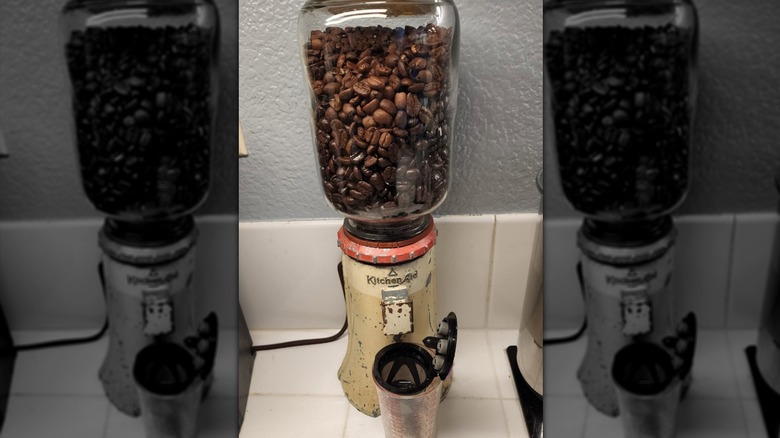
In 1938 KitchenAid utilized the talents of industrial designer Egmont Arens to create their first electric coffee grinder. While the original Model A-9 Coffee Mill was discontinued in 1947, KitchenAid released an updated version of the mill in 2003. The new version was a very close replica but not identical. So, this product disappeared but returned for a short time for a new generation of coffee aficionados.
Portable top-loading dishwasher
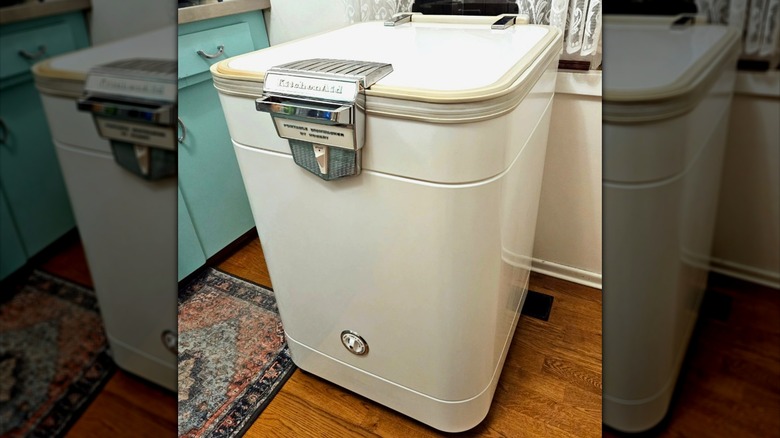
While KitchenAid had been manufacturing dishwashers since the end of the 1940s, its first top-loading portable dishwasher (Model KDC-P2) was put on the market in the late 1950s. The portable dishwasher didn't require installation, so you could take it with you when you moved — very handy for apartment dwellers. The top-loading portable dishwasher was most likely phased out in the 1970s because front loaders were becoming the standard. You could use the top of a front loader for a butcher block or storage.
Model R stand mixer
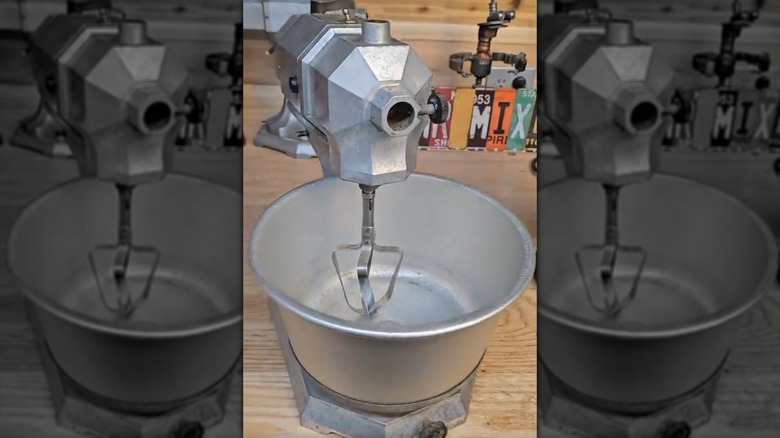
The Model R stand mixer made a brief appearance in the early '30s, with a limited release in 1933. The reason this model didn't stick around for long most likely had to do with timing and cultural events. The Model R KitchenAid stand mixer was a unique Art-Deco-inspired design and because of its angular shape, it was complicated to manufacture, which logically made it more expensive. Sadly, it was shelved because of the economic needs of customers during the Great Depression, and the less expensive Model K was introduced.
Pea sheller stand mixer attachment
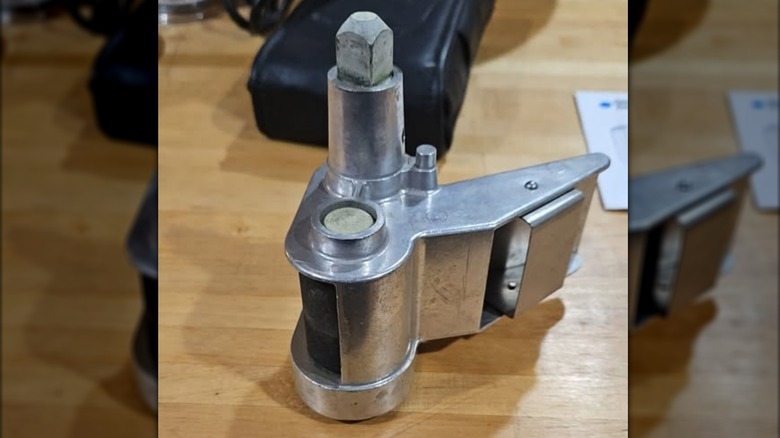
The pea sheller/shucker stand mixer attachment first appeared with the 1919 Model H-5. It was quite handy for gardeners to make quick work of a large bowl of freshly picked peas. When frozen peas became a popular option for families, many home chefs chose to buy their peas already shelled. While there is no definitive date for when the pea sheller was discontinued, it did eventually disappear from KitchenAid attachment catalogs. With the return to popularity of home gardening, it might be worthwhile for the company to bring it back.
Vintage can opener stand mixer attachment
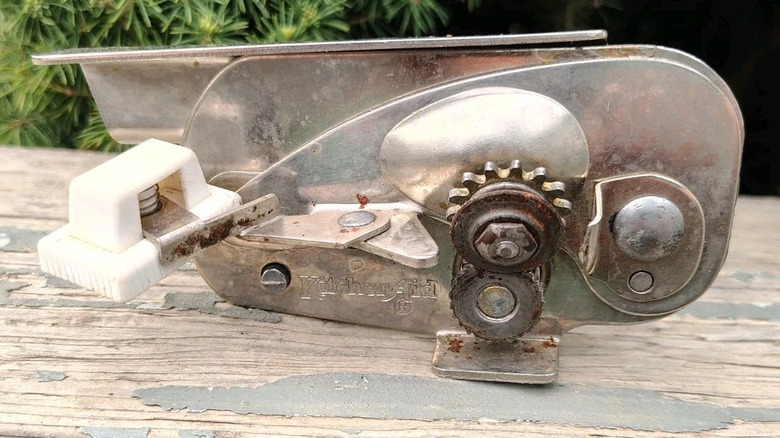
Like the pea sheller, the can opener attachment appeared around the time that KitchenAid developed the tool hub on its stand mixers. While electric stand-alone can openers were invented in 1931, they didn't take off until the mid 1950s.
@mr..mixer This might open up a can of worms.. Or tuna! Opening a can with Kitchenaids discontinued can opener attachment! #mrmixer #baker #baking #cookie #cook #food #kitchen #kitchenaid #kitchenaidmixer #chef #icing #frosting #cake #howto #diy #fixed #repair #everdime #springandwasher #lovehandle
This attachment might have been a great, less expensive alternative, not to mention how easy it was to use and store. The can opener attachment most likely lost in popularity and faded away when the popularity of countertop electric can openers took off.
Model M stand mixer
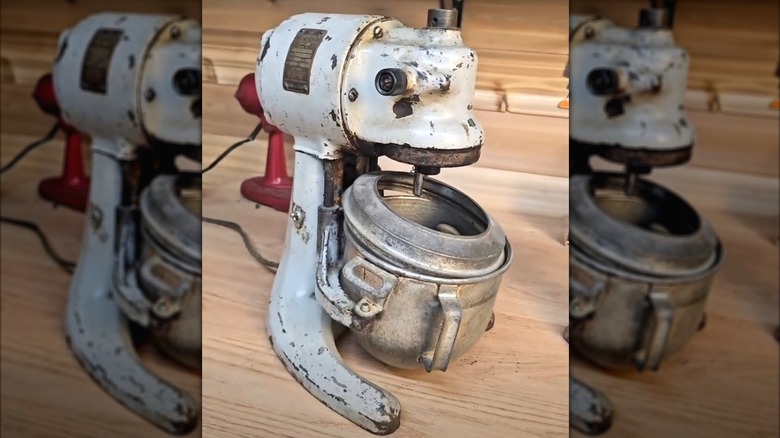
The Model M stand mixer is even more rare than the Model R. It's so rare that even specialist collectors can only guess that it possibly was manufactured between 1931 and 1937 based on of its features and subsequent models. The Model M was a unique size in that it only had a 3-ounce bowl, a small paddle, and dough hook to go with it. Like many of the KitchenAid stand mixers, it was eventually overshadowed by the Model K, from which successive lines were adapted from.