

For Light And Airy Baked Goods, Grab This Old-School Kitchen Tool
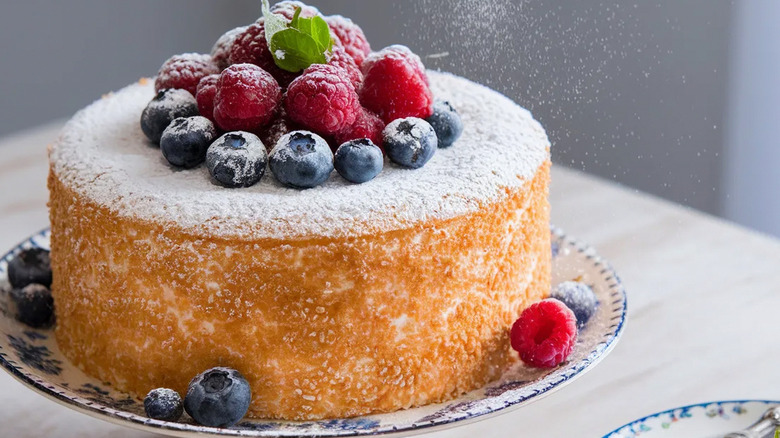
If your homemade sponge cake is dense and heavy even though you measured every ingredient twice, you need a flour sifter in your arsenal of baking gadgets. This old-school kitchen tool helps produce baked goods that are light and airy. Plus, using it makes you feel like an expert confectioner in a boutique bakery.
Sifting flour improves the texture of baked goods by incorporating air into it, which is useful if your bag of all-purpose has been sitting in the pantry for a long time and become compressed. This air acts as a physical raising agent, and produces cakes and pastries that have a lighter quality, softer crumb, and fluffier body. Sifting also eliminates any clumps in the flour and filters out anything that's accidentally ended up in the bag.
While you can use a regular sieve to aerate your flour, you'll need to keep tapping it with your hand to force the particles through the mesh. This movement can also scatter the flour beyond the confines of your bowl, making a mess on your countertop. A flour sifter, on the other hand, which looks like a cylindrical metal tankard with mesh across the base, doesn't need to be tapped; it drops the aerated flour neatly in a circumscribed circle. To use one, simply place your flour inside the cavity (along with any raising agents, like baking soda, to guarantee that they're evenly distributed) and squeeze the crank on the handle to agitate the flour and filter it through the bottom.
Is it necessary to sift flour?
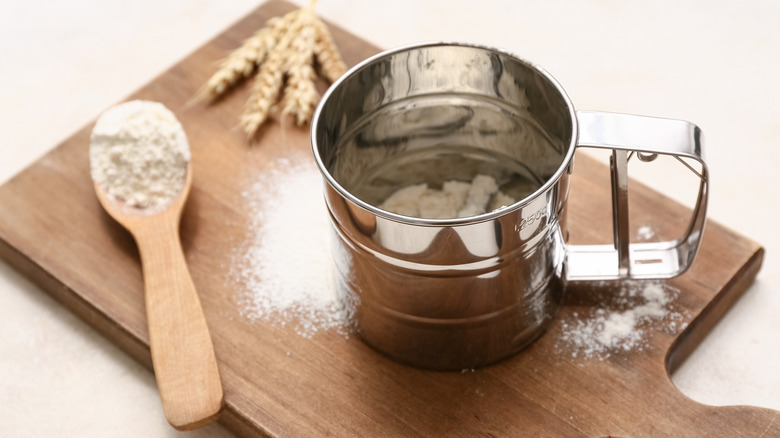
The food police won't put you in county lockup for not sifting your flour. In fact, modern bags of commercial flour come pre-sifted in many cases. That said, a recipe like angel food cake, which is made with only whipped egg whites, sugar, and flour, benefits hugely from sifted flour because it boosts the cake's lighter character and cloud-like texture. Sifted flour is also easier to mix in, safeguarding you from accidentally knocking all of that precious air out of your egg whites. Examples of other baked goods that benefit from sifted dry ingredients include Genoise sponges, chiffon cakes, and macarons, so your decision very much depends on what you're preparing.
Now, the only question is, should you sift flour before or after measuring it? It depends on the wording in the recipe you're working with. If it calls for "1 cup flour, sifted," you should measure it first and then sift it. However, if it requires "1 cup sifted flour," you'll need to sift and then measure. The overall volume of the flour increases after sifting because it contains more air pockets. The same amount of un-sifted flour will take up less space, so following the recipe is essential to achieving the intended result.