

Make Bakery-Worthy Frosting At Home With This Ingredient Swap

The heady aroma of a craft bakery producing a steady stream of cakes and pastries throughout the day is unmatched. However, it's the visual appeal of the baked goods sitting in the window that arguably draws customers in first. Decorated with beautiful frostings, these confections are designed to tantalize the eyes, but it can be tricky to recreate those swirls and shells at home if you aren't in on one culinary secret — many bakeries sub the butter in their frosting for shortening (which is any kind of complete fat that stays solid at room temperature) because it holds up better.
Fluffy frostings can be made with margarine and mascarpone to cream cheese and even egg whites (Swiss meringue buttercream, anyone?). However, it's likely a classic buttercream frosting that you're most familiar with. A combo of whipped butter, powdered sugar, and flavorings, such as vanilla or cocoa powder, this cloud-like concoction is perfect for topping cupcakes, filling layered cakes, or delicate piping on fancy French gateaus. However, as it contains butter, this variety of frosting is prone to softening up too quickly, which can make it hard to work with.
Subbing the butter for shortening eliminates this issue because it stays solid up to 115 degrees Fahrenheit, unlike butter, which melts at 90 degrees. This ensures the piped frosting has sharp and defined edges and looks perfect from every angle, lending it a bakery-worthy aesthetic. Use shortening in your buttercream if you're in a hot climate and don't want the swirl on your cupcakes to deflate.
Combine shortening with butter to make the best frosting
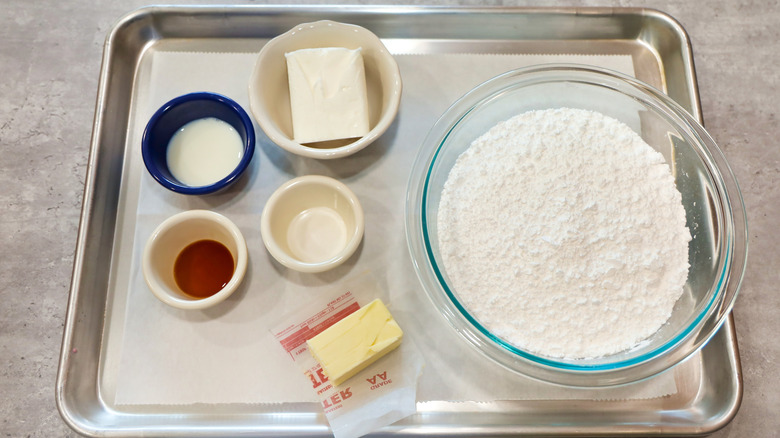
You can go ahead and make frosting with only shortening and sugar, subbing all the butter entirely if you want to prepare a vegan and vegetarian-friendly icing. However, as shortening is usually made with hydrogenated vegetable oils, your finished frosting will have a neutral flavor, and you'll get the structure without the richness that the milk fat in the butter brings to the table. To get the best of both worlds, keep a smidgen of butter in the mix to benefit from its dairy flavor (you could even brown your butter first to lend it a nutty quality).
Other easy ways to upgrade frosting include adding a sprinkle of salt to balance out its sweetness or flavoring it up with freeze-dried fruit powder. Just be wary of the ratio of your additions to avoid loosening up the frosting too much. If you do make this mistake, the simple hack for thickening runny icing without adding anything is to chill it in the fridge. The low temperature firms up the butter, allowing you to pipe fluted designs, such as swirls, shells, and rosettes. Plus, it's a useful move to have up your sleeve on warm days when the ingredients in your frosting have turned runny even without additions.