

5 Reasons Why Your Tomato Plants Are Wilting
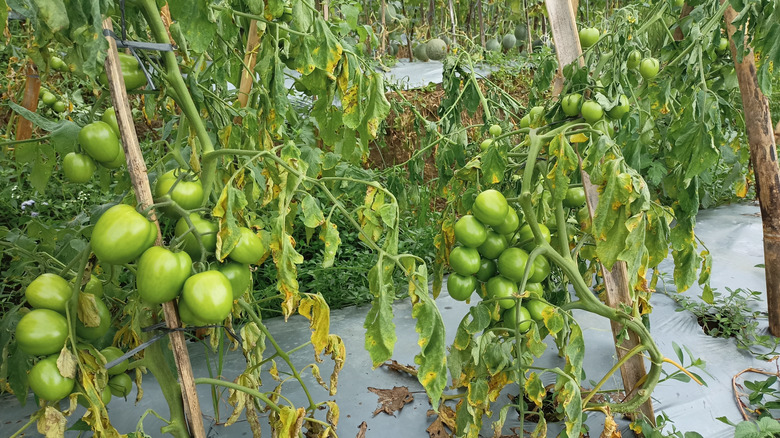
Growing your own fresh veggies and fruits is one of the best ways a home chef can save money and get the freshest produce. And one of the best beginner gardener plants to grow, that has a huge payoff, is tomatoes. Fresh, ripe, red tomatoes from your own garden just taste better. So it can be a huge disappointment when you plant your first tomato plants, and they start to wilt and turn brown. Your dreams of fresh tomato paste for bolognese sauce might not be over. There are many reasons tomato plants wilt, from watering issues to pests, but with a little help, they often can be revived. Many times, it's just a matter of adjusting your watering methods or a little garden maintenance.
You don't need gardening tips from Martha Stewart to know that a wilting tomato plant can be a confusing issue to diagnose, considering that opposite problems like watering too much or too little can cause your beautiful Early Girl to throw a fit and droop. It's enough to make any gardener consider learning how to pick the best, juiciest tomatoes from the grocery store instead of stressing out about why their tomato plants have gone on strike. But before you toss your garden gloves out, a little investigation can help you determine which affliction is causing your tomatoes to look so sad and how you can resuscitate them in time for a healthy harvest.
Insufficient or inconsistent watering
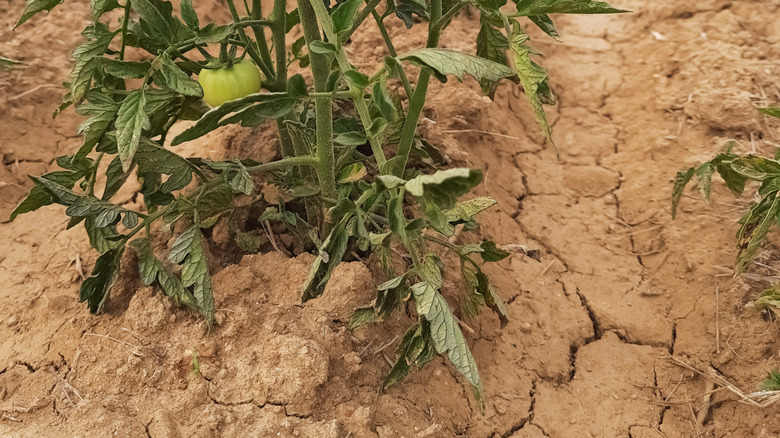
Checking to see if insufficient watering is the reason your tomato plant is wilting is rather easy. If the soil is dry around the base of your plant and you haven't watered in a couple of days, this may be the reason your plant is sad. You should water at least three times a week if you haven't had good rain. Water at the base of the plant, slowly and deeply (never water from overhead, as this can burn leaves). If your plant perks up in a couple of hours, you've found the culprit for your tomato plant wilting.
Overwatering or poor drainage
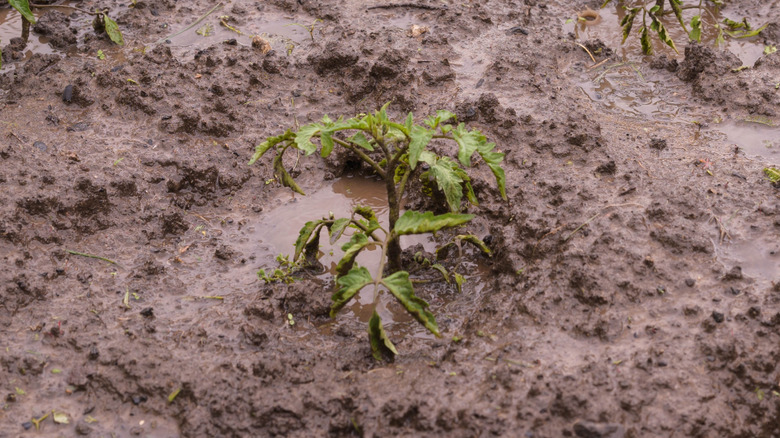
Overwatering or plants getting waterlogged from poorly draining soil is another reason your tomato plants might be wilting. Simply check around the base of your plants, and if you notice water consistently pooling even between periods of watering, and they are wilting, your plant needs help. Firstly, only water three times a week as needed and allow the top inch of soil to dry out between waterings. If the soil still isn't dry after withholding water, you need to dig up the plant, trim rotten roots, and replant in an area with well-draining soil.
Fungal disease
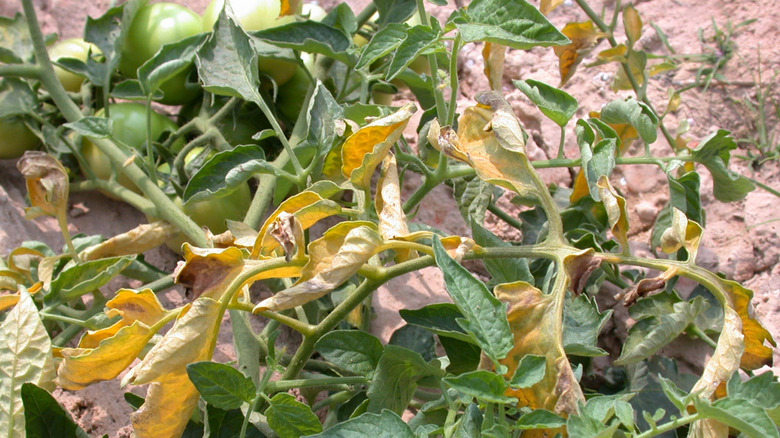
One of the most common causes of wilting tomato plants is fungal disease, the most well-known being fusarium and verticillium. Sadly, if you notice your tomato plants have yellowing leaves and are wilting mostly on one side of the plant initially, that is the sign of fungal disease-causing wilt. The only way to fix this issue is prevention. Once established, the fungal spores remain in the garden soil for up to 10 years. You can either make sure you get a fungus-resistant variety of tomato plant, grow your tomatoes in containers, or rotate your plants every three to five years. Southern blight, or Sclerotium rolfsii, is identified by white fungal patches and brownish-red spots at the base of stems. And sadly, the only way to treat this is to remove the plant and the contaminated soil around the plant.
Pests
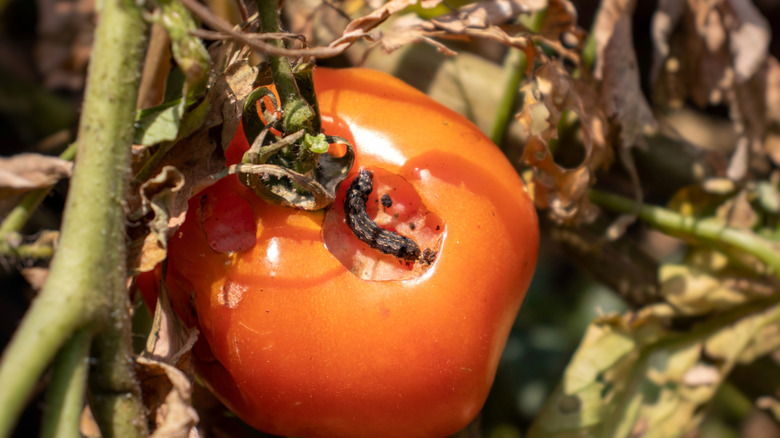
Pests are another reason why your tomato plants might be wilting, and let's face it, they should be pretty easy to spot. Stalk borers are a common pest that can cause your tomato plant to wilt simply because they weaken the structure of the plant by boring into the stems. Stalk borers are thin purple and white striped caterpillars that leave small holes behind, revealing where they entered the plant. Thrips are also a common pest that causes wilt. You can tell your plant is infested by thrips because your leaf faces will have rusty-looking patches. If you notice your plant is damaged by these pests, it is often too late, and the plant needs to be removed and destroyed. Prevention is generally the best solution: attract pest-eating bugs and birds to your garden, water your plants appropriately, and mulch is always a good idea.
Transplant shock
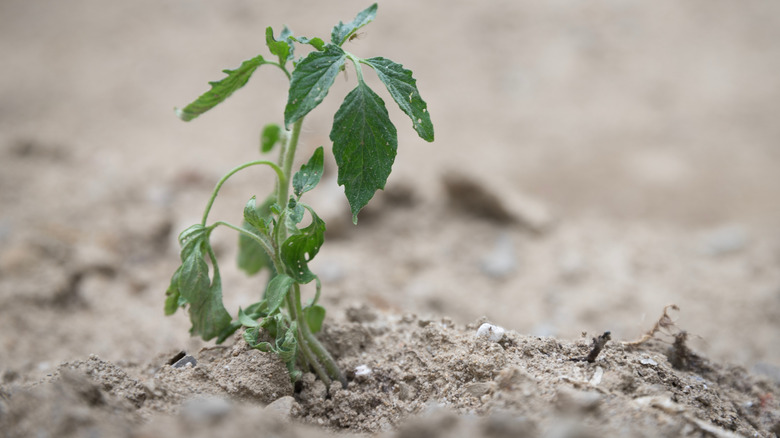
Tomato seedlings can be finicky and, if not properly hardened off, can get transplant shock. You'll know your plants are suffering from this ailment if, after planting your seedlings, they begin to wilt and sometimes have browning, yellowing, or curling of the leaves. To figure out the reasons shock is happening, it's good to know what's going on in the environment. When you transplanted your seedlings, was it hot, windy, or cold? Was there intense sun?
Often, you can help your tomatoes recover. Remove some of the bottom leaves to help your plant not waste energy on damaged parts and instead put its energy into root growth. Provide a mulch around the base to maintain moisture levels. If you need to protect your plant from wind or intense sun, add a row cover cloth or plant protector (you can make one out of ½ a milk jug).