

The Best Baked Potatoes Begin Without Aluminum Foil
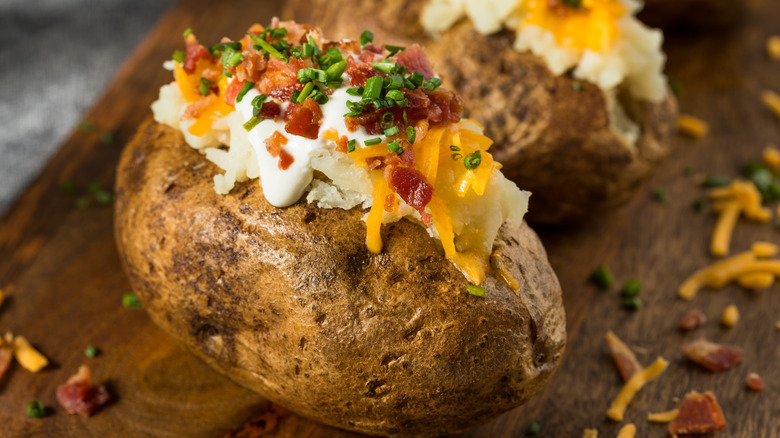
One of the greatest culinary pleasures is splitting a freshly baked potato through its crispy belly to reveal a hot, fluffy, and yielding center. Loaded with butter, topped with cheese, or adorned with sour cream and a sprinkling of bacon bits, these carby tubers make a wholesome, hearty side or a filling meal on their own. But to ensure your next batch reaches its full potential, ditch the aluminum foil. Spuds are best baked commando with a simple slick of oil and seasonings.
Like many people, you may have adopted the common practice of wrapping your bakers in aluminum foil to encourage them to cook faster, but that comes with one serious downside: It prevents the skin from becoming gloriously crisp and producing that inviting contrast of crunchy skin and fluffy interior. That's because if you use foil, the water inside the potato, which turns into steam that's expelled as it cooks, has nowhere to go because it's trapped by the protective foil. The result? Flabby skin that's devoid of texture, crunch, and roasted aroma. Besides, ditching the aluminum actually makes the prep work far easier, anyway.
To make the best baked potatoes, wash and dry them well before pricking them with a fork to create little holes for all that steam to escape. Then massage a touch of oil onto the surface to maximize their ability to crisp up and sprinkle on some salt to season your baked potatoes for more flavor. Place them straight onto your oven rack and bake until the center is tender and the exterior is super-crisp.
Wrap your spuds in foil for campfires and barbecues
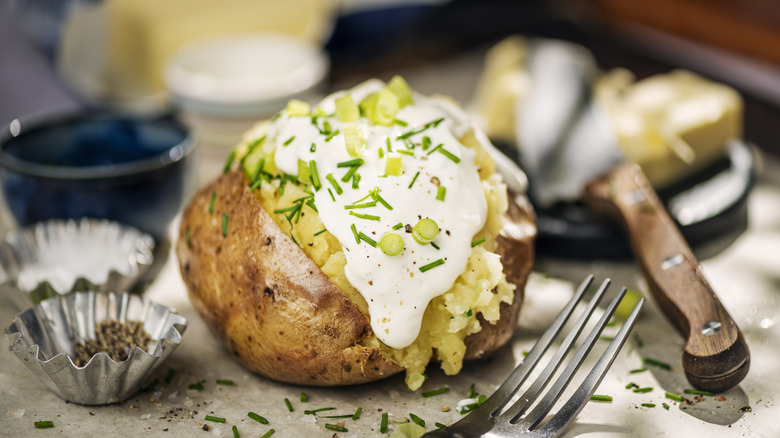
The combination of crunchy skin and a steaming, pillowy middle turns a basic spud into a satisfying bite because of its textural complexity. That said, foil is indispensable in some cases. For instance, if you're roasting your spuds over a campfire or starting them off in a barbecue instead of oven-roasting them, wrapping the potatoes protects them from the fierceness of an open flame and helps them to steam inside and soften up. The foil acts as a barrier on the surface that prevents the skin from burning but still conducts heat into the potatoes. Once they've reached that fluffy sweet spot in the center, you can remove the foil to crisp up the outside with some watchful monitoring.
If you actually like spuds that have a soft skin, you can still save the foil. For fluffy baked potatoes with no crispy skin, throw them in the slow cooker. That's especially handy when oven space is at a premium.