

Red Vs Green Sriracha: What's The Difference?
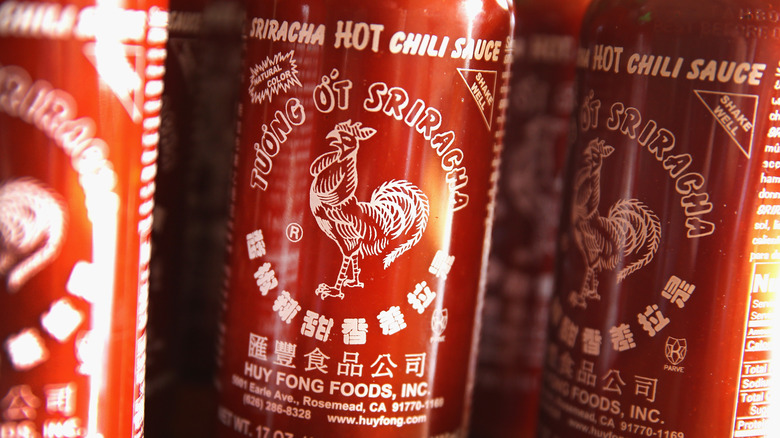
A simple squirt of sriracha can transform a drab dinner into a delightfully punchy meal. Today, there are many hip and happening varieties of this fragrant hot sauce on grocery store shelves that are a riff on the original, such as sriracha with mustard and wasabi, to those mixed with mayo. However, the two classics — red and green sriracha — were the first fellas on the block. But what's the difference between the two?
Both red and green sriracha make wonderful condiments for elevating noodle dishes, mixing into creamy dips, or simply drizzling over a couple of fried eggs. Unlike a basic hot sauce, which is all about heat and tang, sriracha has a more balanced flavor profile that combines sweet, salty, and garlicky elements. If you compare a bottle of classic original red sriracha with a green one, the first obvious difference is the color. The former is a rich red, while the latter is verdant and bright. However, the ingredients list is virtually the same — chilies, garlic, water, flavor enhancer, and some form of sweetener. It's actually the variety of chilies that are different. Green sriracha uses green chilies that aren't fully ripened yet, which lends it a grassier, brighter flavor. Meanwhile, red sriracha uses ripe red chilies that have lots of heat but a slight sweetness. This key ingredient gives it a distinctive ruby-red hue and a slightly warmer and spicier quality.
The color of sriracha depends on the quality, variety, and ripeness of the chilies
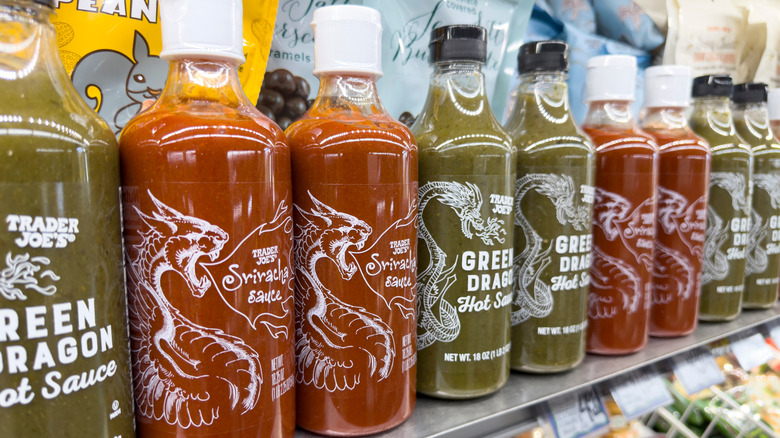
The variety of chilies used to make Sriracha and their level of ripeness can produce batches with a different color and heat level (it's the amount of a chemical called capsaicin, which determines their hotness). Red jalapeno peppers are the vital ingredient for making sriracha at home if you want that classic color. Interestingly, there was a recent controversy surrounding the color of Huy Fong Sriracha (the popular brand owned by David Tran that features a rooster on its label). Stores were suddenly stocking bottles that were closer to an orange than red, which confused shoppers. This color change occurred because Huy Fong broke from its long-time supplier and used different red jalapenos to make their signature product.
Sriracha was first created in a small town called Si Racha in Thailand. However, when Tran (who used to work as a chili pepper farmer) came to the U.S. as a refugee from Vietnam in 1967, he started to make his own sriracha at home, spooning it into small baby food jars to sell. This is how sriracha made its mark in the U.S. Now, his company boasts over $150 million in sales each year, without investing in marketing. The factory is open to the public on Saturdays and even includes equipment designed by Tran. The Korean spice paste, Gochujang, which is also made with red peppers, is the closest replacement for sriracha if you've run out.