

Why Your Homemade Pizza Dough Is Too Tough (And How To Fix It)
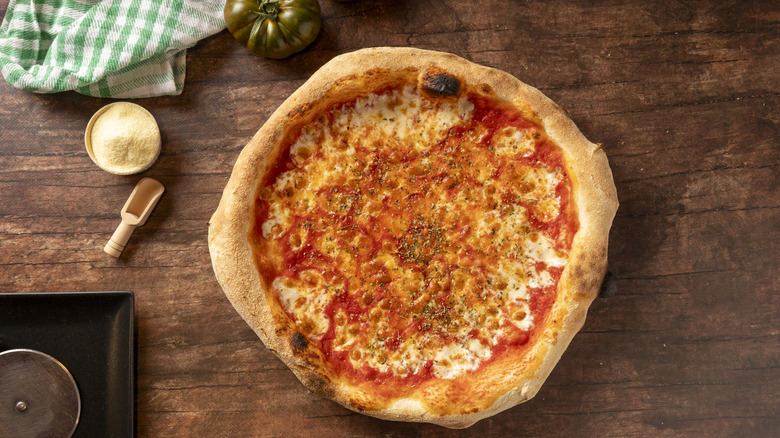
A homemade pizza that's hot from the oven can rival the very best pizza parlor in town. However, the best pies have to have an incredible crust to counterbalance the gooeyness of the cheese. Pillowy with plenty of characterful air pockets, a well-made pizza crust relies on a quality dough. If your pizza dough doesn't stretch freely and instead has a dense texture and tears when you handle it, you may have overworked it. Fortunately, you can salvage a pizza dough that's become too tough with time and water.
An overworked dough will produce a pizza crust that doesn't rise properly when it meets the heat of the oven, which can make it hard, dry, and perhaps even crumbly. Kneading on the counter, versus using a stand mixer, can help to prevent this issue from the outset, as you'll instantly be able to gauge any textural changes in the dough through your hands and stop working it before it feels rubbery. You should also adopt the proper techniques for kneading, such as stretching and folding the dough, and using the heel of your hand to push it (using your fingers can tear the gluten strands you're trying to build that are so essential to lending the finished pizza crust structure and flavor). However, if you've already overdone it and your dough is particularly dense, there are a couple of ways to fix it before you roll it out that might just work if you're lucky.
How to rescue tough pizza dough
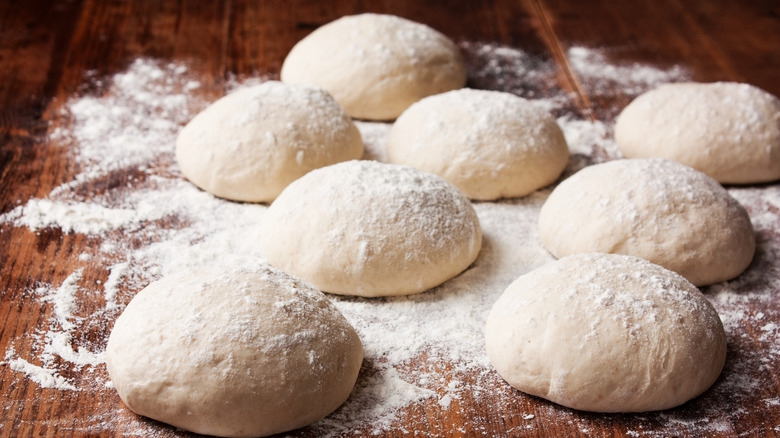
To bring a bad batch of pizza dough back from the brink, you can divide it up into smaller portions and allow it to rest a little longer to give the gluten structure more opportunity to relax. If this doesn't work, add a splash of water to the dough, gently recombine, and allow to rest again. Some bakers actually hold a little water back when making bread dough and wait until the gluten has formed before incorporating it. Known as bassinage, this technique makes the dough easier to handle and improves its texture. In fact, the type of water you use can affect the quality of pizza dough too (hard water strengthens the gluten while soft water keeps it more pliable) on top of the quantity of liquid used – high hydration doughs with a greater measure of water have a delectable open crumb with lots of air pockets but are trickier to handle due to their wetter texture.
There are several ways to repurpose leftover pizza dough, like turning it into breadsticks, pitta bread, or even crackers. Got a sweet tooth? Add some cinnamon, butter, and sugar to the rolled-out dough before coiling it up and baking it to turn it into an aromatic and fudgey cinnamon roll.