

Think Twice Before Seasoning Cast-Iron With Beef Tallow
Many old-school cooks swear by seasoning cast-iron cookware with beef tallow so it can impart some of its savory flavor into their homemade dishes. However, you should think twice before using this rendered animal fat to season a cast-iron skillet if you're new to the task, because it could turn rancid and give off an odor if you do it wrong.
Cast-iron should be seasoned on a monthly basis to maintain its non-stick coating. This is done by rubbing oil over the base and sides and baking it upside down in an oven (this process needs to be repeated a couple of times if seasoning a brand-new pan versus re-seasoning one that's been used regularly). As the pan heats up, it causes the liquid fat to change into a hardened substance that clings to the surface, which is known as polymerization. This chemical process maximizes the non-stick capabilities of cast-iron cookware, but it has to be done for the right amount of time at the correct temperature.
Now, this isn't to say that you can't use beef tallow or another animal fat, like lard, at all. What it means is that you must make sure you heat your cast-iron pan properly and for long enough for polymerization to occur. If you fail to heat it accordingly, the tallow won't polymerize, which is where it can turn rancid. Using an oil with a high smoke point, such as sunflower or vegetable oil, eliminates the risk of this issue.
How to season a cast-iron skillet correctly
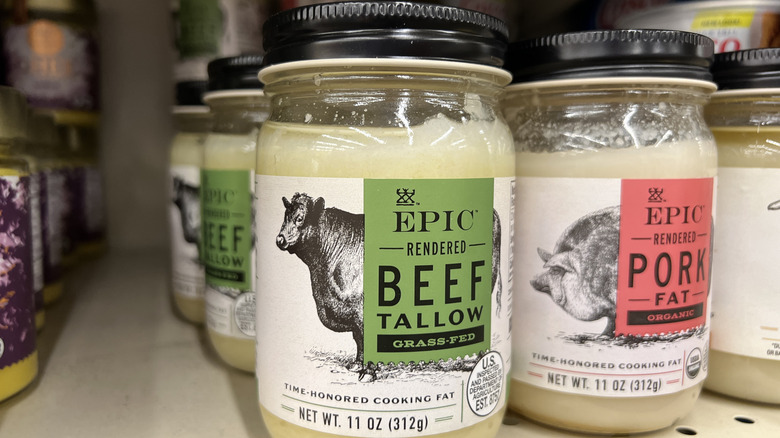
The secret to seasoning a cast-iron skillet is to coat it with a thin slick of oil and bake it in the oven at 450 degrees Fahrenheit for 30 minutes or longer. Once cooled, you can repeat the process if desired to ensure the fat has chemically bonded to the surface to produce that desired non-stick surface. The more you use your pan and re-season it, the tougher the coating will get and the more flavorful your meals will become. Of course, there's nothing stopping you from using beef tallow to prepare those meals.
For instance, beef tallow produces a richer, pan-fried steak because of its naturally savory and meaty flavor. One of the pros of frying with beef tallow is that it's incredible for crisping up potatoes and lending them an umami quality. However, you must filter your homemade tallow very well to guarantee that there aren't any impurities in there, which could burn as your spuds develop some character and crunch.
The one time you should never use beef tallow on cast iron is in between uses. If you need to set your pan aside for storage and want to prevent the risk of it rusting, use oil, as again, beef tallow can turn rancid and start to smell.