

How A Cast-Iron Skillet Does Wonders For Homemade Pan Pizza
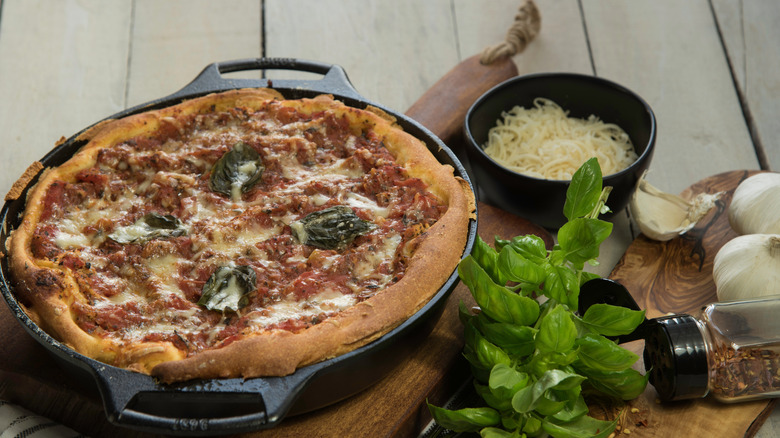
Preparing a homemade pizza takes some forethought, but it's also a rewarding activity that can bring the family together. Aside from using quality ingredients, one of the best ways to give your pie a professional pizzeria vibe is to bake it in a cast-iron skillet instead of a shallow pizza pan.
Why? One of the best features of cast iron is its ability to retain heat — if you preheat it on the stovetop first before placing your rolled-out dough inside and quickly adding your toppings, it will kickstart the cooking process. Then, once the pan is placed in the oven, the surge of heat will cause the water inside the dough to turn into steam, producing a lofty rise and lots of air pockets, which will give your pie a delicious chewy texture and charred quality. Well-loved cast iron that's developed a non-stick patina won't need to be oiled before use. However, if you want your pizza to have a crisper crust that's wonderfully browned on the bottom, slick some oil over the base and sides of your pan. This will produce a pizza with a fried-like flavor and fluffy middle. A crispier crust that has plenty of structural integrity will also be able to withstand the addition of more toppings without turning floppy.
Make Detroit-style pizza in a high-sided cast-iron skillet
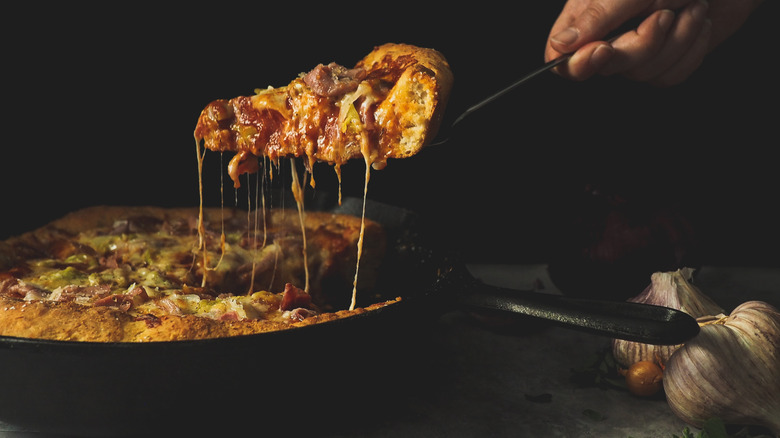
A New York thin-crust pizza has its merits, but there's something particularly scrumptious about a Detroit-style pie that has a thicker, fluffier base and plenty of caramelized cheese. A cast-iron skillet is perfect for creating the distinctive crispy bottom and pillow-y character of this yummy dish because it naturally has higher sides than a classic pizza pan, allowing for the dough to rise to full capacity. As cast iron is excellent at heat retention, it also triggers the rising agents in the dough to rapidly expand, set, and develop some delectable color. Plus, the hot sides create a pie with a signature crispy cheese edge, which is one of the hallmark features of a Detroit-style pizza. Of course, the final pizza won't be rectangular in shape, but the taste and texture make up for it.
Cast iron skillets also make the ideal pans for reheating your pizza, too. Simply heat your pan on the stovetop and place your slices on it before adding a teaspoon of water to one side to create some steam. This technique allows the base of the pizza to become crisp while the steam encourages the cheese to turn invitingly gooey. Alternatively, turn leftover pizza into tomorrow's lunch by sandwiching a couple of slices together, cutting them into cubes, and toasting them up in the oven to make delicious croutons for loaded salads and more.