

6 Vintage Hawaiian Dishes That Deserve More Love On The Mainland
We may receive a commission on purchases made from links.
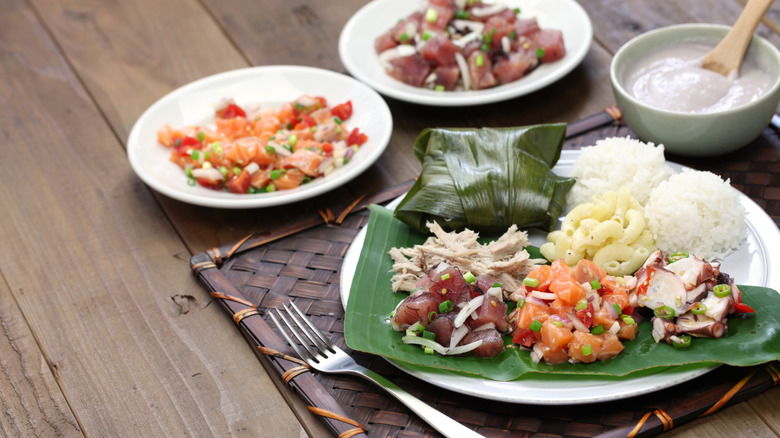
Hawaiian foods like poke, shave ice, and loco moco have become popular in the continental U.S., even becoming mainstream in the case of poke bowls, which have taken over the fast-casual food scene globally. Maui-based Ululani's Hawaiian Shave Ice has also opened multiple locations on the mainland, from California to Florida.
While these are great examples of Hawaiian food, traditional Hawaiian cuisine also goes much deeper and there's much more that a visitor to Hawaii should try. Many dishes use an underground oven called an imu to create traditional and culturally significant dishes like kalua pork, which have been prepared for generations. These traditional foods have since gone on to inspire modern variations, like kalua pork sandwiches.
Hawaiian cuisine today is a combination of Polynesian traditions as well as influences from other groups who moved to Hawaii to work on the plantations over 100 years ago, including Japanese immigrants. To better understand Hawaiian cuisine and culture, we spoke to chefs who've been cooking in Hawaii for years, for their expert recommendations of some vintage Hawaiian dishes that are still underrated and deserve more love.
Lau lau
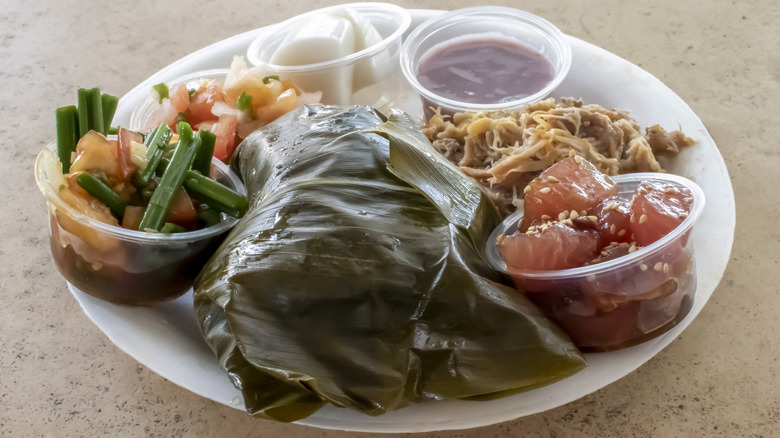
Lau lau is a slow-cooked dish, and one of many leaf-wrapped foods enjoyed around the world. The dish usually consists of seasoned pork and fish, wrapped in taro leaves, then further wrapped with the leaves of another plant called ti. Sheldon Simeon, celebrated Hawaiian chef and author of the cookbook "Ohana Style," loves lau lau and says that the dish is usually steamed gently for eight hours. "It's this beautiful package, and the aroma is one of My most favorite things that I love," Simeon says. The ti leaves are not edible and are usually removed before serving, while the meat is enjoyed together with the taro leaves it's steamed in.
According to Junior Ulep, Chef de Cuisine at Kahuwai Cookhouse in Kona Village, lau lau is traditionally cooked in an imu and "the result is an earthy, savory dish with tender, melt-in-your-mouth meat." More importantly, lau lau is not just a dish but a cultural experience that can "connect food, land, and community," Ulep says.
Poi
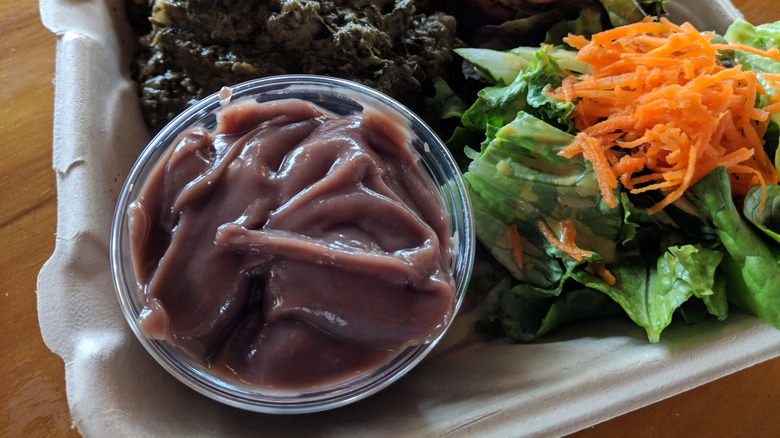
"I think one of the more underappreciated foods in traditional Hawaiian cuisine would be poi," says Allan Alquisalas, Chef de Cuisine at Andaz Maui. Poi is a starchy dish that's not only a staple, but considered a sacred dish in traditional Hawaiian cuisine.
The dish resembles a purple paste, and it is made from boiled taro root. Taro, called kalo in Hawaiian, is an important plant that's used in many Hawaiian dishes. For poi, the boiled taro root is pounded until it has a smooth consistency. It's typically enjoyed as a side with dishes like kalua pork or lau lau.
Chefs in Hawaii today, though, are incorporating poi into other dishes, like mochi or pasta. "At its simplest form, yes, it can be looked at as just a side dish or starch for a meal," says Alquisalas, who notes its many other uses, saying, "it can be turned into a dressing, mixed into pasta dough itself or fried as croquettes."
Chicken hekka
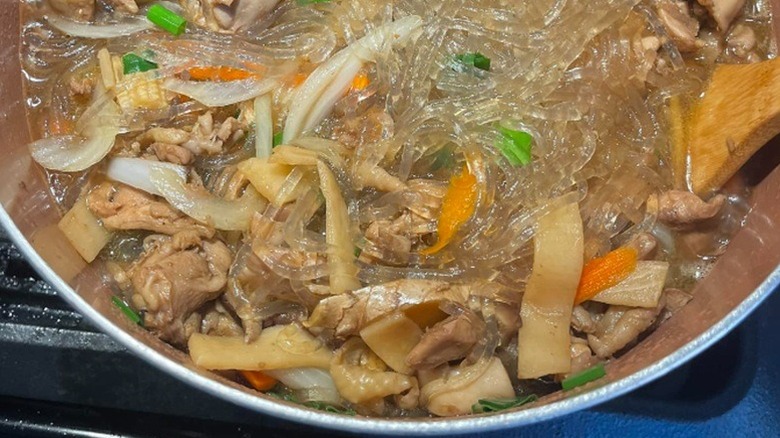
Many dishes in Hawaii use an ingredient called long rice, which is a misnomer — long rice is actually a type of glass noodle and it's not made of rice but mung bean. In some dishes, like chicken long rice, the long rice is even cut into shorter pieces making the name even more confusing.
One of the Hawaiian dishes made with long rice is called chicken hekka. "It's a one-pot Japanese style dish," Sheldon Simeon explains. Chicken hekka consists of sweetened dashi with chicken, long rice, and vegetables that may include shiitake mushroom, carrots, and bok choy, although you can use whatever vegetables you have in your fridge.
Like many Japanese-influenced dishes in Hawaii, chicken hekka originated from the Japanese-Hawaiians who migrated during the plantation days. The word hekka means sukiyaki in the Hiroshima dialect, making this Hawaii's version of a Japanese classic.
Squid luau
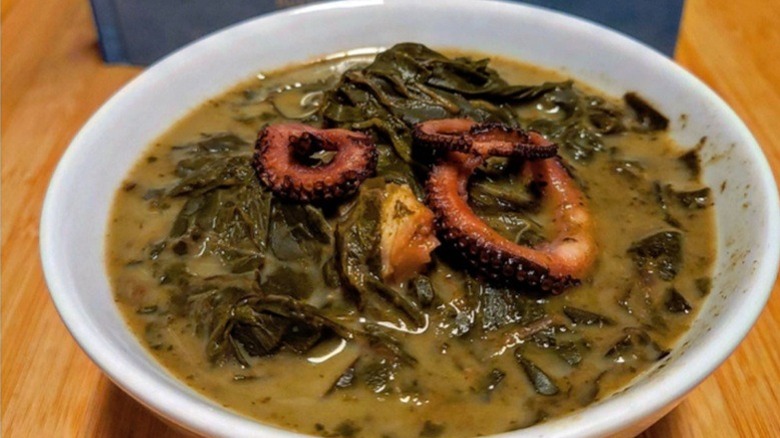
Another traditional Hawaiian dish Sheldon Simeon wants people to know more about is called squid luau, saying it's "one of my favorite dishes, and I think a lot of people are not exposed to it." While it's called squid luau, this dish actually uses octopus, which is called squid in the Hawaiian pidgin language.
In this dish, the octopus is sliced into small pieces and boiled with luau (which means taro leaves) and some Hawaiian salt. The octopus and luau are simmered until the leaves become very soft and break down easily. After they're done simmering, butter, coconut milk and sugar are added to the mixture. While squid luau is hard to find, even in Hawaii, it's available on the islands at places that offer Hawaiian combo lunch plates.
Pastele stew
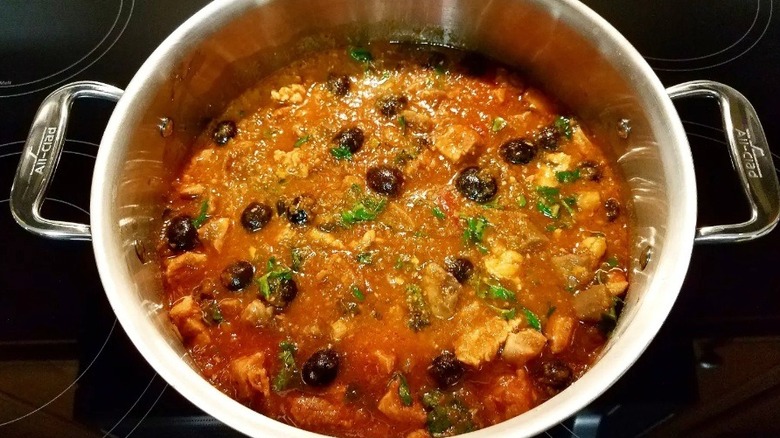
If you think pastele stew sounds like a Puerto Rican dish, you're not wrong. This dish stems from the Puerto Rican influence in Hawaiian cuisine, which Sheldon Simeon says is "not talked about or represented much." Puerto Ricans also migrated to Hawaii in the early 1900s, to work in the sugar plantations, and today there are close to 40,000 Puerto Ricans living on the islands. Their influence on Hawaiian culture and cuisine can be seen in dishes like this one.
Pastele stew is a simplified version of pasteles, or Puerto Rican tamales. Instead of forming green bananas into tamales and stuffing them with pork, this dish is easier to make, taking the ingredients and turning it into a one-pot stew that's perfect for large gatherings. Pastele stew usually contains pork, green bananas, and olives in tomato sauce, seasoned with achiote, among other spices.
Kūlolo
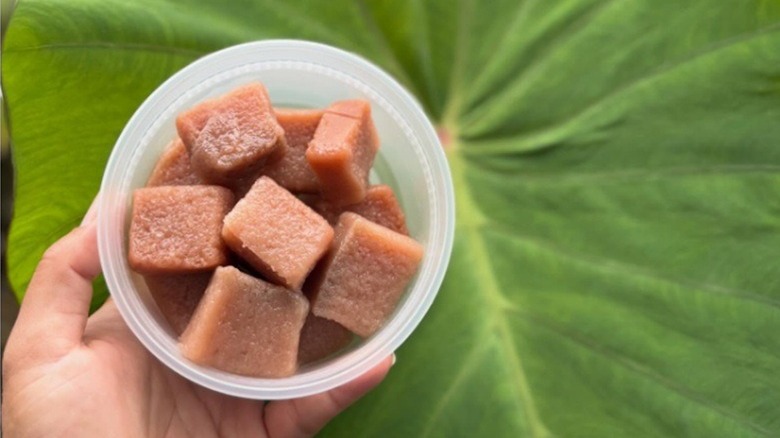
"When kūlolo is prepared right, there is nothing else like it," says Matt Dela Cruz, Executive Chef at Kō at Fairmont Kea Lani. Kūlolo is a traditional Hawaiian dessert made of Hawaii's favorite plant — as you may guess by now, that plant would be taro. To make kulolo, taro is grated and mixed with coconut milk and some sweetener. The mixture is slowly steamed or baked until it's firm, and then cut into smaller pieces to enjoy. Kūlolo is commonly sold in Hawaii in one-pound packages, but it's hard to find on the mainland.
The texture of kūlolo is slightly chewy, similar to mochi, but more dense. "There's nothing on the mainland that truly compares to it," raves Dela Cruz, "It exists entirely in its own category." Dela Cruz also says that the slow cooking process gives kūlolo a nice complexity in flavor.