

The Saucy Red Flag You Should Never Ignore At Barbecue Restaurants
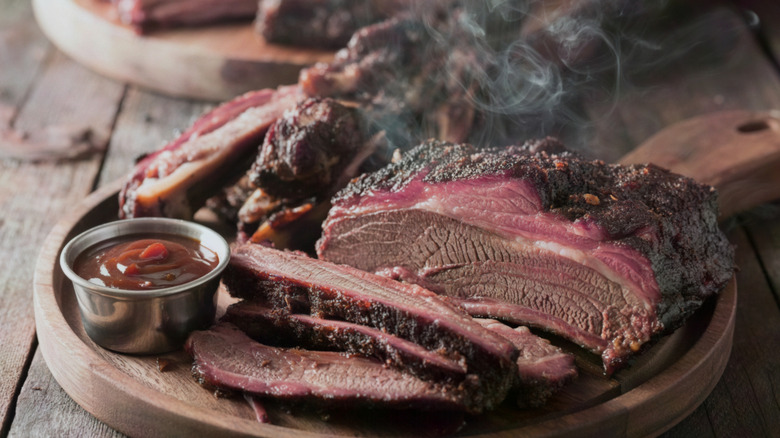
Stepping out of your culinary comfort zone and trying a barbecue restaurant that's new on the block? Championing neighborhood eateries is an incredible way to show support to your local community; however, they've got to be able to deliver the goods. Before taking a seat, case the joint and observe any red flags. From poor service to an uninspired menu, there are several signs to be wary of, but at a barbecue place in particular, always check if the meat comes smothered in sauce or is proudly served unadulterated.
The best barbecue restaurants serve their brisket, ribs, and burnt ends straight from the smoker or grill to guarantee that the natural flavor of the tender meat takes center stage without a coating of sauce. Unlike other meat dishes, such as seared steaks and smash burgers, barbecued meats have a smoky quality and a pull-apart texture that doesn't require additional sauces and condiments due to the way they're prepared. While smoked brisket is often coated with a dry rub, these spices don't overpower the beef. Rather, they penetrate the surface, which seasons the meat and helps to create a tasty bark with a distinctive smoke ring beneath it. Masking all that hard-won flavor — a result of a lengthy marinade and slow smoke — is simply an injustice to the process.
Barbecue sauces are best for dipping
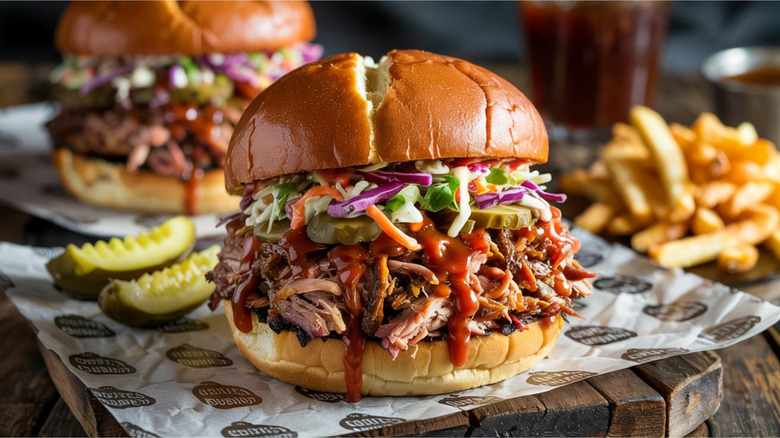
Now, this isn't to say that barbecue sauces don't have their place. Firstly, serving them on the side allows diners to taste the quality and flavor of the meat first before saucing it to their liking if desired. Secondly, even though coleslaw, cornbread, and hush puppies are classic sides featured on the menus of many barbecue restaurants, fries often make an appearance too, which are downright delectable when dunked in tangy barbecue sauce. Finally, some fattier dishes, like pulled pork recipes, are smothered in a sauce on purpose because they require a tangy ingredient to cut through their richness and simultaneously lend additional moisture. As vinegar is a key ingredient in barbecue sauce (along with brown sugar and ketchup), it's able to temper the decadence of some well-marbled cuts of meat that would otherwise be too cloying to eat in large servings.
A menu packed with several regional barbecue styles is one of the other red flags you should never ignore at a barbecue restaurant. An unfocused menu that features everything from Memphis ribs and Texas brisket to Carolina pork indicates that the chefs are preparing too much and failing to give each dish the time and care they deserve to truly excel. Similarly, the sides on the menu shouldn't stray too far from the classics, like beans and collard greens. Unusual side dishes can be a sign of unnecessary showboating.