

How A Paper Towel Does Wonders For Protecting Cast-Iron Pots
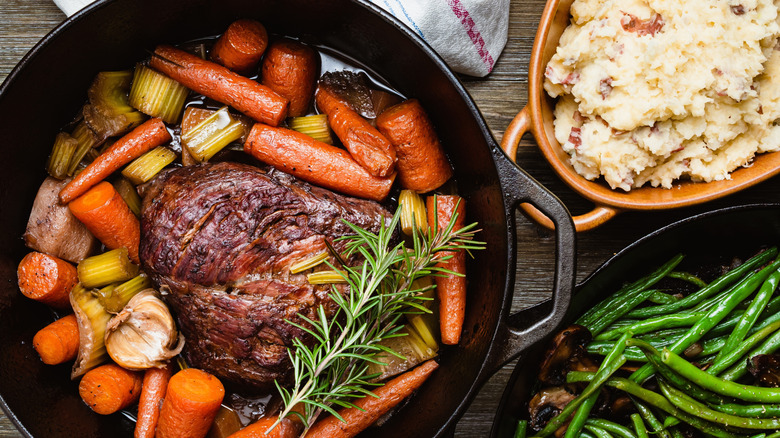
Cast-iron pots can last a lifetime with the proper care, making them an incredible culinary investment that can be passed down through the generations. Better yet, with careful use, their surfaces develop a flavorful and non-stick patina that imbues anything that's cooked inside it with a savory character and depth that simply can't be recreated in enamel or stainless steel options. The only problem is that cast iron needs to be regularly seasoned to prevent it from absorbing moisture and rusting. Luckily, a cheap piece of paper towel can do wonders for protecting cast-iron pots from corrosion.
Even cast-iron skillets that have been seasoned well and fully dried over a burner can be susceptible to rust in humid environments. Ideally, you should store the lids for your cast-iron cookware separately to prevent any moisture from getting trapped inside. However, that isn't always possible in compact kitchens with limited cupboard space. This is where paper towels come in super-handy; they're incredible at absorbing any moisture in the air and ensuring that the interior of your skillet remains dry and rust-free. All you need to do is place a folded paper towel across the edge of your pan so it overhangs and loosely place the lid on top, leaving some room for airflow. This technique will allow you to stack cookware on top of each other while guaranteeing that the humidity doesn't damage the cast-iron surface.
Dry your cast-iron pans and lids thoroughly before storing
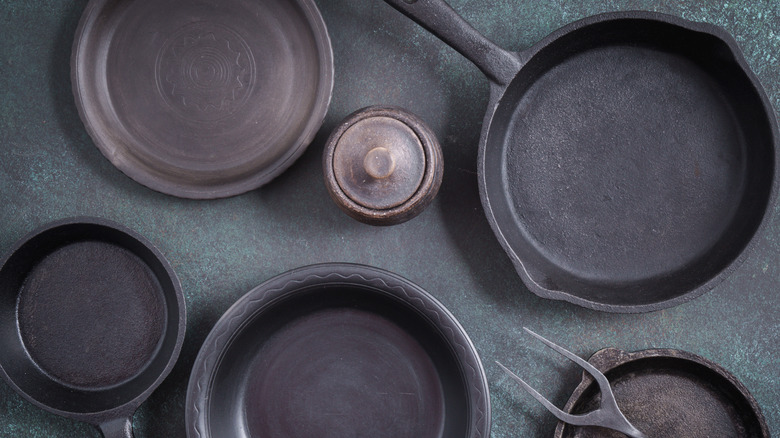
Using a paper towel to dry the interior of your cast-iron pan is a useful move, but you should also dry the base and lid on a burner to guarantee there are no traces of any moisture left before rubbing a slick of oil over them. While vegetable oil is a popular option, you can also season your cast-iron cookware with leftover bacon grease and place it in a low oven to give the surface an umami-er quality. Finally, store your cast-iron cookware in an area away from the dishwasher and sink to make sure that it isn't exposed to moisture when not in use. If, after all this, it still gets rusty, you can scour the surface clean, dry it, apply some oil, bake it in a moderate oven, and allow it to cool fully. Alternatively, a genius hack to keep cast-iron pans rust-free is to scrub them with a scrap of aluminum foil.
One of the interesting facts about cast-iron cookware is that it isn't ideal for preparing acidic foods, like tomatoes and citrus fruits, because they can eat away at the seasoned surface and give the finished dish an iron-like taste. That said, you can get away with it if you cook these foods quickly (bear in mind that cast-iron is extremely good at retaining heat, so your food will continue to cook even if you remove it from the burner).