

Lucille Ball's Retro Salad Dressing Recipe Wasn't Complete Without This Condiment

Lucille Ball was best known for her hilarious comedic timing in the iconic show "I Love Lucy," but she was also a keen cook who knew how to prepare everything from goulash to nutty walnut crisp cookies. The comic actress also had a retro salad dressing up her slapstick sleeve, which wasn't complete without the squirt of a classic red condiment; good old ketchup.
Featuring standard vinaigrette ingredients, such as a basic salad oil, lemon juice, vinegar, and seasonings, the unusual addition of ketchup gave Ball's salad dressing a sweet but tangy character. The original recipe, published in a 1938 collection titled "Famous Stars Favorite Foods," also had a surprising method, which called for boiling sugar with water until it held its shape and turned into a pliable ball when dunked into cold water. Known as the soft ball stage in candy making circles, this move ensured the finished dressing was smooth and didn't contain any gritty sugar particles. Then the ketchup, paprika, dry mustard, celery salt, vinegar, and lemon juice (flavored with grated onion and garlic) were combined before the cooled syrup was whisked in with a beater.
Ball's recipe is strikingly similar to Catalina dressing, which is also made with ketchup, paprika, sugar, and vinegar. However, with Catalina dressing, the sugar is simply blended into the other ingredients instead of being turned into a syrup, making it faster to prepare.
Are catsup and ketchup the same thing?
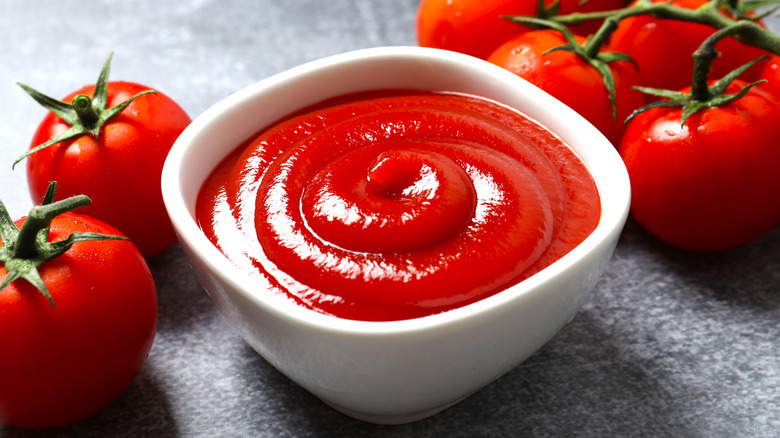
In Ball's original recipe, the ingredients include a quarter cup of catsup versus ketchup. However, dig into the history of ketchup, and you'll find that both spellings were used interchangeably to describe the same tangy condiment. Hailing from Southeast Asia and made with a base of fermented anchovy, the modern recipe for the bright red ketchup – or catsup – we all know and love didn't actually contain tomatoes until the 1800s (a horticulturist called James Mease published a recipe for the sauce back in 1812, which featured tomato pulp, brandy, and sugar). Eventually, Heinz started to produce a commercial version of ketchup in 1876 that contained more vinegar to prevent it from spoiling. If you want to recreate Ball's salad dressing recipe at home, a store-bought bottle of Heinz ketchup will definitely work a treat, but any other basic brand will deliver the same flavor and distinctive red color. The finished dressing can moonlight as much more than zesty vinaigrette, too. For instance, it doubles as a dipping sauce, a glaze for barbecued meats, or a punchy marinade for veggies.
Some of the other unusual but delicious uses for ketchup include employing it as a quick spaghetti sauce or marinade for shawarma. Again, the tangy but sweet character of this scarlet condiment lends these dishes a savory but honeyed twang that's rich with umami flavor.