

Brand New Cast-Iron Pan? Avoid Cooking This Fish For Awhile
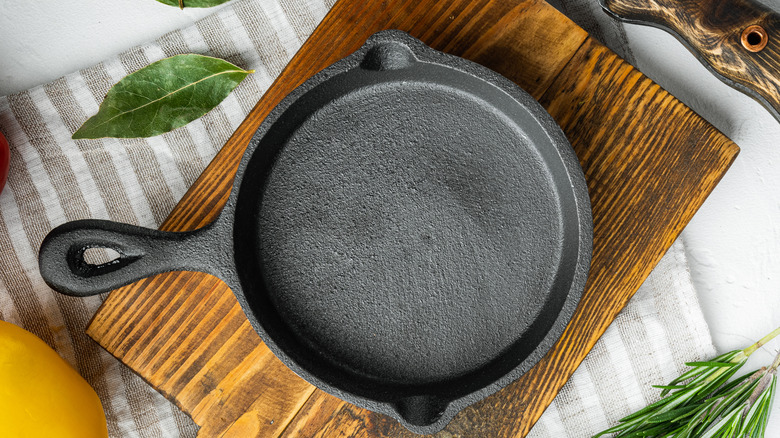
Cast iron skillets are incredible at retaining heat, which makes them fantastic for achieving an even sear on steaks, pork chops, and more. Plus, they're an awesome vessel for preparing one-pan meals as they can go straight from the stovetop to the oven. However, one of the essential tips for cooking with a cast-iron skillet is to season it before use to lend it a non-stick surface and prevent it from rusting. If you've got a new cast-iron pan, you might want to avoid cooking things like a flaky fish on it until it develops a patina that makes it non-stick.
Flaky fish, like hake and tilapia, have a naturally delicate and tender flesh that's prone to sticking and breaking when it meets the intense heat of a cast-iron skillet. If you try to pan-sear a flaky filet of flounder or sole in a new pan, it will likely fall apart when you try to flip it over. You might be more successful with firmer varieties of fish, such as salmon, but even then, you will need to be careful when turning them over to avoid making a mess.
The wonderful thing about cast-iron pans is that the more you use them, the better they get at giving your food depth of flavor, a golden sear, and a rich aroma. Older cast-iron pans that have been well seasoned will develop a polished coating, or patina, on the surface that prevents food from sticking.
Always season a new cast iron skillet
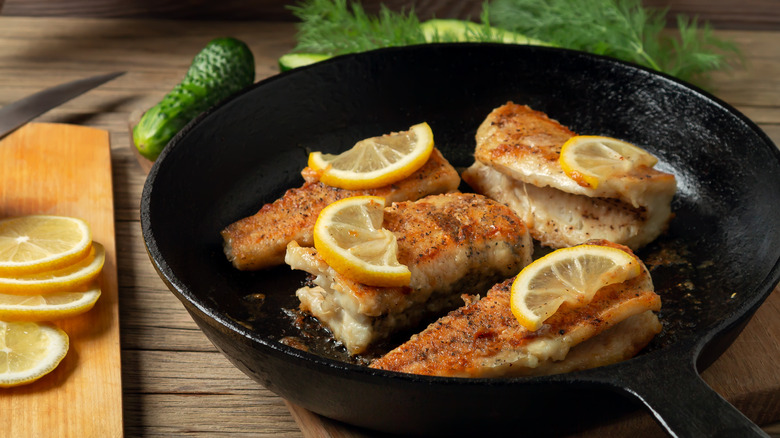
If you want to take your chances and cook flaky fish on a new cast-iron skillet, season it first, even if it comes pre-seasoned. You can do this by buffing oil onto the entire surface of your clean pan before heating it in a hot oven for 30 minutes. This process will need to be repeated three to four times for the best results. Once your pan is seasoned, heat it well with a slick of oil to prevent the fish from sticking and from moving around. Allow it to develop some color on one side and firm up a little before you flip it. Use a spatula with a thin edge to slide under the fish without disturbing its delicate texture.
Though you may insist, flaky fish is just one of the 12 foods you might want to keep away from your cast-iron skillet. You should be careful about cooking acidic foods in cast iron, too; ingredients like tomatoes, wine, and citrus juices can react with the material, tinging your meals with a metallic flavor. If you do want to use acidic ingredients, cook them quickly to reduce the amount of time they're in contact with the pan.