

Forget Beef Broth: This Liquid Makes Homemade Pot Roast So Much Better
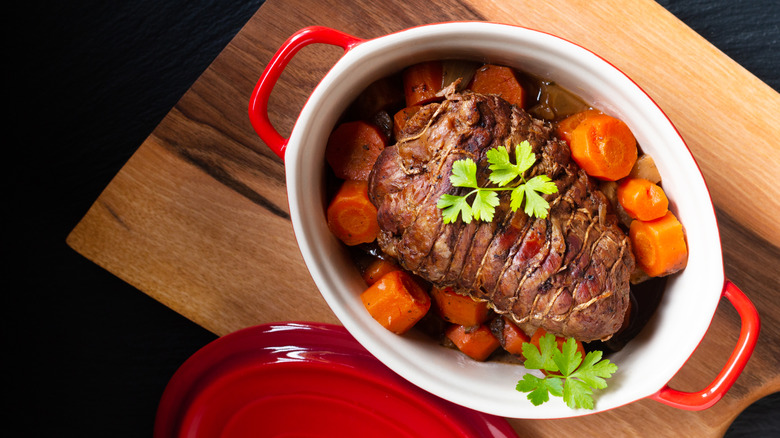
The best type of meat to use for a pot roast should come from parts of the cow that do the most work, such as the top, center, or bottom round roast. As the beef slowly simmers, the collagen and connective tissue keep it moist, producing a wonderfully tender dish. However, the beef shouldn't be your sole consideration when making this all-American classic — the liquid you simmer it in can also be an incredible source of flavor. Beef broth is a popular choice, but consider using beer next time to lend your slow-cooked meal a richer taste, inviting hoppy aroma, and deeper color.
The best beers for the job are full-bodied stouts, porters, and other darker varieties because their naturally nutty and coffee-like flavors can stand up to and complement the richness of the beef. The acidity in these beers also cuts through some of the fattiness in the meat and lends the pot roast an earthier aroma and depth too. Finally, their amber color produces a flavor-packed jus that's deeply pigmented and rich.
The great thing about using beer instead of beef broth is that you don't need to change the method in any other way. Simply pour the beer into the pot after searing the beef and veggies and simmer until the meat is tender. That said, you can add extra flavors that would complement the nutty depth of your beer if preferred, such as bay leaves or mushrooms.
Brown sugar balances the bitterness of darker beers in pot roast
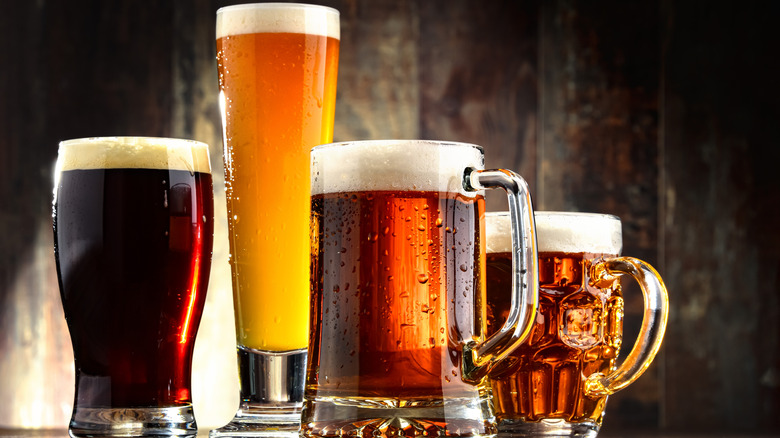
If you've used a beer that has a bitter note to it, consider adding a dash of brown sugar to your pot roast to balance it out. You could also use caramelized onions at the very start to give the gravy a sweeter character or toss in plenty of carrots that will sweeten as they soften. This recipe for Sunday beef pot roast already contains carrots so it makes a useful springboard for experimentation; just sub the bouillon paste and water for a splash of your favorite beer.
Alternatively, supplement your beef broth with beer, rather than subbing it completely, if you think the alcohol might be too malty or astringent to use exclusively. This way the final gravy will benefit from both the savory flavor of the broth and the maltiness of the beer, resulting in a well-rounded jus that isn't too bitter and can be ladled over the meat prior to serving.
Beer is a great addition to stews too but you need to select a variety that complements the protein. For instance darker beers are ideal for lamb and beef while lighter ones work well with chicken. Fruitier beers with a citrusy taste are delightful in seafood and fish stews.