

Roast Vs Corned Beef: What's The Difference?

If you've ever entered a deli and wondered what the difference is between roast beef and corned beef, you aren't alone. After all, at the end of the day, beef is beef, right? Yes, but no. Perhaps no two meats cause more confusion than roast beef and corned beef. They are both meaty cuts from a cow. They both can grace the table as a Sunday dinner or be transformed into hot or cold sandwiches where the meat can be thinly or thickly sliced pieces piled onto pieces of bread. But that's about where the similarities end.
While the history of corned beef and roast beef both have roots in English culture, their origin stories are completely different. Moreover, these two meats differ in the cut of beef used, how they are prepared, and how they taste. And even more than that, corned beef and roast beef also represent how different cooking techniques can make for exciting dining experiences that are satisfying and comforting.
Pot roast
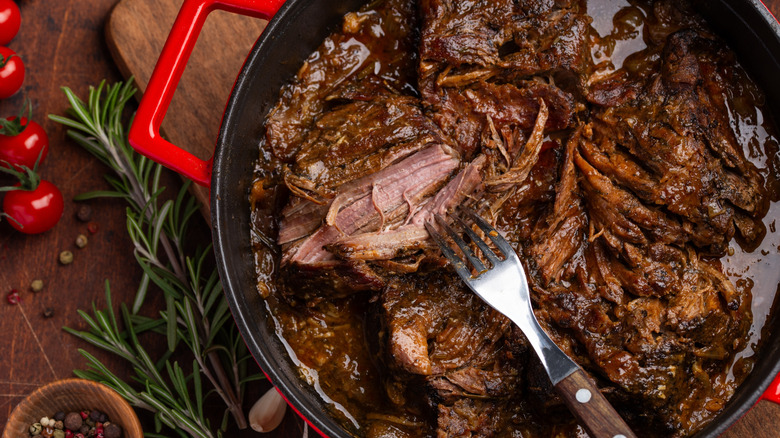
Roast beef is just that: Beef that has been roasted in the oven until it turns so tender it falls apart, creating a succulent bite. It is generally made from a chuck roast, which comes from the shoulder of the cow, or a round roast, which comes from the rump or hindquarter. It also really embraces its beefy, savory taste.
A traditional American pot roast is served alongside roasted carrots and mashed potatoes – vegetables that can soak up all the beautiful juices and gravy that can be made from its drippings. But it can also make a delicious French Dip or roast beef sandwich. Either way you choose to eat it, roast beef tastes equally good as a sandwich as it does as a meal.
What's this meat's origin story? The English will take the nod on this one. The concept of roast beef can actually be traced to the days of Henry VII of England and his protectors, the Yeomen of the Guard,who were also known as "Beefeaters." They would slowly roast meat over a fire and feast upon it. This practice caught on as meat became more abundant. During the Industrial Revolution, it became a Sunday tradition to put a roast in a pot in the oven before heading to church. Today, the English love their Sunday pot roast and often eat it with a good, old-fashioned Yorkshire pudding.
A corny moniker
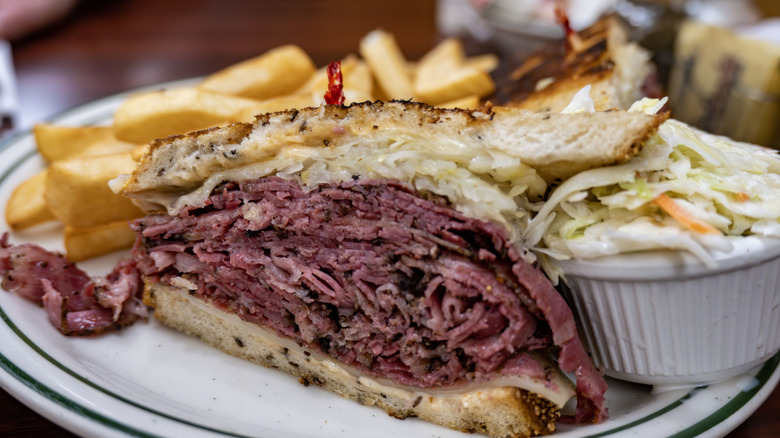
Corned beef is made using brisket, which is cut from the cow's breast or chest muscle. This can be a tough piece of meat, which is why it needs a low and slow cook to achieve tenderness. But before it ever sees an oven, corned beef is "corned" or cured. The brisket is soaked in a brine, seasoned with salt, spices, and sugar; however, curing this meat is not for the impatient. It can take a few days to a week for the brisket to sop up all those flavors that create its signature spicy, salty, and zesty taste.
Why is it called "corned" beef when there is no corn involved in making it? The name comes from the supersized, kernel-looking pieces of rock salt that are used in the preserving process. This method of curing meat has been around forever, but dubbing this meat "corned beef" can be traced to 17th-century England. So, is it still Irish? Absolutely. Ireland became the center of production after the Cattle Acts of the 1660s created a surplus of cattle on the Emerald Isle.
Corned beef can be served as a Reuben sandwich with a little Thousand Island dressing and sauerkraut, or if it is St. Patrick's day, Americans are keen to have corned beef and cabbage to celebrate this lucky day. If you find yourself with leftovers because you've made too much of this meat, throw it into a casserole. Your family and friends will love it.