
10 Common Habits Of Boomers At Restaurants
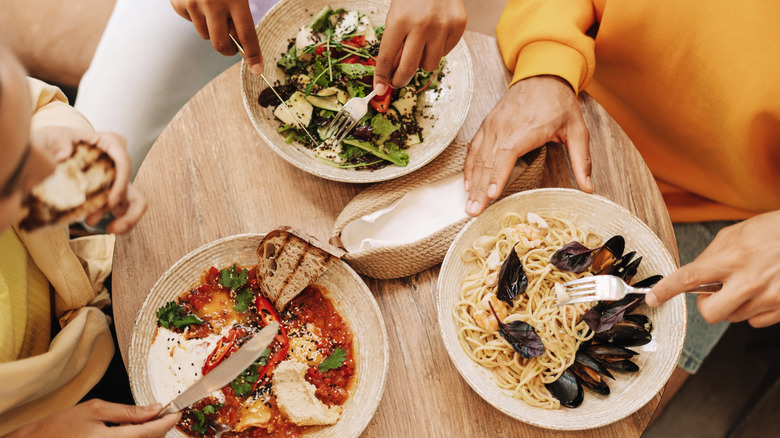
You know who loves boomers? The restaurant industry. This age group may have faced a lot of characterization from many different parts of society (namely, the young'uns) over the last few years, but it remains a staunch ally of eateries everywhere. Broadly speaking, boomers have a sense of loyalty to restaurants and frequent them for special occasions and casual dinners alike more than other generations, and when you throw in that higher-than-average disposable income, it's easy to see why they're such valued customers. However, as with any other restaurant patrons, they have their quirks — and not all of them are entirely lovable.
Studies and anecdotal evidence have pulled apart the biggest behavioral habits of boomers in restaurants, and found some key things that a lot of them do. While choosing restaurants based on price or asking for a physical menu feel perfectly reasonable, other behavior, like sending food back when there's a fairly minor problem or expecting too much from their servers, fall on the slightly more uncomfortable side of things. There are also some habits you might not expect, like opting to pay by card instead of cash (if you have an image in your head now of boomers only carrying around wads of notes, then you're sorely mistaken, folks). Let's check out how boomers really eat in restaurants.
1. Commenting that the music is too loud

The older you get, the more you hate loud music: It's a bit of a cliche, but honestly, it's kinda true. It's especially clear when it comes to boomers, too, who tend to feel that music in restaurants these days is just way too loud. Children of boomer parents and service staff alike are well aware that when a boomer customer walks into their restaurant, which is pumping house, R&B, or even classical music at top volume, that eventually there will be a comment about it. It's all part of the experience, folks.
That said, this honestly isn't that unreasonable a complaint to have. A lot of the time, music in restaurants is just that bit too loud and is cranked up in a bid to create a lively atmosphere. Unfortunately, it doesn't create the vibe that the boomer generation has grown up with and come to expect when dining out. For older customers, eating in a restaurant is a convivial experience where you come together with friends and talk, without having blaring music inhibit it. Younger customers might put up with the loud volume of a restaurant, but honestly? They probably don't like it that much either.
2. Sending food back if there's a small problem
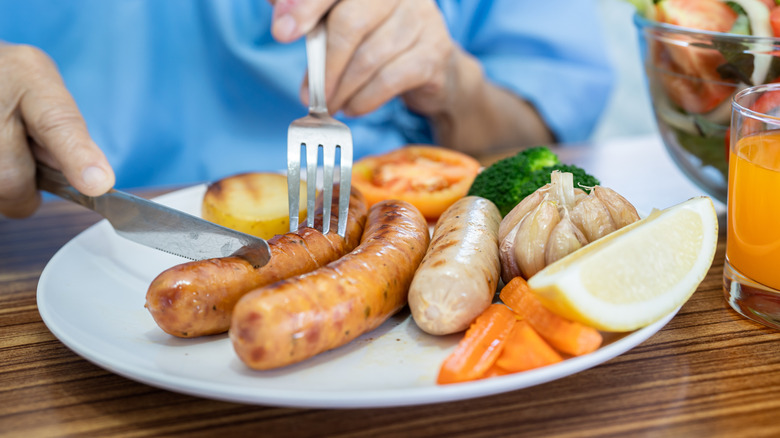
It feels like the older you get, the more comfortable you are with sending back food in restaurants if there's an issue with it. Generally speaking, younger customers are way happier to just put up with things if their order is a little bit different than what they were expecting, or if it's not made entirely perfectly. Boomers, however, are a lot more willing to call over the server and tell them that something's wrong and that it needs to be remade.
Occasionally, though, this can go way too far. The children (or children-in-law) of boomers have traded horror stories online about how often their parents send back food, which causes that sense of deep embarrassment that only your parents can produce. "My mom sends her steak back at least once every time she orders one," said one person on Reddit. "Last time we went out to Texas Roadhouse, she sent her steak back FOUR times. It was mortifying." That's obviously at the extreme end of the spectrum, and there are plenty of boomers out there who would never dream of doing that — but it's not uncommon by any means.
3. Sticking to familiar dining experiences
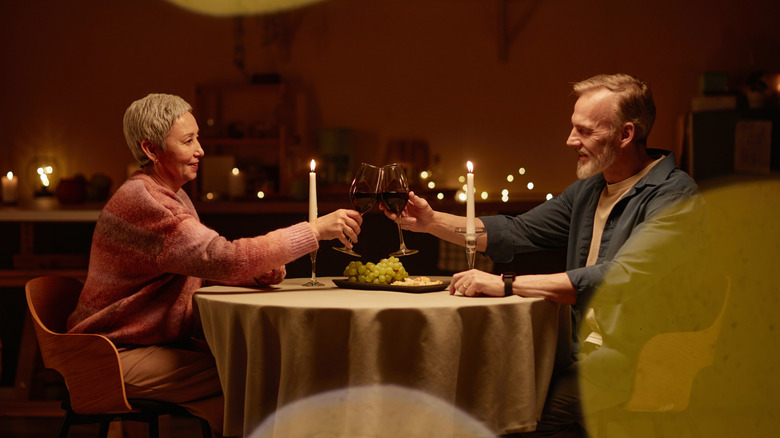
More often than not, boomers don't want trends when they dine out. They don't want up-to-the-minute service styles and fashionable communal tables, where they have to bump elbows with their fellow diners. Instead, they value familiar experiences that are built on formerly established dining traditions and habits. Boomers "value consistency and familiarity in their food and beverage choices and are far less likely to swap based on price alone," says Guy White, CEO of Catalyx, to The Food Institute. They know how they like to dine, and while they're not averse to finding a good deal, they're not a generation that's especially excited by restaurant innovation.
Having said this, though, boomers are by no means unadventurous when it comes to what food they like. There's a perception that it's all meatloaf and potatoes, but a study commissioned by Eater, which surveyed over 2,000 adults, found that the boomer generation was the one most likely to seek out new foods and culinary experiences. However, in terms of dining protocol and what to expect from a restaurant, it's generally an age bracket that knows how it wants to eat and wants to keep things standardized.
4. Choosing places based on price

Price is king — at least when it comes to boomers, anyway. When choosing restaurants, boomers are a particularly price-sensitive bunch, and multiple surveys and reports have identified the cost of a meal as a big factor in whether older customers will dine in a specific establishment. In a study by Eater, 62% of boomer respondents identified reasonable prices as one of the key things they consider when picking where to eat. In turn, restaurants may well then emphasize value and fair pricing when marketing their food to their boomer clientele.
Now, it should be said that boomers aren't alone in thinking about how much a meal will cost them. In fact, the Eater study found that nearly 60% of diners across all age groups will think about how much their food will set them back before ordering. However, boomers are a lot more likely to choose a specific restaurant based on the cost of a meal. Younger customers, meanwhile, will adapt in different ways, by ordering smaller or family-style sharing plates to offset higher prices, or opting for a kids' meal over an adult one.
5. Going big on the substitutions
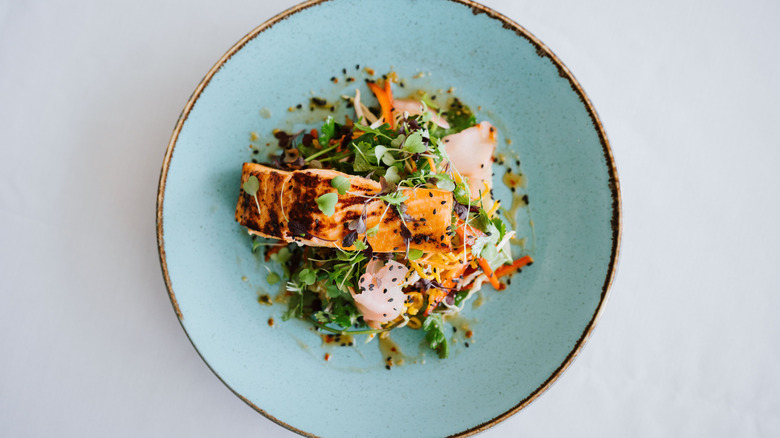
Who knew that boomers liked to make food substitutions so much? Well, apparently, everyone. The boomer generation is infamous for being one that has no compunction about modifying their orders to the point where they're almost completely unrecognizable. Some people have noticed that their boomer relatives seem to do this more as they get older, whereas others have noticed that these modifications can sometimes come with a lack of manners, making the whole affair awkward.
Why is this such a thing? Well, it arguably comes back to the fact that older generations have slightly higher expectations of what a meal out should be, and what restaurants can accommodate. The "customer is always right" approach used to rule the roost in restaurants, and substitutions were just part and parcel of the experience, whereas now, younger generations have a greater sense of how awkward this can make life for the people working at the place you're eating at — a lot of us have worked those kinds of jobs, so we know how annoying it can all be. A couple of substitutions are totally fine, of course, but the limit of when to stop appears to differ from age group to age group.
6. Tipping consistently (but maybe not as well as others)
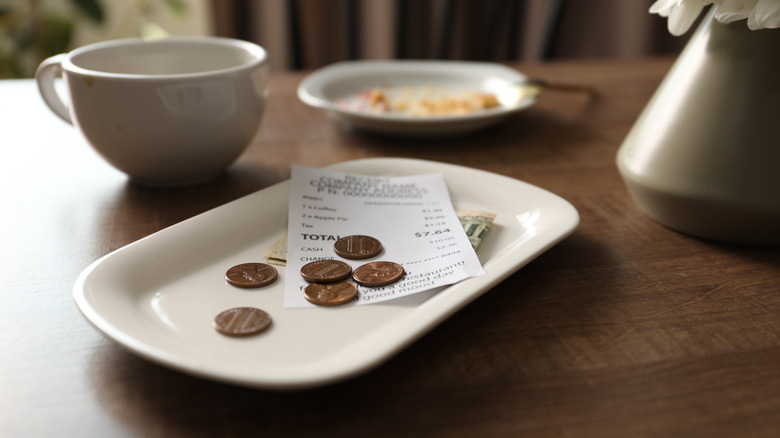
One thing about boomers is that they know you need to properly tip your server. In contrast to the image of this generation, which is that they'll withhold a tip for the slightest inconvenience, boomers have grown up with tipping culture in restaurants, and as such, they'll usually get out their wallets at the end of a meal. A 2025 survey by BankRate found that 84% of boomers always tip in sit-down restaurants, compared to 83% of members of Gen X and 61% of millennials. Bringing up the rear are Gen Z, of whom only 43% tip. Listen, folks, you're gonna have to do better than that.
However, what's interesting is that while boomers may tip consistently, they're perhaps not as generous as they may think. This is confirmed both from the service side and from the customer side. A SpotOn study, which surveyed restaurant workers, found that they consider boomers to be average tippers, while a broader poll by TradingPedia (via Southern Living) found that this generation leaves the lowest tip out of all the biggest age groups. They leave 16.4% on average on top of their bill, whereas millennials come in as the highest tippers, leaving approximately 19.49%. Boomers, we know you've got that money stashed away — get it down on the table!
7. Asking for a physical menu (instead of a QR code)
Okay, to be honest, we totally get this one. The use of QR code menus and Ziosk tablets in restaurants is a move that the COVID-19 pandemic sped up considerably, and a half-decade on, more and more restaurants are embracing them. You know who isn't getting on board, though? The boomer contingent. A 2024 Datassential survey found that 78% of boomers hadn't accessed a menu via QR code, indicating a preference for physical menus. A further study conducted by William Blair and discussed by Restaurant Dive found that only a minority of boomers were interested in using them at all; about 46% of boomers said that they'd be up for using a QR code menu.
What's interesting, though, is that while boomers clearly prefer to use physical menus, a lot of those who've accessed one through a QR code actually quite liked doing so. However, it's clear that most of them like holding a menu in their hands as they order — and to be honest, we do too. The tactile nature of a restaurant menu just enhances the experience of ordering, and sitting there and scrolling on your phone makes things feel a bit lacking in atmosphere. We all scroll for hours a day anyway, guys; give us a break when we're figuring out what we want to eat.
8. Preferring to pay by card (but not with mobile pay)
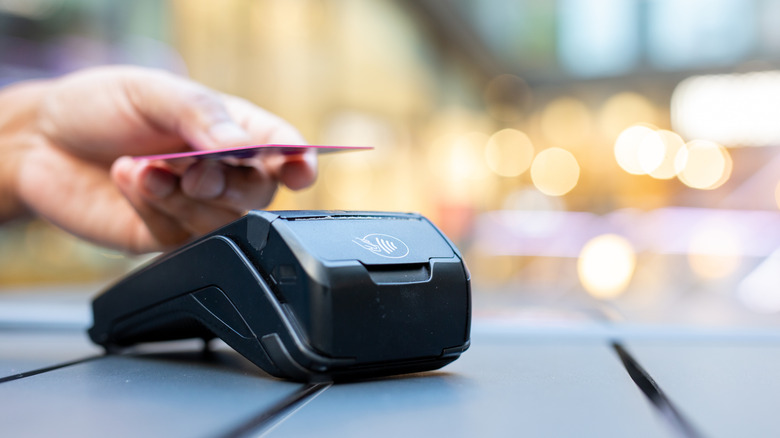
There's a slightly fusty perception of boomers as people who reject any modern technology whatsoever, and only pay for meals with wads of cash (or even by check). Frankly, that's not the case. Baby boomers are actually way more likely to pay by card than any other generation that came after them, and vastly prefer it as the chosen way to settle a restaurant bill. Research from PXP, published by Business Money, found that only 21% of boomers will pay for a restaurant meal with cash, leaving 79% of them opting to use a debit or credit card. However, what boomers are less excited about is the next wave of payment technologies.
Older restaurant customers are way more wary of using contactless, mobile pay, or app-based payment options, and prefer to stick to the method that they've used for the majority of their lives. Boomers are also way more likely to check their bank balance before they make a payment. To be totally honest, we think that's a habit that we could all do well to adopt.
9. Commenting on portion sizes

We live in an age where more means better, particularly in restaurants. However, that's not the case for boomers. Instead, older restaurant patrons tend to be less receptive to massive portions in restaurants, and are way more likely to comment when the food they (or others) receive feels like too much. Sometimes, this can feel a little awkward, or like a judgment on one's appetite; other times, it can just seem quite strange. Surely, getting more for what you've paid for is good, right?
Well, it all comes down to two things: Growing up with a greater sense of scarcity and moderation, and a perception of value. Baby boomers tend to be more receptive to moderately sized meals that feel fresh, vibrant, and that exude quality, as opposed to those that feel big for the sake of being big, and which may use cheaper or lesser ingredients. Interestingly, this is a trend that tracks into the retail world, with the food shopping habits of boomers emphasizing portion control instead of a more-is-more approach. We guess that getting better bang for your buck means different things to different people.
10. Expecting a lot (maybe too much) from their servers

If you've ever worked in a restaurant and served a table of baby boomers, you'll likely know that it can go one of two ways. Sometimes, they're kind, accommodating, and allow you to do your work with no fuss. Other times, though, they can have somewhat higher expectations of what you should be doing for them. In the service industry, boomers are somewhat notorious for assuming that restaurant workers will know their usual order, being unnecessarily demanding and creating extra work, and leaving an inordinate amount of mess everywhere. It's not just servers that notice this, either — other customers do too.
Now, it's important to recognize that we shouldn't only distinguish boomers as being demanding of their servers; this can be a trait that people of any age or generational group can exhibit. However, when baby boomers act this way, it speaks to perhaps a bygone age of what restaurant service used to look like. A couple of decades back, restaurants could afford to be well-staffed and have plenty of servers to provide individualized, constant service. Now, though, everyone's just trying to get by, and that server that you keep asking things of might have absolutely no time to do anything. They could be the only one on-shift. Just keep that in mind when you're thinking of calling them back to make your fourth request in five minutes.