
How To Pick The Best Meat For Prime Rib, According To Experts
We may receive a commission on purchases made from links.
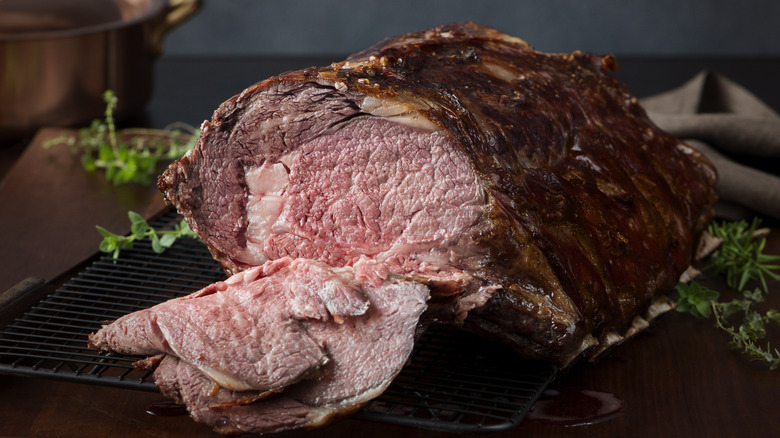
When a prime rib roast is on the menu, you know a celebration is at hand. This tender, succulent cut is a go-to special occasion meal for many, and there's a good reason few of us get to enjoy it very often — it's seriously pricey. You can save money by buying prime rib to cook at home, but you'll need to do some homework to ensure you're getting the right cut for your needs. "Before you really get into looking at prime rib, you need to cover a few questions," warned Melissa Cookston, seven-time world barbecue champion and author of the cookbook Fanning the Flames, set to come out in April of 2026. "Good prime rib is expensive, and you'll want to get your ducks in a row, so to speak."
Along with Cookston, we've enlisted four other experts to help you navigate the tricky task of choosing the right meat for a prime rib roast: Adam Jakins, executive chef at Halls Chophouse in Charleston, Maricel Gentile, chef and owner at Maricel's Kitchen in New Jersey, Jon Wood, director of culinary for Lawry's The Prime Rib, and Katie Flannery, COO of Flannery Beef.
Know how much meat you'll need
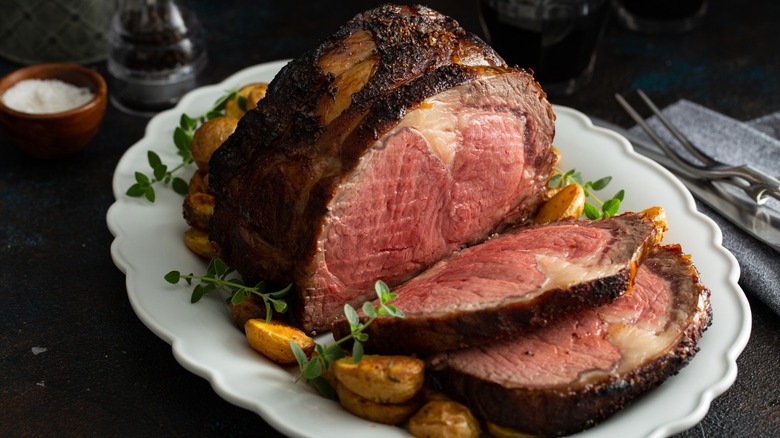
Prime rib pieces come in a large range of sizes, which is one of the reasons choosing the right one can be daunting. The most obvious factor to consider is how many people you plan to share your feast with. "Most people order ½ to ¾-pound of raw, boneless prime rib per person, or 1 pound per person for bone-in," barbecue champion Melissa Cookston said. And even though the bones aren't edible, don't think of them as a waste of space or money. "Bones and fat are not waste," Maricel Gentile of Maricel's Kitchen said. "Rib bones add flavor and insulation during cooking, and trimmed fat can be rendered or used to baste the roast."
Also be mindful of the appetites of your diners -– a crowd that's just finished a marathon will likely be hungrier than a group returning from an afternoon at the movies. "I always ask the question: 'Are you feeding linebackers or cheerleaders?'" Cookston said. If you're in doubt, the experts encourage you to err on the side of too much, rather than too little. "Prime rib is one of those dishes where leftovers are never a problem," Jon Wood of Lawry's The Prime Rib said. "It makes fantastic tacos, chili, or cheesesteak sandwiches the next day."
Check the grade before buying
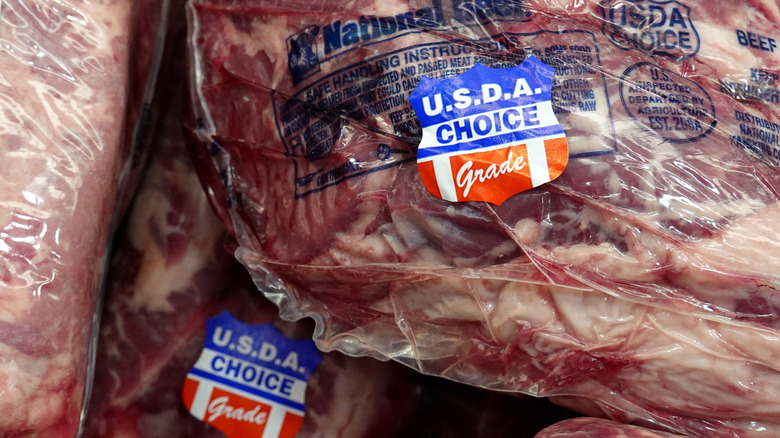
You might think prime rib is an elite cut because it has the word prime in its name. And this would be totally understandable, since Prime is the highest (and rarest and priciest) well-marbled grade of meat designated by the USDA. But be forewarned –- not all prime rib is Prime grade. "The word 'prime' in prime rib refers to the cut, [the rib primal], not the grade," Katie Flannery of Flannery Beef explained. Like other meat cuts, prime rib is also available in lower but more accessible grades, such as Select and Choice.
Like so much else in life, you get what you pay for -– higher grades will be easier to cook and more satisfying to eat. "Yes, Prime will have a higher price point, but think of it like buying insurance," Flannery said. "A higher quality piece of meat is more forgiving if you run into any issues on the cooking side of things. The better the piece of meat, the harder you have to work to screw it up." If the prime rib's grade isn't labeled on the package, either look for intricate marbling, a bright red color, or simply ask the butcher.
So if you're craving tender, juicy prime rib, don't be tempted to go the cheap route. "The Select grade will be too lean, and even if it's on sale, you won't enjoy it as prime rib," Melissa Cookston said. But if you can't resist the siren song of an affordable select prime rib, Cookston suggests you smoke it and slice it thinly for sandwiches.
Corn-fed and grass-fed meat are both good – but different
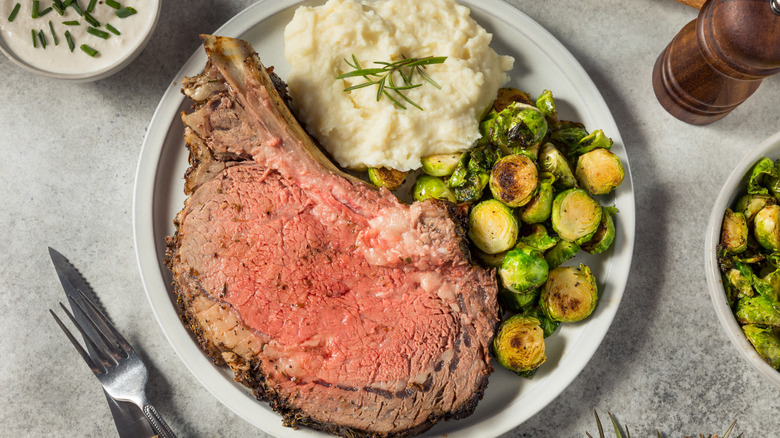
Like steak, prime rib is a dish for meat nerds. Both are typically cooked simply, so the flavor of the meat itself is the main attraction. So if you're feeding serious beef lovers, the first thing to look for when buying prime rib is whether or not it came from corn-fed or grass-fed animals. Both can yield delicious meat, but have distinct flavors and personalities –- and meat connoisseurs can taste the difference.
At Halls Chophouse, Adam Jakins serves cuts from both grass-fed and corn-feed beef — grass-fed is leaner, while corn-fed is fattier, with a layer of corn fat along with the marbling that all good beef has. "Corn fat and marbling are two different things," he explained. "Marbling is the fat that runs through the muscle that makes your steak delicious." In addition, corn-fed beef has a milder, sweeter flavor than grass-fed beef, which has more distinct mineral or gamy flavors, a product of the minerals in the grass eaten by the animals.
Beware of discoloration
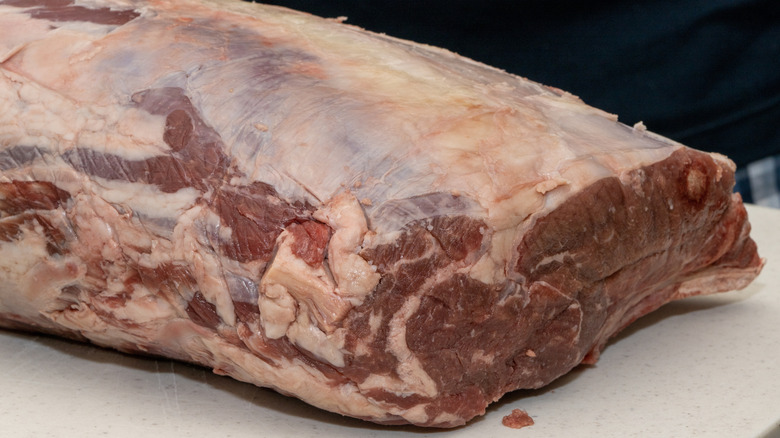
Looks can be deceiving when it comes to food. But when shopping for prime rib, it pays to look carefully before committing to a piece, since coloration can offer invaluable clues about the meat's quality. According to Melissa Cookston, the fat on a good piece of prime rib should be a creamy white, and the meat itself vibrantly colored. "If the meat is brown, turn it down," she said. "Look for a deep, rich red color with plenty of fat flecks through the eye." Adam Jakins agrees. "My biggest red flag when buying beef is discoloration," he said.
Katie Flannery explains that prime rib and other beef cuts have a range of acceptable coloration. "Color is a useful cue, but you have to know how to read it," she said. "Fresh beef gets its bright cherry-red color from a reaction between a protein called myoglobin and oxygen in the air. We call this blooming. When you pull that oxygen out, like in vacuum packaging, myoglobin converts to deoxymyoglobin and the meat goes purplish-red." Either shade is fine (once you open a sealed package of prime rib and expose the meat to air, the purplish-red will revert to bright red), but Flannery warns consumers to walk away from any beef that's grayish or feels tacky.
Know what part of the prime rib you're buying
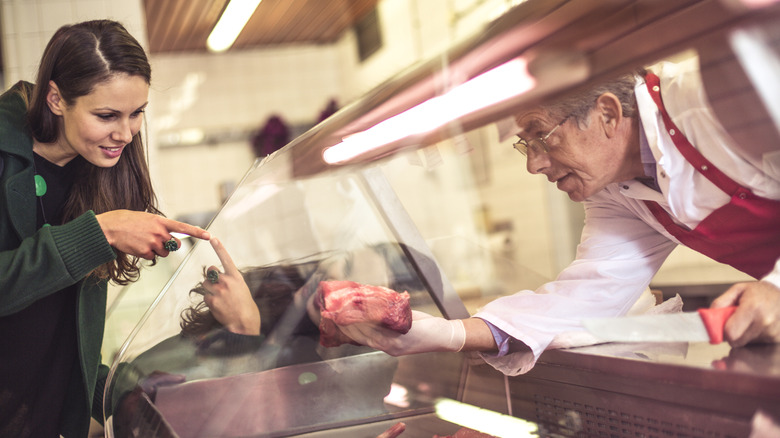
One of the biggest mistakes you can make with prime rib is not being selective while shopping. Not all prime rib looks or tastes alike -– even cuts from the same animal can have different textures and flavors. This is because the cut known as prime rib – the rib loin – comprises different types of muscle. "Prime rib, and ribeyes in general, are different in structure than most steaks because there can be many different experiences in one rib loin," Adam Jakins said.
This variation is due to the structure of the rib primal, the larger cut from which the prime rib comes. "The rib primal starts at the chuck, or neck end, of the animal, and runs toward the rump, where it meets the striploin (New York strip) primal," Katie Flannery said. "Because of that, the two ends of a prime rib look quite different from each other." They also taste different from each other – but both are flavorful and appealing in their own way. "For maximum tenderness, look for the loin end of the prime," Melissa Cookston said. "The chuck end is generally slightly richer-tasting and has a texture more similar to a New York strip."
Look for generous marbling
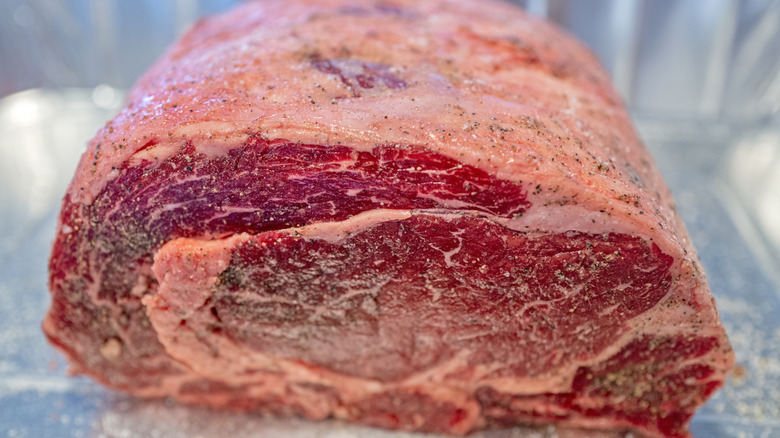
Ask prime-rib lovers what they enjoy most about the cut, and chances are they'll mention its richness and juiciness. Some of this comes from careful timing to ensure the meat doesn't dry out while cooking, but a defining factor of prime rib's quality is its marbling — that is, the small flecks of fat distributed throughout the meat. "When I'm choosing a prime rib, I always start with overall quality and marbling — this is non‑negotiable for me," Jon Wood said. "I want to see fine, evenly distributed fat throughout the muscle, because in my experience, that's what delivers real flavor and helps retain moisture during the cooking process."
According to Melissa Cookston, a thick fat cap can be an indicator of generous marbling within. "One trick when inspecting whole ribeye loins is to hold them by the ends and give them a shake," she said. "Those that shake more generally have a smaller fat cap on the outside, which can result in lower marbling. So get the ones that don't jiggle for better tenderness." A good fat cap is also advantageous if you plan to smoke your prime rib. "When smoking, I like having a bit more external fat to protect the meat during a longer, lower‑temperature cook," Wood said.
Handle prime rib with care after buying it
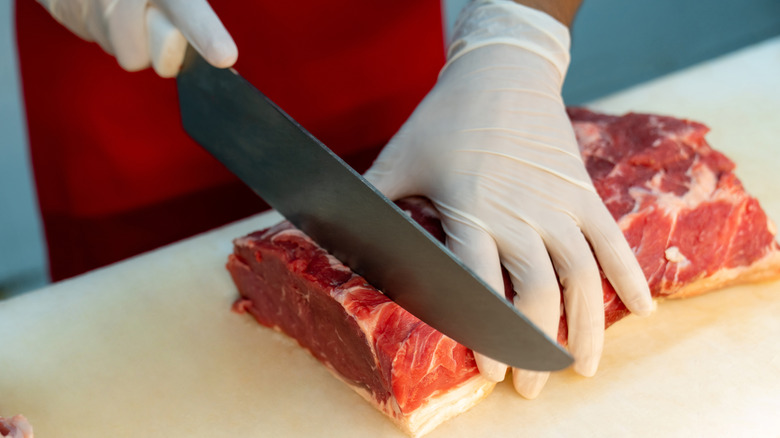
Once you've found and purchased the right piece of prime rib, your task is to keep it at its best until you're ready to cook it. "If you purchased a piece, store it in the refrigerator and cook it within three days to ensure it is fresh," Melissa Cookston said. "Alternatively, dry-age your own piece by opening it, placing it on a wire rack over a sheet pan, and storing it in the fridge for five to seven days."
Maricel Gentile likes an abbreviated dry-aging process. "Prime rib benefits from resting uncovered in the refrigerator overnight or even up to 48 hours," she said. "This dries the surface slightly and improves browning during cooking." If you do choose to dry-age your prime rib at home, check your fridge first. "Make sure your fridge is clean and nothing strongly aromatic is sitting nearby, because beef will absorb odors," Katie Flannery said. If you can't cook your prime rib within a few days of purchase, Flannery said you can freeze it –- just wrap it tightly in plastic, then in butcher paper or foil, and flash freeze it, if possible. "Slow freezing creates larger ice crystals that damage the muscle and affect the texture when you thaw it," she said.