

7 Craft Beers That Aren't Worth The Price, According To Experts
Once upon a time, beer was the drink of choice for American drinkers who were strapped for cash or wanted something mindlessly pleasant to bring to their next beach cookout or pool party. With few exceptions, if you ordered beer, what you got would be a fizzy, low-proof lager. This all changed with the craft beer revolution of the 1980s and 1990s, when small-scale brewers started to revive forgotten traditional brews and create new styles of their own. Today, the beer aisle at any supermarket will offer beers at a variety of price points with a huge range of flavors, from sweet to hoppy to sour.
Not all brands, however, are worth the price. While some premium brands earn their price tags by using high-quality ingredients and labor-intensive brewing and aging techniques, others slap higher prices on rather ordinary brews to boost their perceived prestige. Or their brewers aren't as skilled as their publicists. And unless you're a serious beer nerd or have friends who are, it can be hard to tell the difference. Luckily for you, we've found two such beer experts to share their insider tips on craft beers better left on the shelf: Bridget Fahey, owner and bartender at The Wander Bar, a New Hampshire-based mobile bar; and Ryan Hopay, special projects and beverage coordinator at Flanker Kitchen + Sporting Club in Salt Lake City.
New Belgium Fat Tire

Many beer lovers fondly remember New Belgium's Fat Tire as their gateway craft beer. It was originally created as a homebrew in the 1980s, inspired by the co-owners' recent biking trip through Belgium. The brew was a hit with the brewers' friends and fellow homebrewers, who encouraged them to produce the beer commercially. This flattering but seemingly dubious advice turned out to be sound: When Fat Tire launched in 1991, it won over fans with its distinctively malty, toasty flavor profile, which made it a novel and welcome change of pace from the light lagers most beer drinkers of the era expected. It was also a great beer with food, pairing well with hearty roasts and meaty braises.
But if you're a longtime fan of Fat Tire and suspect it's lost its mojo as of late, you're not imagining it. "In 2023, New Belgium changed their recipe for Fat Tire, much to the disappointment of those that enjoyed its malt-heavy taste," Bridget Fahey said. "This change was meant to suit the more 'modern' palate and resulted in what tastes like a largely different beer." The new recipe, Fahey said, is no longer a malt-forward traditional amber ale, but "contains much lighter notes with hints of floral and caramel." If you're new to Fat Tire, it might be fine on its own terms. For those who loved the original, however, it's a real loss.
Goose Island Beer Co.
Like growing businesses in many industries, craft breweries have been undergoing a wave of consolidation, as larger producers and distributors buy up beloved local and regional brands. This can be a win for beer lovers, since it can make favorite regional brews more easily available in more places. But heavy-handed corporate owners may also change recipes in the interest of cost or market trends, neutralizing the very qualities that made that brand special.
Among the brands that have seen a noticeable decline, Ryan Hopay says, is Chicago-founded Goose Island, which was purchased by Anheuser Busch/InBev in 2011. "Goose Island brand has fallen off when AB acquired the beer brand," he said. "They recently even closed their brew house in Chicago after 35 years of operation but will reopen in the future." This must have felt like a betrayal to Goose Island's longtime Chicago fans. Even worse for the brand's other fans, the beer itself has changed since the acquisition — and not for the better. In particular, some critics have noted that its famed IPA has lost much of its distinctively refreshing tropical fruit notes.
BrewDog
Smart beer lovers approach heavily hyped beers with caution. Most have learned from hard personal experience that breweries with the best ad campaigns and most social media buzz don't always produce the best beer. As a prime example, Ryan Hopay cites beers from BrewDog. Founded in Scotland in 2007 by a pair of self-described "punks," BrewDog leans hard into its rebel outsider image — all while expanding its breweries to the U.S. and Germany and opening over 100 branded locations around the world. It also has a penchant for high-drama novelty beers, including one with 55% ABV and beers brewed on planes and boats.
All this makes BrewDog the kind of brand curious beer fans want to follow. But according to Ryan Hopay, despite its aggressive marketing and image building, BrewDog offers "inconsistent quality across regions," "modest brewing innovation," and critically for frugal shoppers, "prices [that] don't always match execution." Lesser-known but superior alternatives Hopay recommends are Cloudwater (Manchester, UK), for its "cleaner, more expressive modern styles," and Verdant (Penryn, UK) for its "excellent hop handling."
The Alchemist Heady Topper
Even casual craft beer drinkers can see that India pale ales (IPAs) are everywhere – they're pretty much unavoidable anywhere there's a decent beer selection. Indeed, by some estimates, IPA variants, from hoppy West Coast IPAs to fruity New England versions and boozy double IPAs, comprise between 40 and 50 percent of all U.S. craft beer sales. And drinkers have plenty of options to choose from, many of which have become local favorites.
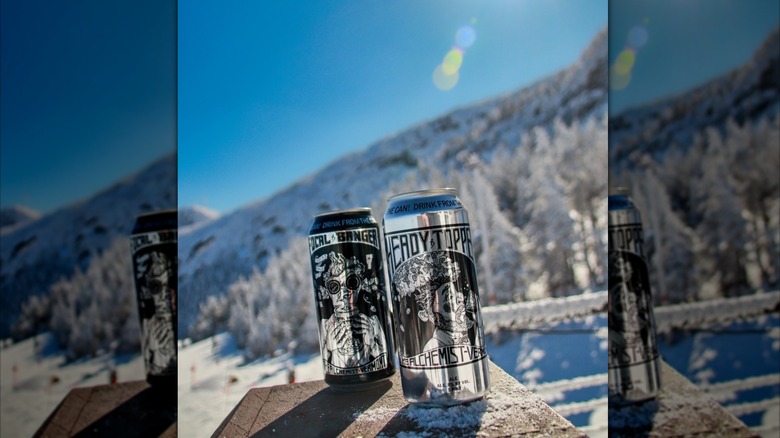
But not all IPAs are created equal. For instance, The Alchemist's Heady Topper is a New England favorite — an imperial IPA with an ABV of 8% that we named one of the best beers in America back in 2018. While it's a go-to choice for some hop lovers, according to Bridget Fahey, it's pricy for the quality it offers, and serious hopheads have better, more affordable options. "While I hate to say it as a New Englander myself, I do find The Alchemist's Heady Topper to be a bit overpriced with quality that isn't overwhelmingly new. If you're searching for a double IPA that isn't quite as pricey with no missed quality, I highly recommend the Four Fours Double IPA," she said. This highly-rated beer is brewed by Equilibrium Brewery in Middletown, New York.
Ballast Point Brewing
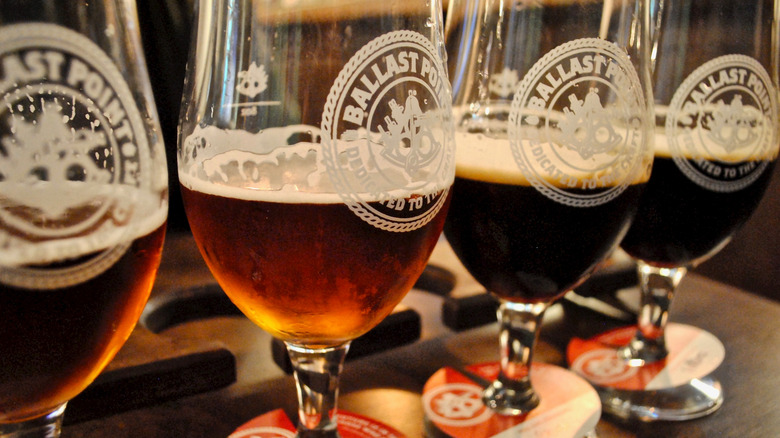
Founded in San Diego in 1996, Ballast Point later won over fans with its Sculpin line of punchy IPAs. Offered in fruity flavors ranging from grapefruit (considered a classic in some circles) to habanero (definitely not for everyone), it's credited by some for whetting the public's appetite for today's fruit-accented and hazy IPAs. Its popularity proved to be both a blessing and a curse. Obviously, every brewery loves to be loved. But Ballast Point's rising profile made it an attractive target for corporate acquisition, which led to a tumultuous period in which the brand changed hands multiple times.
In 2015, Ballast Point was acquired by Constellation Brands, and shortly thereafter, the brewery's founder and several other senior executives left the company. In 2019, Constellation sold the brand — at a significant loss — to the Chicago brewery Kings and Convicts. All of this resulted in changes to the brewery's offerings and quality, which some drinkers feel have deteriorated over time. Perhaps Ballast Point realized it overshot its mark, since, according to Ryan Hopay, it seems to be undergoing a retrenchment. "Ballast Point is very well known in San Diego, where it is brewed," he said. "[It] feels like they took a step back in secondary markets due to local breweries making craft beer."
Victory Sour Monkey
Sour beers aren't for everyone, and despite their growing popularity, they're still a bit of an acquired taste. And they have a long history: in the days before germ theory and sanitation were well understood, almost all beers picked up sour flavors from airborne yeasts and bacteria. Today, some traditional Belgian breweries intentionally produce their sours the original way, by leaving unfermented beer exposed to open air to pick up these organisms and the flavors they contribute.
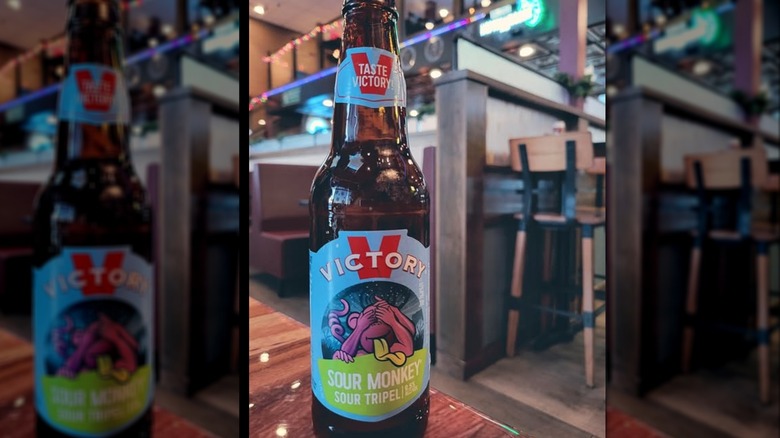
American craft brewers have also embraced sour beers, but use carefully nurtured cultures for sourness rather than taking their chances on nature. Among the more prominent varieties is Victory's Sour Monkey. This super-popular sour packs a punch — with an ABV of 9.5%, it's not exactly a lawn-mowing beer. And it's fine for what it is. But according to Bridget Fahey, its ubiquity leads drinkers to overlook more interesting options. "Fans of sour beer are often shy to branch off and try new sours, which results in missing out on some great smaller brands," she said. One she recommends is The Bronx Brewery City Island Sour from New York. This alternative not only boasts a balanced, refreshing flavor even non-sour-lovers can get behind, but with an ABV of 6%, it won't knock you out after your first pint.
Allagash Curieux
Brewers have aged beer in barrels for centuries – Belgium's famed lambics, for instance, have traditionally been aged in barrels. And in the 1990s, American craft brewers discovered that aging rich imperial stouts and other strong beer varieties in used bourbon barrels lends the beer a distinct bourbon flavor and aroma, thus creating seriously tasty beers. The catch is these beers aren't easy or cheap to make, and creating a harmonious balance between the flavors and aromas of the beer and bourbon requires finesse.
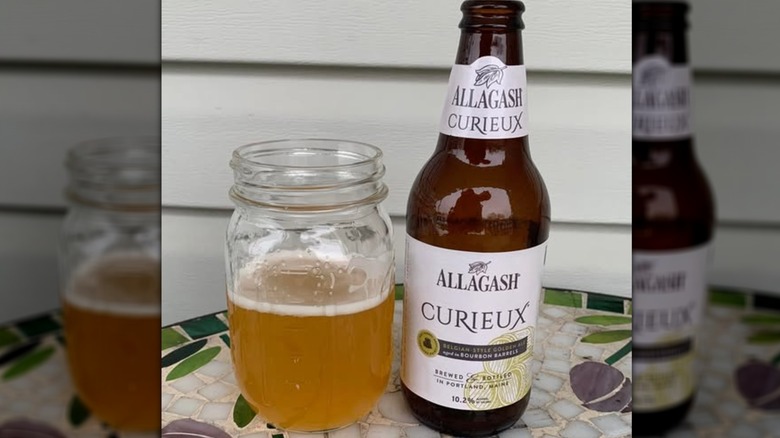
An interesting example of such a beer is Allagash's Curieux. Unlike most bourbon-barrel-aged beers, it's a Belgian tripel, rather than a more common chocolaty imperial stout. And with its 10.2% ABV, it's meant to be a celebration beer to be sipped and shared rather than glugged. Because of its expensive ingredients and painstaking production process (including aging in just-emptied bourbon barrels and bottle conditioning), it comes with a hefty price tag. But for all its potential, Ryan Hopay feels it misses the mark. "The bourbon barrel character (vanilla, oak, light coconut) often overwhelms the tripel base rather than integrating with it," he said.
Any brand that's mysteriously unobtainable or suddenly everywhere
Our experts also advised consumers to look out for general red flags when exploring craft beer brands. For instance, if you've been to multiple stores in search of a buzzy new brew that's almost impossible to find, stop. While there could be legitimate reasons for shortages, according to Bridget Fahey, breweries sometimes create artificial scarcity to raise prices and perceived prestige.
Conversely, Ryan Hopay warns beer lovers to be wary of niche brands that suddenly go national — growing pains can lead to inconsistent flavors due to uneven quality control, shipping, and storage glitches. If you notice the same beer tastes different from batch to batch or find off-flavors, this is a sign of quality control issues. Beers with no canned-on or bottled-on dates are another red flag. Contrary to popular belief, most beer (with the exception of some high-proof varieties) should be consumed fresh. And as an industry professional, Hopay distrusts breweries that blame old or off beers on distributors or retailers instead of owning the problem.