

Don't Freeze Champagne This New Year's Eve. Here's Why

New Year's Eve tends to turn even the most organized hosts into last-minute chillers, which is how so many bottles of bubbly end up wedged between frozen peas. It feels like a convenient fix, but when drinking champagne, this is the biggest mistake to steer clear of. The freezer might seem like the fastest way to get a bottle cold, yet it does more than overchill the wine — it starts messing with the very qualities that make good champagne worth opening in the first place.
Champagne freezes more easily than most people think. Because it's a mix of water, alcohol, sugar, and dissolved carbon dioxide, it hits its freezing point somewhere around 15–20°F — a range your average home freezer has no trouble reaching. Once it gets that cold, the water content turns solid first and pushes the rest of the liquid upward. That alone can throw off the wine's balance, even before you spot any frosty buildup.
The bigger concern is pressure. A champagne bottle sits under roughly 90 psi — a level of internal pressure you'd never guess from looking at the bottle — and freezing only tightens the squeeze. Even if the bottle survives without cracking or losing its cork, the process can take the shine off the wine: Softer bubbles, a less lively texture, and aromas that don't lift the same way. And it's likely one of those things you didn't know about champagne, because the freezer does far more harm than most celebratory shortcuts suggest.
What goes wrong when champagne freezes
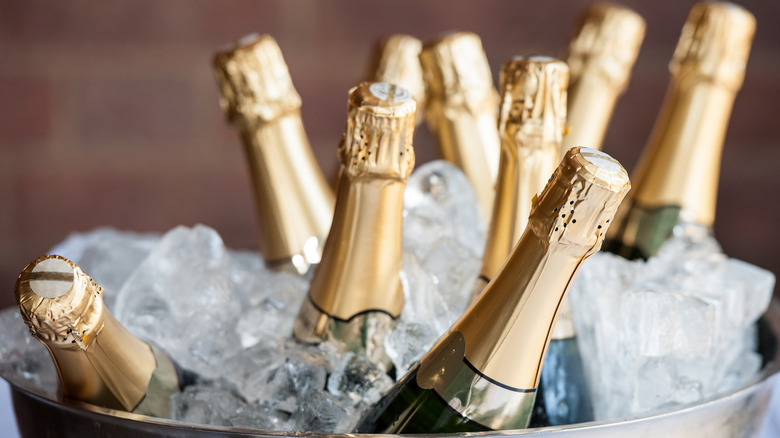
When champagne actually freezes, it loses more than just its sparkle. The cold flattens the wine's personality, muting the aromas and softening the layers of flavor that are supposed to hit you the moment the cork pops. Even the bubbles change: Freezing disrupts the fine, consistent effervescence that gives champagne its texture, leaving behind fizz that feels uneven or strangely weak once the bottle thaws.
And then there's the structure of the wine itself. As the water content freezes first, the rest of the liquid shifts around inside the bottle, forcing the carbon dioxide toward the neck and throwing off the balance that winemakers work so hard to build. That's why thawed champagne often tastes dull or slushy instead of crisp. It's also the reason you wouldn't want to risk damaging high-cost champagnes — the freezer can undo the nuance you paid for long before the cork ever moves.
If you actually need to chill a bottle quickly, there are better ways to do it. A bowl of ice mixed with water is still the quickest fix — the cold wraps around the bottle instead of just brushing the surface, so it cools evenly without stressing anything inside. If you're short on ice, wrapping the bottle in a wet towel before placing it in the freezer for a brief, monitored chill works much better than freezing alone. And when you only need a glass or two, cold, pre-chilled stemware or reusable cooling wands do the job without watering anything down. However you handle it, when it's done properly, the bottle stays cold, the bubbles stay lively, and nothing gets sacrificed along the way.