

Julia Child Refused To Eat This Controversial Herb
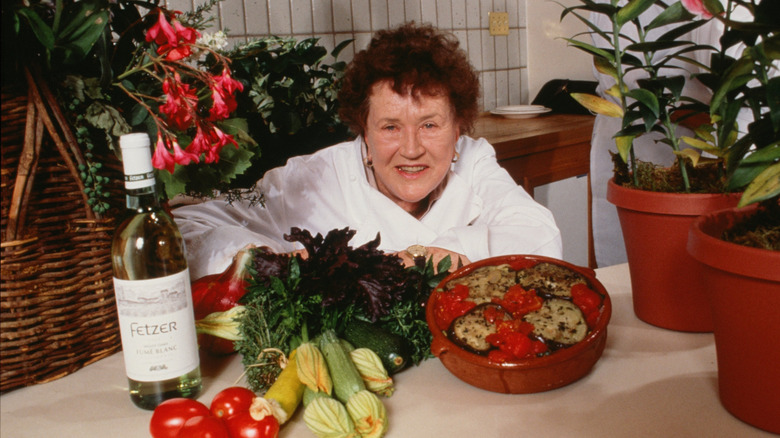
Julia Child's favorite foods ran the gamut from cheap and cheerful Goldfish crackers to fancy oysters on the half shell. Best known for introducing home cooks to the pleasures of simple French cooking, the bestselling cookbook author and beloved media personality was a graduate of the famous Parisian cooking school Le Cordon Bleu, which made Child a passionate advocate for using fresh ingredients, like vegetables and lush herbs. However, there was one controversial herb that she refused to eat: cilantro.
When asked if there was any food she hated, during a 2002 episode of "Larry King Live," the popular cookery show presenter replied, "I don't like cilantro," (via CNN). In fact, if she were to find either cilantro or arugula (a leafy green with a distinctive bitterness and bite) in a meal that was served to her, Child professed that she "would pick it out [...] and throw it on the floor," because the celebrated chef found it to have a "dead taste."
A common ingredient in South Asian, Middle Eastern, and Mexican cuisine, cilantro (also known as coriander) lends dishes a fresh aroma and an almost-citrusy flavor. It's often added to Indian curries and Bajan tacos at the final moment to provide vibrancy and freshness but cilantro can also be whizzed into spicy chutneys or scattered over salads. Despite all of these incredible culinary uses, this herb is a polarizing ingredient due to an interesting genetic quirk that gives it an unusual taste on some palates.
Why does coriander taste soapy to some people?

Some people absolutely detest cilantro, describing it as having an unpleasant soapy taste. This phenomenon is attributed to a variance in their olfactory receptor genes, which make certain people more sensitive to perceiving organic compounds known as aldehydes, which are present in the pungent green herb. Instead of finding cilantro to be earthy, herbaceous, and aromatic, they describe it as completely revolting. Perhaps Julia Child was a victim of this genetic quirk too?
If your recipe calls for coriander but you don't like the taste either, consider subbing it for parsley. The difference between cilantro and parsley is that parsley has pointier leaves and a milder flavor. Though it doesn't have the distinctive aroma of cilantro, it can still be used as a striking garnish. Parsley is often utilized in Middle Eastern tabbouleh due to its slightly peppery character. Adding a spritz of lemon, meanwhile, is a great trick that mimics some of the citrusy notes present in fresh cilantro.
If you are a fan, you can use it freely to inject color and character into your favorite dishes. Just remember to store your verdant bunch of herbs like a bouquet of flowers by placing cilantro in a tall container of water, which helps the leaves and stems stay fresher for longer.