

For The Most Natural Peanut Butter, Look For These 2 Ingredients
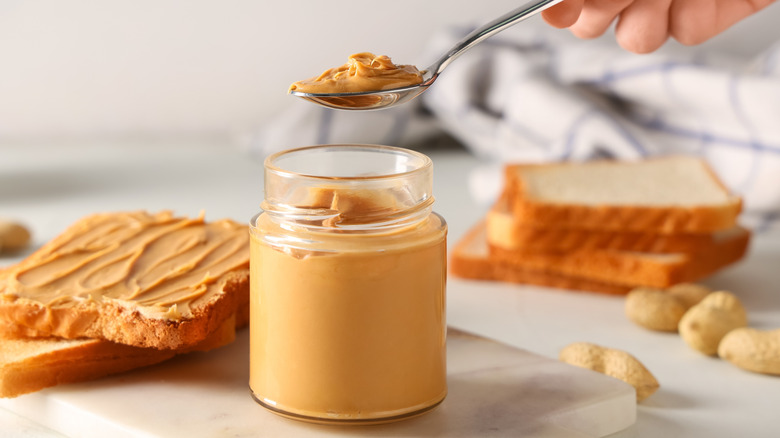
Regardless of whether it's a sweet dish or a savory one, peanut butter is a versatile ingredient that can come in handy in a myriad of situations in the kitchen. The pantry staple is widely beloved for both its nutty taste and many nutritional benefits — especially when it comes to improving heart health. However, many have found that some of the most popular brands of store-bought peanut butters have unnecessary additives that get in the way of these upsides. In fact, peanut butter only truly requires two ingredients to be created, with any additional components being used for preservation reasons more than anything.
The two ingredients in question are none other than peanuts and salt, both of which are able to come together to create some delicious, natural peanut butter for your beautifully crafted PB&J sandwiches all on their own. While many store-bought peanut butters include oils and sugar in their ingredients list, you can make it at home by simply roasting, skinning, salting, and blending raw peanuts into a soft, buttery texture.
What's the difference between natural peanut butter brands and conventional ones?

One great thing about the store-bought product is that it legally isn't allowed to be made up of any less than 90% peanuts if it's called peanut butter, meaning that the number of additives needs to be kept to a relative minimum. Nevertheless, the inclusion of additional oils and sugars is typically made to prevent the peanut butter from separating — a process that creates a thin, oily form on top and a thick, solidified butter on the bottom. In this case, the peanut butter must be stirred continuously in order to combine the two forms back together and enjoy the ingredient at its optimal consistency.
This ultimately creates the biggest difference between conventional peanut butters and natural ones. While the former results in a smooth butter that can be used in recipes that require a consistent texture, the latter sacrifices that smoothness in favor of being a healthier, less processed product overall. Both have their own ideal recipes and uses; conventional peanut butter is great for sweet, dessert recipes, while natural is better for savory soups and stews, for example, but it often comes down to preference regarding which one you should purchase for day-to-day use.