

The Absolute Best Ways To Upgrade Roasted Brussels Sprouts
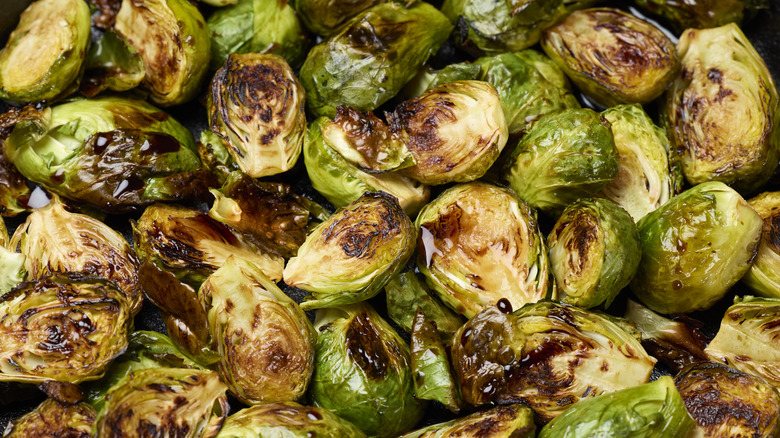
Anyone who's tried roasted Brussels sprouts will know how much the cooking method can change them. In no time, these veggies transform from bitter to beautifully browned, with their nutty and sweet notes unlocked by the heat of your oven. However, while oven-roasted Brussels sprouts can be pretty good in their basic form, a lot of us might miss the boat by only doing the bare minimum in terms of preparation. Many home cooks who roast Brussels sprouts will simply put oil, salt, and pepper on them and call it a day.
And so, you could be missing out on a world of flavor. Like cabbage and broccoli, Brussels sprouts are surprisingly versatile when roasted, and the flavor notes that come to the forefront when they're cooked in dry heat allow them to work with a host of different taste profiles. By adding ingredients with spicy, sweet, sour, umami, or nutty flavors, you can create way more complexity for your sprouts. Including a variety of textures can also give Brussels sprouts way more dynamism and appeal, and will turn an already tasty side dish into something everyone's talking about. The best part? A lot of these upgrades take no more than a minute or two.
Throw in some chopped jalapeños and honey for sweet and spicy flavors

When upgrading roasted Brussels sprouts, it's useful to think both in terms of contrast and synchronicity, and consider how you can add different notes without creating a clash. Using jalapeños and honey will allow you to do just that. Chopped jalapeños will give your sprouts a pop of heat that works against their inherent mellowness, but also provide a grassy note that pairs well with the cruciferous vegetable's flavor profile. If you opt for pickled jalapeños, that grassiness will be replaced by a sourness, which will again contrast the sprouts, but make them way more lively. The honey, meanwhile, will lift the caramelized sweetness that's unlocked when the sprouts are roasted.
One of the easiest ways to add these ingredients to your Brussels sprouts is by making a jalapeño honey. While the sprouts are cooking, mix the honey, jalapeños, and any other ingredients you'd like (such as garlic or soy sauce), and then drizzle the mixture over them once they're done. Alternatively, you can roast your sprouts in the honey, which will help them caramelize more, and then stir through the jalapeños at the end. Bear in mind, though, that if you're using fresh jalapeños, it can be useful to cook them separately and add them at the end, instead of dicing and roasting them with the sprouts. The ingredients will cook at different rates, and your chilis may burn.
Top your Brussels sprouts with peanut sauce

When Brussels sprouts are roasted just right, they develop a nutty flavor, which has a surprising amount of depth, considering their tiny size. If you want to bring that nuttiness to the forefront while also introducing loads of other flavor notes, then drizzling peanut sauce over them is the way to go. Peanuts bring a bolder nuttiness to the table, which doesn't overshadow the flavors in the sprouts, but instead lifts them. The additional ingredients in a classic peanut sauce, like soy sauce, lime juice, garlic, and maple syrup, also provide further dynamism.
However, you don't have to stick to those flavors. One of the best things about whipping up a quick peanut sauce to use with Brussels sprouts is that it can be whatever you want it to be. If you like your peanut sauce (and your sprouts) spicier, stir in some sriracha. Alternatively, if you prefer a peanut sauce that's umami-rich and slightly funky, add a few splashes of fish sauce. If you want sauce with a bit more texture, use chunky peanut butter and toss in some coconut flakes. The world's your oyster here, folks.
Add a balsamic glaze
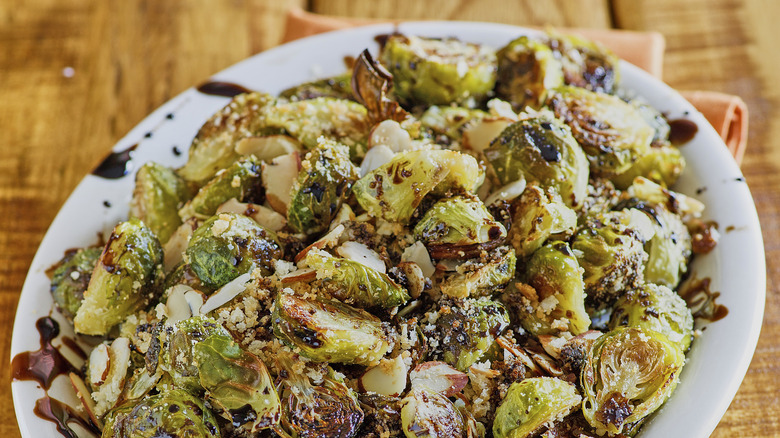
Balsamic vinegar and roasted Brussels sprouts are a match made in heaven, and once you try them together, you'll understand why. Balsamic vinegar gives Brussels sprouts a combination of fruitiness and sharp acidity, which makes the vegetable so much more exciting and multifaceted, and which highlights its nutty, slightly bitter flavor. However, one key problem with using just balsamic vinegar is that its sourness can quickly overwhelm your Brussels sprouts, and the sweeter flavors in them can be completely knocked out.
That's why we prefer using balsamic glaze, which brings all of the nuance of balsamic vinegar to the table, but also provides a sugary boost. This gives your sprouts a sweet-sour effect and real intensity, without you really having to do anything at all. Simply drizzle on your balsamic glaze when they come out of the oven, making sure to do so when they're still hot, so they absorb the flavors more effectively. We'd avoid cooking them in the glaze itself, as it can unleash a pretty fierce acidic smell that can stink out your kitchen. If you want to contrast the sweetness with a pop of umami, then scattering over some grated parmesan before serving your sprouts can make them even tastier.
Stir through some gochujang
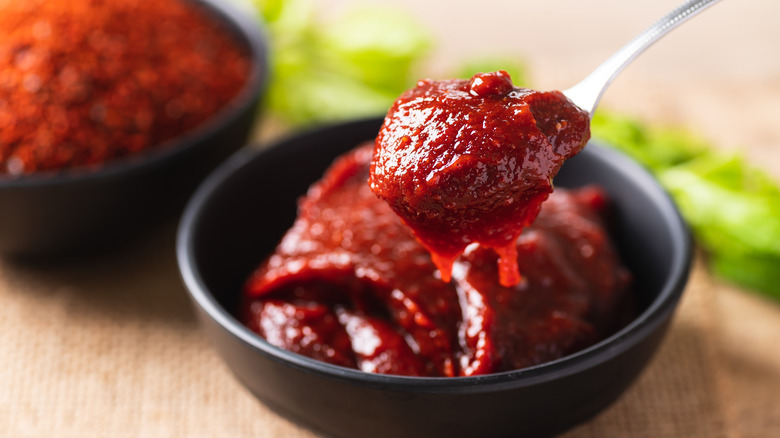
With just one ingredient, you can transform your Brussels sprouts into the star of the show. Gochujang is a Korean chili paste made with fermented soybeans, soy sauce, and copious amounts of red chili flakes. It's sweet, savory, and has a serious spiciness to it that creates intensity in any dish it's included in. When it's paired with Brussels sprouts, however, something really special happens. The nuttiness that roasted Brussels sprouts develop acts as an undertone for the gochujang's fiery flavors, while the spice paste itself mellows out as it's cooked, creating a harmony between the two and a flavor that's incredibly moreish. Gochujang's sticky texture also caramelizes with the sprouts, and when cooked, it gives them an almost tacky bite.
Because gochujang is so flavorful already, you can use it straight out of the tub without any additions. If you do this, though, we'd recommend thinning it out slightly with some water, as it can be super thick and hard to distribute evenly. If you want to amp things up even further, add in a drizzle of honey and rice wine vinegar. The honey takes the edge off the spice, while the vinegar adds acidity, balancing out the flavors.
Toss through sliced almonds
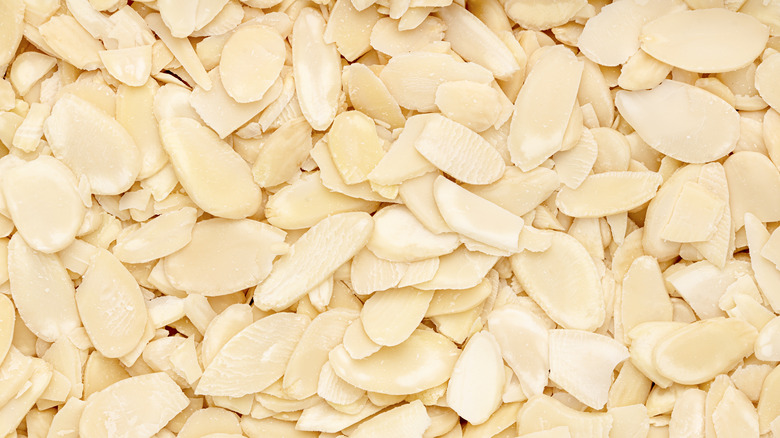
Although Brussels sprouts can get crispy when they're roasted, it's a bit of a balancing act to get them just right. If you cook them for too long in pursuit of crunchiness, they can burn and turn unbelievably bitter; overcrowd the pan or cook them at too low a temperature, and they'll become squidgy. While you can spend your whole life trying to perfect their crunch, we prefer to introduce it elsewhere, to create new textures and flavors. That's why we love using sliced almonds.
Sliced almonds have a gentle crispiness that livens up your sprouts without being too intrusive. They help to boost the sprouts' earthy flavors, while giving a nutty, almost fruity taste of their own. They also pair terrifically with ingredients like parmesan and lemon juice. You can use sliced almonds raw, or you can toast them before throwing them in to deepen their flavor even more. Try roasting them in a mixture of paprika, maple syrup, and soy sauce, to make them into little flavor nuggets that your guests will be fighting over.
Pile them onto whipped ricotta
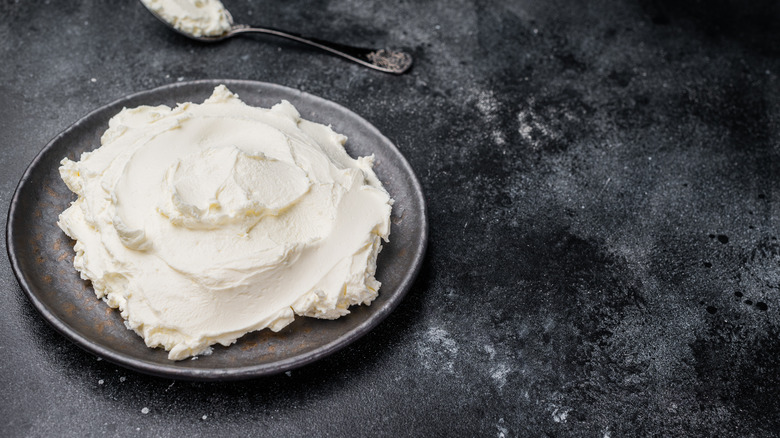
One flavor element that often gets forgotten about when it comes to vegetables, and particularly Brussels sprouts, is creaminess. Although it's not uncommon to pair cheese with Brussels sprouts, that often comes in the form of parmesan or pecorino — which gives an intense saltiness and an umami — but not necessarily a smoothness. Opting to pair roasted Brussels sprouts with ricotta, however, opens up a whole new territory. Ricotta's mild, milky flavor pairs excellently with the charred, slightly smoky flavor of roasted sprouts, and when topped with an acidic element, the whole dish sings.
You can use ricotta straight out of the tub, but we prefer to whip ricotta until it's light and airy. Introducing air into this cheese stops it from being too dense and smothering the sprouts. If you want your dish to be a communal experience, spread the ricotta onto a big plate, and then pile the sprouts on top, before placing it in the middle of your table with a big old serving spoon on the side. On the other hand, you can also create individual ricotta sprout toasts, placing the ingredients onto slices of sourdough bread, which makes an awesome appetizer. Whichever way you choose, don't forget about toppings. Adding balsamic glaze or lemon juice and a scattering of chopped nuts makes this dish a real event.
Sprinkle on some garam masala
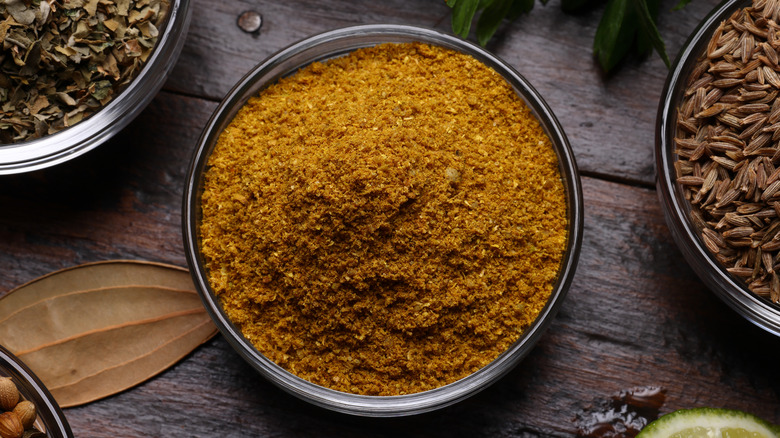
One of the best ways to make roasted Brussels sprouts more interesting is with spices — but finding the right balance can be tricky. With one particularly enthusiastic flick of the wrist, you can add too much ground coriander or chili powder, and make your sprouts overly floral or way too hot. Opting for garam masala helps you avoid this happening, and keeps things comforting. Its name, which roughly translates to "warming spice mix," is a clue to its intensity: Garam masala is typically fragrant and complex without being excessively fiery. Its primary ingredients, which include cinnamon, cardamom, cloves, black pepper, cumin, and nutmeg, all pair well with the earthiness of roasted Brussels sprouts.
Store-bought garam masala may be made with pre-roasted spices, or it may need cooking. If you can't tell the difference by smell alone or from the packaging, it's best to err on the safe side and cook it with your sprouts, so that you don't end up with a mouthful of raw spice. All you need to do is toss your sprouts with the garam masala, add any other ingredients you like (for a touch of sweetness, try using mango chutney), and then roast them all together until the veggies are cooked. If you don't have any garam masala, you can also use regular curry powder.
Add fish sauce
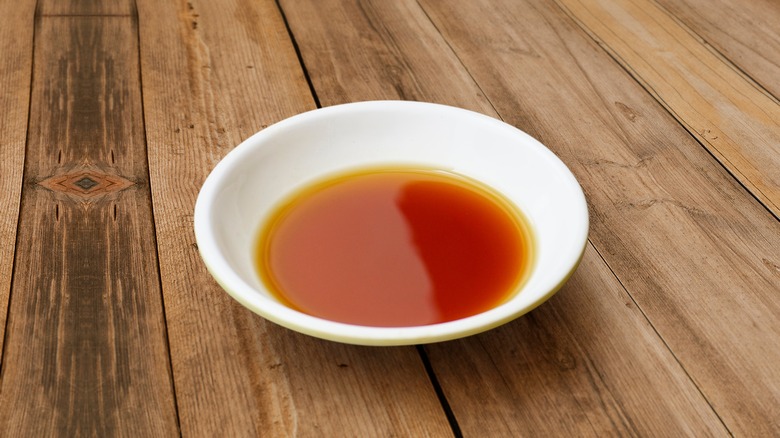
If you want to add an immediate punch to roasted Brussels sprouts, a little fish sauce will do the trick. Fish sauce gives Brussels sprouts a serious boost of umami and a sharp saltiness that wakes them up. Its inherent funkiness also pairs seamlessly with sprouts' nutty tones and slight bitterness, giving the vegetable new layers of flavor. That fishy note also cooks off as the sprouts roast, so all you're left with is real depth and a lot of impact. It's an easy win.
Having said this, you probably won't want to use fish sauce on its own. This ingredient can be overwhelming, and it's easy to tip the balance and turn your sprouts into a salty, funky mess. Its salinity and savoriness needs sweetness to level things out, so try mixing it with some maple syrup or a bit of honey. Adding an allium note from garlic, shallots, or a little chopped onion can also create more dynamism. If you prefer your fish sauce to have more presence, instead of adding it to your sprouts before roasting them, make a separate condiment using the sauce, your sweetener of choice, and shallots or garlic. Simmer them together for a couple of minutes, and then drizzle the mixture over your sprouts.
Stir in Dijon mustard

Mustard is a great addition to any cruciferous vegetables, and Brussels sprouts are no exception. Dijon mustard gives Brussels sprouts a briny depth, bolsters their earthiness, and also gives the veggie a sourness and gentle heat. When cooked, its intensity is slightly pulled back, and it loses that overwhelming raw flavor that it can sometimes have when used in salad dressings or sauces. It's also a versatile ingredient, and can be mixed with spices like paprika to give it more heat and smokiness, or grassier additions like parsley, cilantro, or onion powder.
In our opinion, all of those options pale in comparison to the MVP: Honey. There's a reason why honey mustard is such a classic combination, with the sour heat of mustard being both tamed and elevated by the floral sweetener. When the two are mixed with Brussels sprouts, they elevate the vegetable's caramelized flavors and balance out any bitterness that may have developed from the roasting process. Don't have honey? Try using maple syrup to make maple-dijon Brussels sprouts.
When in doubt, add bacon
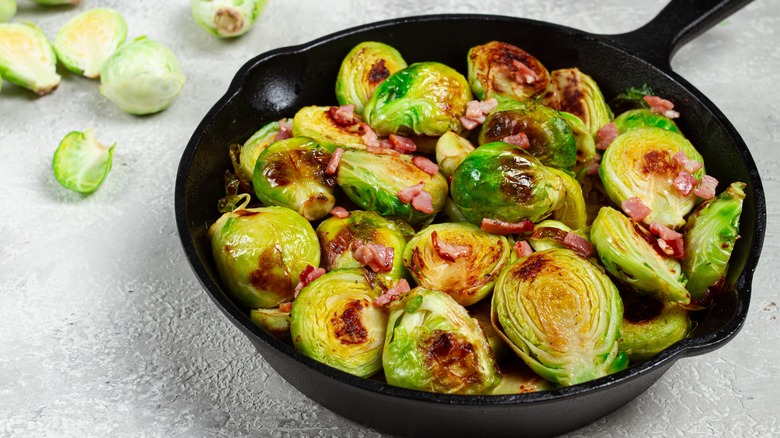
The old saying, "Bacon makes everything better" really has truth to it. It's definitely the case when it comes to Brussels sprouts. The mild, nutty, slightly sweet flavors that develop as Brussels sprouts roast are turbo-charged when you add bacon into the mix. The bacon amps up the smoky taste of the sprouts, and also gives them a salty, umami, rich flavor of its own. It's a match made in heaven.
To roast Brussels sprouts with bacon, all you have to do is mix the two with some oil and then put them on a baking sheet. It's best to use thicker bacon pieces so that they don't overcook as the sprouts brown. You can also opt for pancetta, which will retain its bite while generating a lovely crispiness. Oh, and if you're following a plant-based diet, you don't have to miss out on the fun. You can whip up a vegan bacon using crumbled tofu pieces mixed with tamari, tomato purée, liquid smoke, nutritional yeast, garlic powder, and smoked paprika. Roast the pieces in olive oil for around 10 minutes before adding your sprouts, and cook until everything's golden and deeply flavorful.