

The Affordable Way To Make Fresh Pasta Without Fancy Equipment
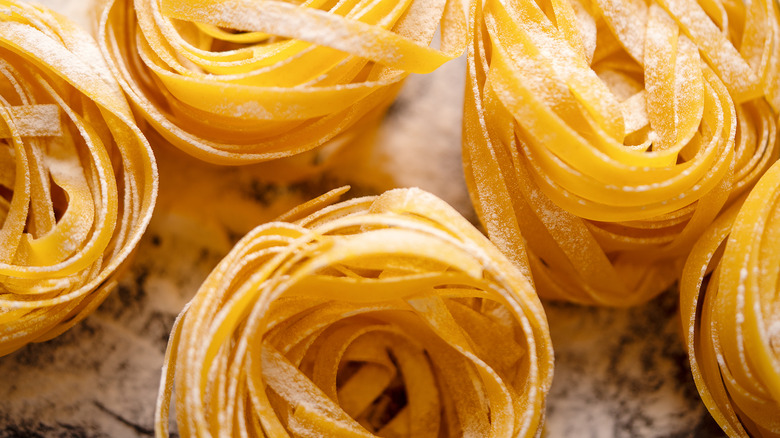
Making pasta transports your imagination back a few generations and results in an unforgettable dinner, but the equipment needed for the job can be a bit pricey. Fancy pasta makers can cost anywhere from $30 to $300, and expensive equipment doesn't necessarily mean you'll save on time or effort. Instead of sorting through the dozens of mixer attachments and gadgets online or in your kitchen drawer, make fresh pasta in a more affordable way and just use your hands.
You can create any of the usual pasta shapes with your fingers and palms, mixing all the ingredients you need right there on the cutting board until it forms a dough, and it doesn't take that much longer than it would if you were to use a machine. After you've made fresh pasta dough on the cutting board, wrap it in plastic or cover it with a damp towel and let it rest for around 30 minutes. Roll it out into a long, thin sheet and then cut it into whatever shapes you want. After that, you'll continue with the process, drying the fresh noodles a bit and then cooking them up with whatever sauce you desire (we suggest a lighter one to make your fresh pasta really shine).
Choosing the right ingredients and technique will make or break your pasta

When homemade pasta goes wrong, it can get tough, tasteless, sticky, and uneven; a tragedy often the result of over-kneading, making your dough too dry, or not letting your dough rest long enough. Kneading time and resting time are all dependent on the environmental conditions in your kitchen and the type of flour you're using. In general, kneading time should be around 10 minutes, and resting time should be 30-60 minutes. What to do after you've cut your pasta is, however, up for debate. Some say you should let your pasta dry for at least 30 minutes before cooking. Other pasta makers say you shouldn't worry about letting your pasta dry before turning it into dinner.
From angel hair to egg noodles, every type of pasta uses its own ratio of wet and dry ingredients. Even though you can technically shape the dough into whatever form you want, sticking to the recipe of your chosen style will get the best result. Regardless of the pasta style you're making, there are a few tricks to choosing ingredients that will help you make that perfect batch of pasta by hand. The flour you choose will make a difference, with finer types being best for a smooth pasta texture and coarser flour for a more rustic noodle. Additionally, use the right number of high-quality eggs for a rich and satisfying flavor. Opt for ones that are pasture-raised and organic, hormone-free, and fresh.