

The Simple 'Cake' That Originated In The Middle Ages (The Texture Is Questionable)
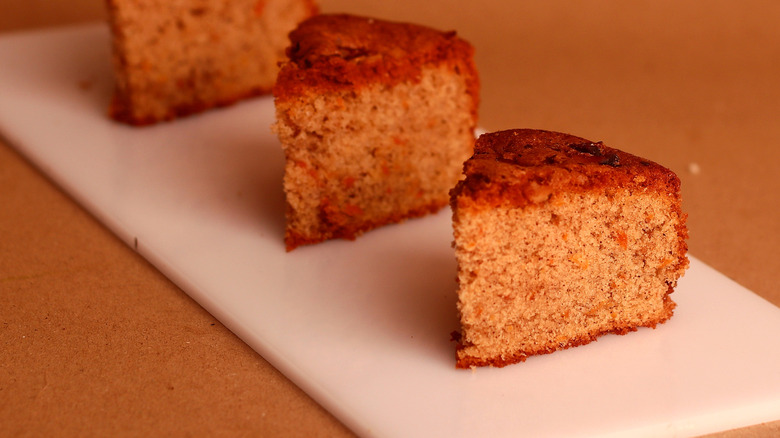
Cake hasn't always been cake. Or, not as we know it. The word originally appeared in English back in the 1390s. As this was a time of Danish influence and non-standardized spelling, it was often seen as "kaak." At this point, any kind of cooked dough counted. In fact, the very first iterations were legume-based, so as honey cakes were developed, they were an immediate improvement. At least they were flour-based, although the lack of leavening agents means the texture was more like a cookie. We know this because we still have some, like an overly simple European offering that calls for fine flour, honey, oil, and milk. That's it.
Honey cakes were popular in some form within the Roman Empire and Ancient Egypt, but they didn't make it to Germany and France until the late 11th or early 12th centuries (which is when our recipe was written down). It's likely that Arab peoples from the Near East brought some variation of honey cake to Spain and Sicily, and the culinary tradition spread to Italy. There, they made the treat with breadcrumbs, like the filling of a modern treacle tart, but with honey in place of golden syrup. Italian Jews then brought the dish west. The simple dessert soon evolved into something more spiced, and often laced with dried fruit. This paved the way for gingerbread and other modern cakes, too. There might be no cupcake towers or musing over the flavor of red velvet if we hadn't gone through the honey cake phase. We did have to wait until the 17th century for cake to have icing, though, which must have been painful.
Making ancient honey cake, for a taste of the Middle Ages
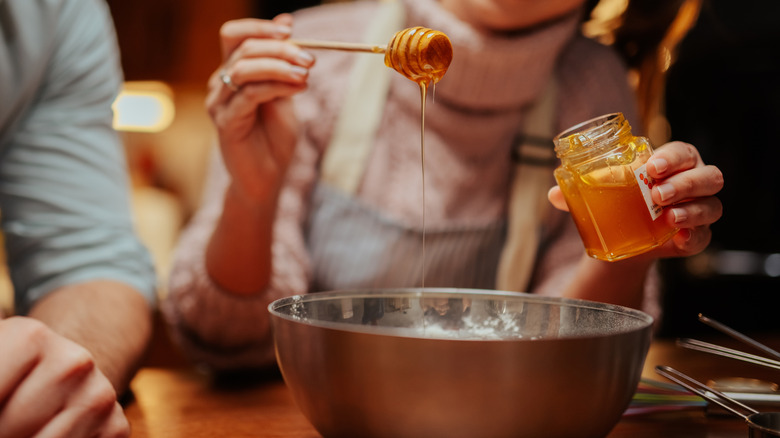
Despite the recipe being vague, you can recreate a honey cake at home. Yes, it's more like making a scone (that's a U.S. scone, not a U.K. scone, they are different), but it represents an important culinary turning point. If you want to pay homage to baking history, or just fancy a challenge, mix cake flour, honey, a flavorless oil, and milk (or a nondairy milk). The dough should come together into a ball, but it will still be a little sticky. It's not a wet, pourable cake batter. You can roll it out, or just spread it into a cake tin or pie tin using floured hands or a spatula. Remember to use oil or butter and parchment paper, which you can keep flat with this foolproof method. You'll need to push the dough out to perfectly fit your tin, and it's liable to stick. Set the oven to 350F, and bake for about 40 minutes. This isn't a recipe that has been repeatedly practiced in modern test kitchens, so the timing isn't exact!
As it's not super sweet and tastes mostly of honey, this cake is good with a cup of coffee or tea, just like semi-sweet loafs. It would also pair well with cheese or fruit. If you aren't sure about getting Medieval in the kitchen, why not try a more modern take on honey cake. As it's eaten for Rosh Hashanah, the dessert remains popular in much of the world.