
Stop Buying Imitation Maple Syrup From Big Brands: How To Make Sure It's Real
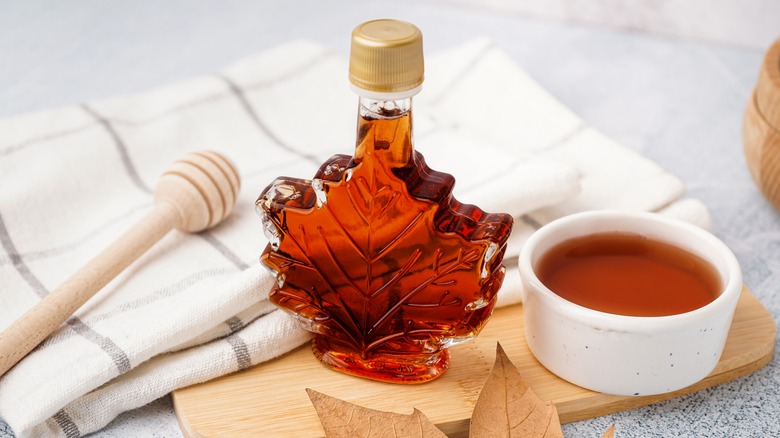
Making maple syrup is an intricate art — and one that is expensive and labor cost-intensive — so it's no surprise that there are imitation products out there. Imitation maple syrup is a variety that uses inexpensive ingredients to make a syrup that tastes like maple, but does not actually contain any maple sap. Instead, the ingredient list will consist of things like high fructose corn syrup and caramel color. It will likely be labeled as something like "pancake syrup," which may be a fitting name — after all, we've been eating pancakes with syrup for longer than you may have thought — but you'll want to avoid it if you're looking for the real thing.
If it's labeled as "pure maple syrup," then it should have just one ingredient: Maple syrup. This means that it was made through the process of attaining maple sap and boiling it down until it becomes a syrup. Additionally, for the best quality, you'll want to look for a U.S. Department of Agriculture (USDA) grade A seal somewhere on the label — this means that it has met certain USDA standards. These standards convey that the maple syrup has a good color, odor, and flavor. It also signifies that the syrup contains no more than 68.9% solids by weight, among other specifications.
Other ways to tell the difference between maple syrup and imitation syrup
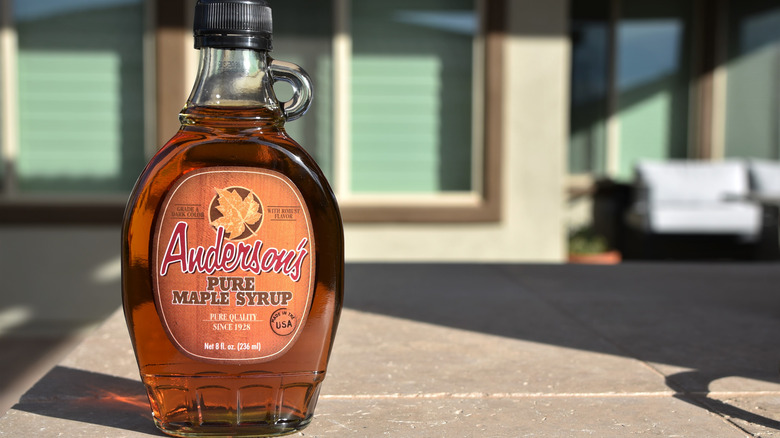
You already know to look out for syrups labeled as pancake syrup, but you should also be on the lookout for a label that states the syrup is "maple-flavored." This means that it may contain maple syrup, but only a small percentage — just enough to be able to label it as such. The only label you want is one that specifically says "pure maple syrup" — because of regulations, only the real thing can be labeled that way.
Meanwhile, there is only one "type" of pancake syrup, while there are four types of real maple syrup: Golden, amber, dark, and very dark. Each of these grades has a different color and flavor. So, if you see one of these words on a maple syrup label, it's likely that it's real maple syrup, but make sure to check for the other specifications just in case. Additionally, real maple syrup is going to have a higher price tag because it costs more to produce the real thing, which is a big reason why imitation syrup is made in the first place.
Now you know what to look for to get your hands on real maple syrup, rather than the artificial counterpart, but not all pure maple syrups are created equally. If you're not sure which one to buy, you can check out our ranking of nine maple syrup brands — we recommend Shady Maple Farms or Sapjack, which we placed in the first and second spots, respectively. We also think you should consider buying real maple syrup from Aldi, which offers high-quality real maple syrup for a more affordable price.