

These 4 Pillars Of Flavor Unlock The Magic Of Thai Food
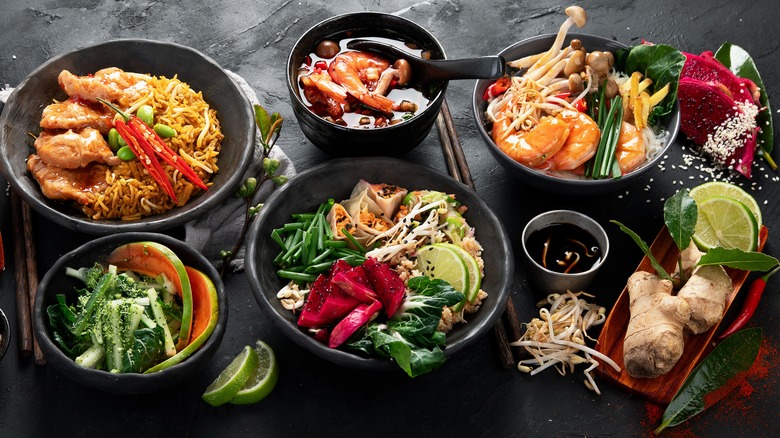
Thai food might not be for the faint of heart, but for anyone who craves a good kick of spice, it's pure bliss. Much like Indian food, it relies heavily on chiles and pepper, though beyond the fiery similarities, Thai and Indian curries are actually quite different. Perhaps you're trying to crack the code of Thai flavors by whipping up a Thai-inspired dinner recipe at home. Maybe you recently tasted a sumptuous serving of the best pad Thai and are just curious about the cuisine.
It all comes down to four pillars. These flavorful tastes are pretty much the basics of authentic Thai cooking. You can think of the elements as the fantastic four of Thai food, and they are quite easy to remember. The flavors are salty, sour, sweet, and spicy. Sounds simple, right? If you thought salty equals adding salt, it is actually a little more nuanced than that. Each of these essential Thai flavors comes from very specific ingredients, which might not be available in your regular pantry.
Ingredients that form the 4 pillars of Thai food
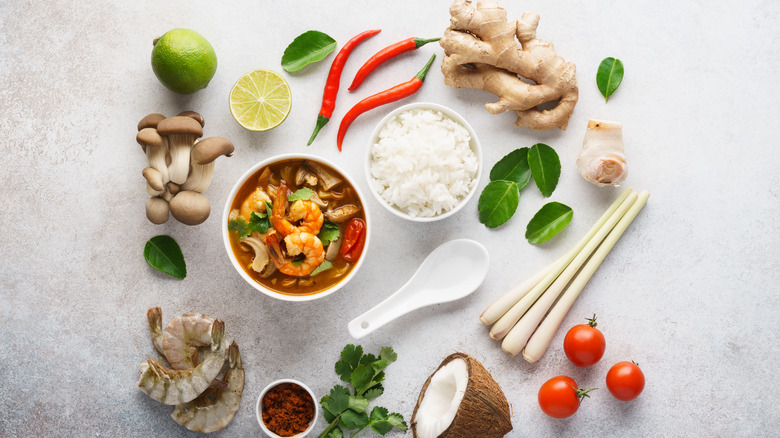
Let's pick the most important element in any cuisine first: saltiness. This pillar of Thai food comes from the umami of fish sauce, or the intensity of shrimp paste. Both of these ingredients layer the dishes with that savory undertone while lending a bit of funk to the aroma. This works in a freshly tossed green papaya salad or a Thai green curry. The second pillar is sour, and that zing is one of the defining elements of the cuisine. While a simple drizzle of lime juice can suffice, Thai people often use tamarind for a fruitier kind of tartness that complements the spice beautifully.
Sweet is next, and palm sugar is the go-to choice. Typical granulated sugar can be an option, but palm sugar lends that caramel-like richness to the dish. Last, but certainly not least, spicy is perhaps the most recognizable note in Thai food. It comes from the addition of fresh and dried chiles, while at times black or white pepper is also added for a sharper kick that's not overpowering. Together, these four pillars create a push-and-pull of flavors that makes Thai food so unforgettable, but every dish is a careful act of balancing these elements.
Balancing the 4 pillars in Thai food
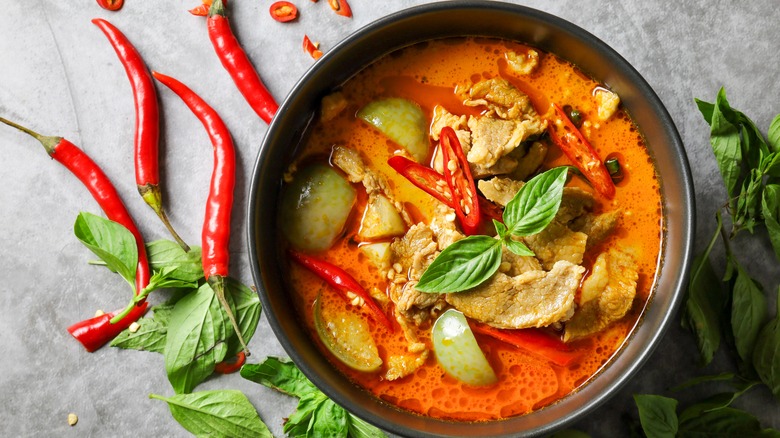
While Thai food is a delicate balancing act of these four flavors, that doesn't mean one can't occasionally become more dominant than the others. Certain dishes in Thai cooking are constructed around a defining note, but always have the other flavors present. Take tom yum soup, for instance. Its spiciness is potent enough to clear your sinuses, but the tone that is the most pronounced is its bright, bracing sourness. These two pillars keep each other in check.
If you look at preparations from the southern region of Thailand, like Khua Kling, a dry meat curry, or Kaeng Tai Pla, a fermented fish entrail curry, both are assertively spiced. In these dishes, heat is the first thing you notice, even though these dishes are brewed in a spectrum of other flavors such as mushrooms, cilantro, tomatoes, eggplant, shallots, and sweet white onions to add a depth of taste. Coconut milk is often used to add sweetness to balance spicy dishes such as Thai yellow curry.
Of course, many other ingredients are at play in these recipes. Thai food is almost incomplete without lemongrass, galangal, and kaffir lime leaves, but the secret code lies in knowing how to bring the four pillars of Thai food into harmony. With even a modest understanding of how they interlace in different recipes, you can easily master much of the craft of cooking authentic Thai food.