

What A 'Family Meal' Really Means In A Restaurant, And Why It's A Bit Confusing
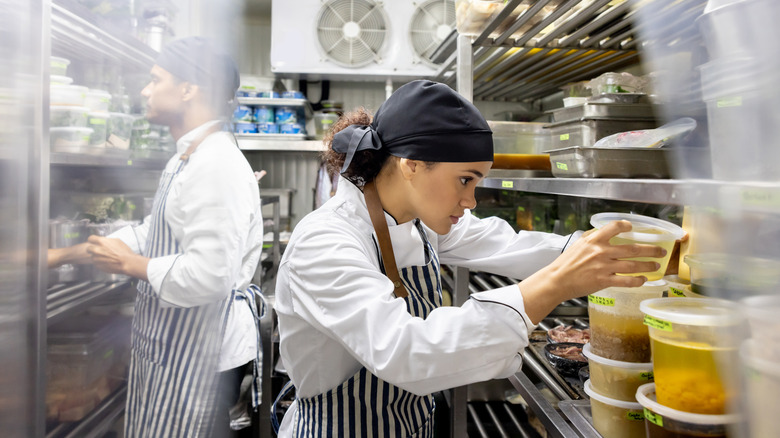
Most people, when they hear the phrase "family meal," think of parents and kids sitting around the table for dinner. It looks different to everyone. For some, everyone is engaged and talking about their day or week, for others, it's chaos where one kid is doing homework, another is on their phone, one parent sits at the table while another is wrangling a 5-year-old who would rather be eating peach rings while jumping off the top bunk. Just like at home, family meals at restaurants look different from place to place, but generally, it's when everyone behind the scenes eats.
When I worked at the now-defunct Peels (known for its brunch cocktail menu) in New York City, family meal was served on a rotating basis. We served breakfast, lunch, and dinner, so someone always had to be out in the dining room. We lined up in the kitchen to scoop pasta, or a salad, or beans and rice with tacos, from big trays, while others worked and had a plate of food set aside for later. Other restaurants that are closed between meals will serve the whole staff at the same time before they open for dinner.
Since I was a vegetarian, they often would make me a separate dish on the side, sometimes something straight off the menu, other times the pasta everyone else was eating, but with a meatless sauce. Family meals are beneficial to a restaurant staff in more than one way.
The purpose of the family meal
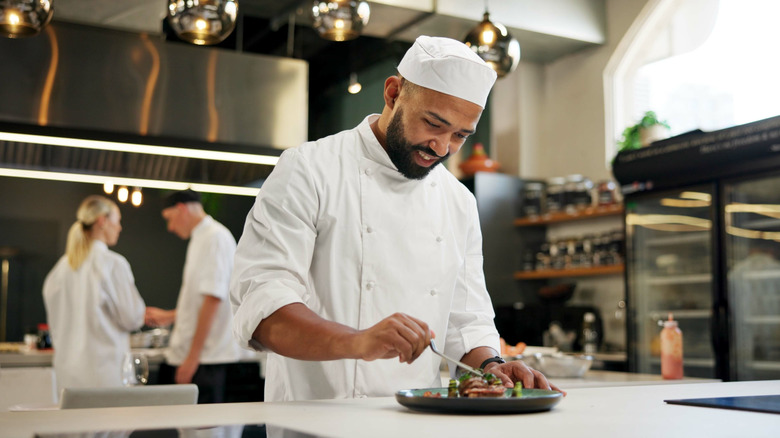
No one wants to work on an empty stomach, especially at a restaurant. Imagine being hungry while serving people delicious meals all day or night. It's torture! Just like how every restaurant does things differently, every restaurant also has a different purpose for its family meal. Some places will use it to create a sense of camaraderie and build a team atmosphere. The whole staff will dine together before the public arrives. In an industry that is built on service, caring for people doesn't end at the paying customer. It extends to the workers.
Other times it's utilitarian. The manager knows a well-fed staff is a better working staff. I often sat on a back stoop around the corner, shoveling my meal in my 15-minute break, watching New Yorkers walk by, so I'd have energy for my shift. Another useful purpose is to let chefs build up their skills or try new dishes out, especially since not everyone working in the kitchen has applied to and attended culinary school. They'll often also find creative tricks for using up all of the leftovers, saving kitchen waste.