

Panda Express Owns These 2 Other Restaurant Chains. Here's What We Know About Them
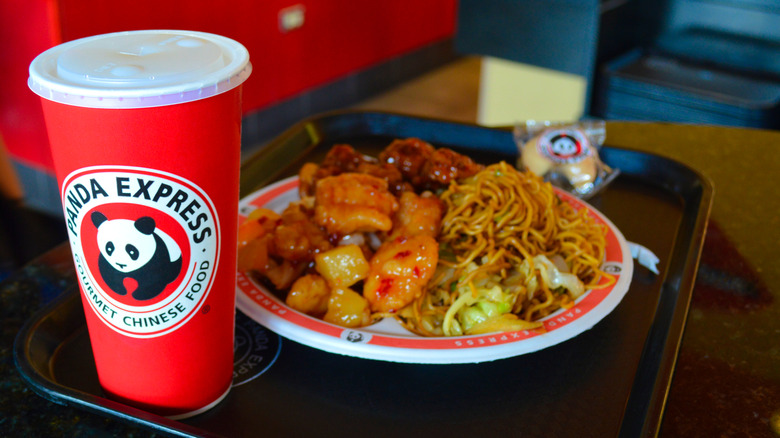
With more than 2,500 locations worldwide and over $6 billion in annual sales, you'd have to be living under a rock not to be familiar with Panda Express. The fast food restaurant has been in business for more than 40 years and sells millions of pounds of orange chicken annually. You probably know this American-Chinese cuisine chain for its zesty orange chicken and crunchy chow mein, but what you might not know about Panda Express is that its parent company actually owns two other chains: Hibachi-San and Panda Inn.
As one of the biggest family-owned Asian-cuisine chains in the country, Andrew and Peggy Cherng have combined their love for traditional Chinese food and business acumen into a multi-billion-dollar restaurant business that proudly serves customers all over the world. Here's what you should know about Panda Express's sister restaurants and why you might want to stop in for a bite if you're a fan of Asian cuisine.
The Panda Restaurant Group: A family-owned success
The Panda Restaurant Group was founded in 1973 by Andrew Cherng and his father, Master Chef Ming-Tsai Cherng. Andrew was born in Yangzhou, China, and then his father moved their family to Taiwan and later Yokohama, Japan, where he worked as a chef. Despite his father's career, Andrew had not initially planned to go into the restaurant business. Rather, when the family immigrated to the U.S. in 1966, he attended Baker University and later studied mathematics at the University of Missouri. It was at Baker University that he met his wife, Peggy, with whom he would go on to build a multi-billion-dollar empire over the next 50 years.
Andrew and Ming-Tsai sought to create food reminiscent of the Mandarin and Sichuan cuisine from their childhoods. The sweet and sour flavors, crisp wheat-based staples, and bold aromas are exemplified in their restaurants. The father-son duo opened their first restaurant in 1973 and called it Panda Inn. This would set the stage for decades of growth and for the Panda Restaurant Group to become a leader in Asian dining.
Panda Inn: The sit-down restaurant that came before Panda Express
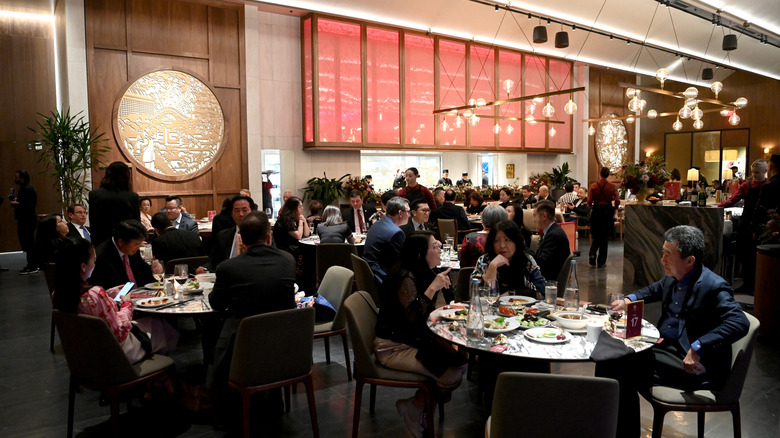
Interestingly, despite the far-reaching success of Panda Express, it was Panda Inn that came first. The original Panda Inn was a sit-down Asian cuisine restaurant that sought to serve high-quality Chinese food with a welcoming and comfortable atmosphere. The family-owned company used Andrew's business acumen and his father's expertise as a chef to bring flavors of the East to Pasadena, California, where the first Panda Inn was opened.
The Cherngs were inspired by the success of Panda Inn over the next decade, and in 1983, they opened the first Panda Express, the fast-food version of Panda Inn, which skyrocketed in popularity. It was this casual style of Asian cuisine that grew the Panda Restaurant Group into the multi-billion-dollar empire that it is today, but it was Panda Inn that started it all. Today, there are four Panda Inn locations all in Southern California: Pasadena, Glendale, La Palma, and Ontario.
Hibachi-San: A Japanese teppanyaki grill concept
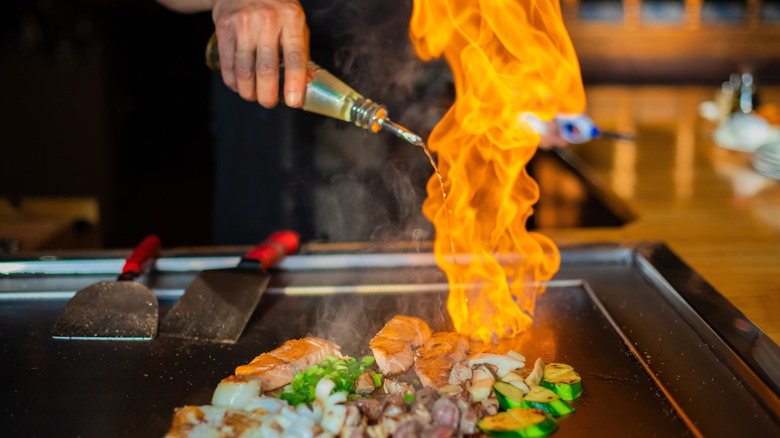
The Panda Restaurant Group then expanded to Japanese cuisine in 1992 with the opening of the first Hibachi-San in Minnesota. This restaurant proudly serves teppanyaki grill-style food as well as sushi. Rather than stand-alone restaurants, all Hibachi-San locations are within retail, airport, military, or university settings. Today, there are 10 locations across the U.S., including university locations at Penn State, Cal State Fullerton, and the University of Maryland.
The restaurant uses recipes from Master Chef Ming-Tsai Cherng, inspired by the time he and his family spent living in Japan before immigrating to the United States. The menu includes classic Japanese cuisines such as tempura shrimp, teriyaki chicken, kimchi shrimp, and yuzu salmon. In recent years, the restaurant has adapted to the idea of "build-your-own" meals inspired by popular chains like Chipotle and Subway. They introduced poke bowls to the menu, which allow customers to customize their own meal.
The couple that started it all
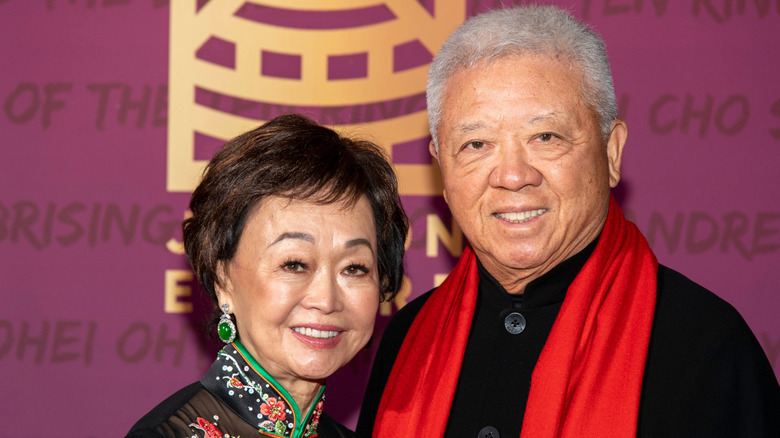
It was when Andrew met Peggy that the Panda Restaurant Group started to grow significantly and eventually landed them on the list of the richest fast food CEOs. The couple met at Baker University in Kansas while receiving their undergrad, and then both went on to pursue higher education at the University of Missouri. Peggy joined the restaurant business in 1983, and they opened the first Panda Express in Glendale, California, together. Peggy earned her PhD in electrical engineering, and her technical background helped streamline the operation processes at Panda Express, massively contributing to its growth and success.
She helped pioneer and optimize the behind-the-scenes tasks like inventory and ingredient-ordering, which helped the restaurant stand out from many of the other American Chinese restaurants in the country. Within 10 years, there were 97 Panda Express locations, and by 2006, there were 888 locations. Today, there are more than 2,500 and nearly 30% of all Panda Express locations are in the state of California.
The Cherngs built a billion dollar fortune from their restaurant company
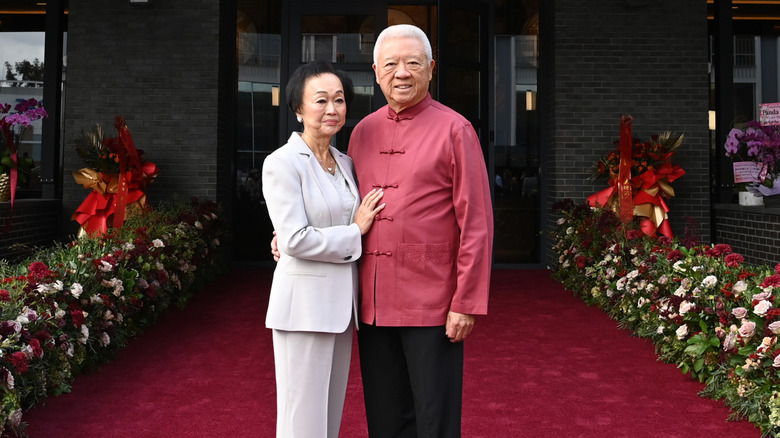
What started as one small restaurant in a California mall grew to a global empire, and the ownership remained in the family all the while. In 2007, the company celebrated $1 billion in revenue, and in 2011, they opened their first restaurant outside of the U.S., in Mexico City. Today, Panda Express also has locations in Guam, Puerto Rico, Canada, South Korea, Dubai, Guatemala, Japan, and Saudi Arabia. The Cherngs had aspirations to grow Panda Express to be as well-known as McDonald's.
Since the opening of its first restaurant in 1973, the Panda Restaurant Group has expanded to more than 2,600 restaurant locations, creating a multi-billion-dollar empire and earning Andrew and Peggy a place in the California Restaurant Association Hall of Fame. Forbes estimates that the couple's combined net worth is more than $7 billion and growing. The family-owned business now employs two of the Cherng's children; one of whom is the Chief Brand Officer, while the other is the manager of catering and special events.
They do not franchise their restaurants
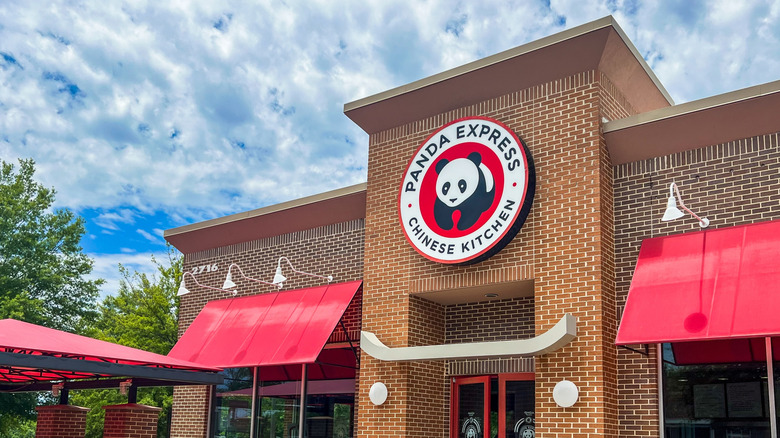
One of the things that sets the company's restaurants apart from other chains of its size is that they do not franchise their restaurants. The company website explains, "Panda Restaurant Group operates all of our restaurants with the exception of select locations in airports, universities, military bases, hospitals, casinos, amusement parks and stadiums. We do not offer franchises at this time". Some other chains, like Cracker Barrel, have followed suit in not franchising its stores.
It is rather unique for fast-food chains that are as large as Panda Express to choose not to franchise because franchising typically allows for rapid growth. Take McDonald's, for example, where the original McDonald brothers sold the company early on and then became reliant on cheap labor and ingredients to grow. However, the Cherngs have managed to retain complete control over their restaurants by owning and operating them themselves. This has contributed to their massive wealth and makes them one of the few family-owned large-scale fast casual dining restaurant groups in the country.
What customers have to say about Hibachi-San
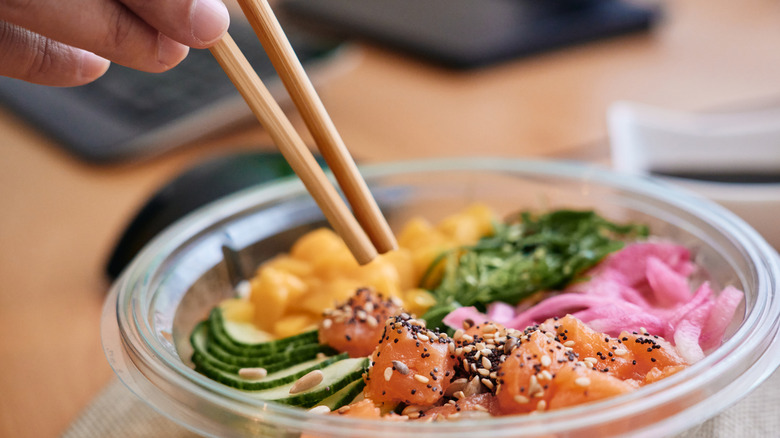
It's clear that the Panda Restaurant Group's Japanese-style restaurant has not garnered the same international success as Panda Express. With a modest 10 locations, it appears customers are not overly excited about Hibachi-San, although it does receive praise from college students for adding build-your-own poke bowls to the menu. However, the general consensus online seems to be that the food is somewhat lackluster.
One reviewer even described the restaurant as a "more expensive Panda Express." Some Redditors blame the poor service for the diminished quality rather than the food itself. One commenter shared an explanation for the dip in quality at the Cal Poly Pomona campus location, "It's the quality of employees that they hire, unfortunately. What it comes down to in my opinion." Despite an overwhelming preference for Panda Express, however, some customers appreciate having some variety in their Asian cuisine and celebrate Hibachi-San for being a slightly healthier alternative on campus.
What customers have to say about Panda Inn
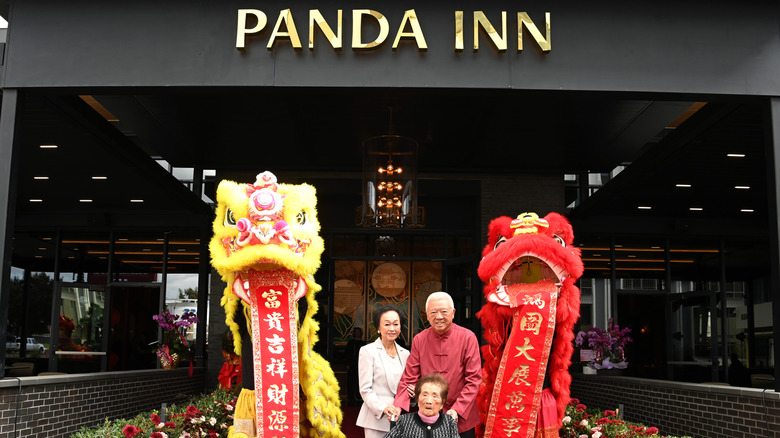
Panda Inn, on the other hand, seems to receive glowing reviews from customers not only for the high-quality food, but for the service and atmosphere as well. Where Panda Express provides a quick, build-your-own Chinese food bowl experience, Panda Inn seeks to provide an experience in which people can share in the love of authentic Chinese cuisine. And customers can taste and feel the difference.
A customer on Yelp explained, "The service, food, and ambiance was spectacular ... I would highly recommend going here if you are a lover of Panda Express. It is a 100% upgrade. Every food item was amazing". In addition to the flavorful food, other reviews applaud the friendly service staff and the general atmosphere of the restaurant, which sets it apart from its fast-food counterpart. Commenters mention it is an excellent restaurant to share as the portions are large and many of the dishes are served family-style.
Panda Inn gets a redesign
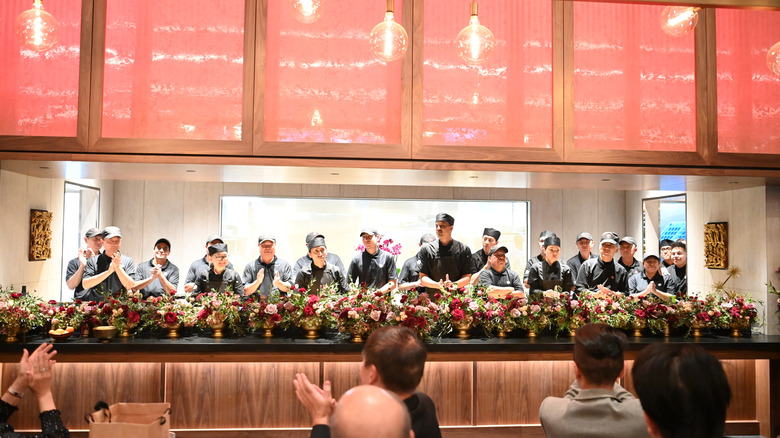
Despite overwhelming praise online for food quality, friendly service, and authentic atmosphere, Panda Inn only has four locations: Pasadena, Glendale, La Palma, and Ontario. While the company has not announced any plans for expansion, they are investing in improving the dining experience at the existing Southern California locations. The Pasadena location, which has been open for 51 years, received a complete redesign at the end of 2024.
The revamp included changes to both the interior of the restaurant and the menu. The new menu features fresh new concepts based on Chef Ming-Tsai's recipes, including Panda Beef in an orange peel sauce and chargrilled beef short ribs. The updated interior is described as "modern, clean, and welcoming" by patrons. The Cherngs' daughter, Andrea, who is the Chief Brand Officer for the family business, explained that the two-year renovation aimed to pay tribute to the recipes of her late grandfather and the hard work of her parents, as well as the immigrant families who came before them.