

The Creamy, Coconut Pie That Filipino Bakers Have Perfected For Generations
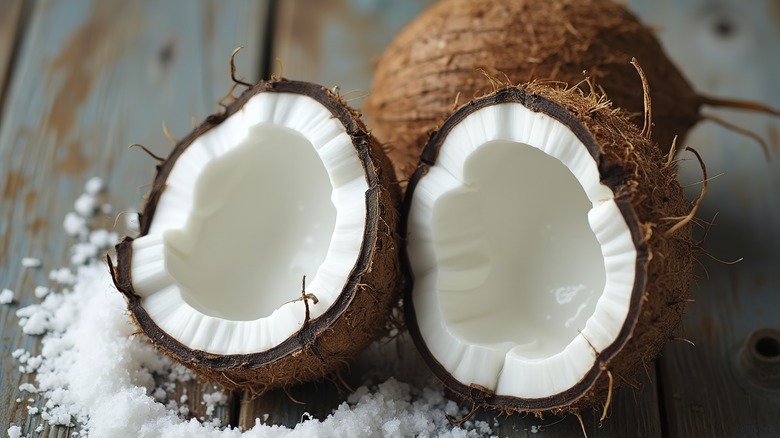
Coconut is used extensively in Filipino cuisine due to its fragrant, nutty flavor and versatility. For instance, you'll find coconut milk in creamy buko pandan, textured shredded coconut in palitaw, and gelatinous macupono strings in chewy bibingka. However, there's one particular Filipino dessert featuring coconut that's been perfected by generations of local bakers: enter the Buko pie.
Buko pie was the brainchild of Nannette Pahud, who worked as a cook for an American exchange professor living in the Philippines in the 1960s. After honing her baking skills, she created the buko pie using local ingredients and began to sell them (today, the Original Buko Pie is a family business still owned by the Pahud family). Most widely sold in the southern part of Luzon, this sweet dessert is made with young coconut meat, which is cooked down in a saucepan with milk and sugar before it's thickened using a cornstarch slurry prepared with coconut water. The sweetened coconut filling is then dolloped onto a pie crust and topped with a pastry lid before it is baked until golden. Once the pie is cooked, it's left to cool slightly so the filling can set — the pie is best enjoyed warm, but it can also be eaten cold when the texture of the buko becomes more chewy and satisfying. When the finished pie is sliced into, the striations of coconut can be seen running throughout the custardy center.
Enrich buko pie with cream or condensed milk
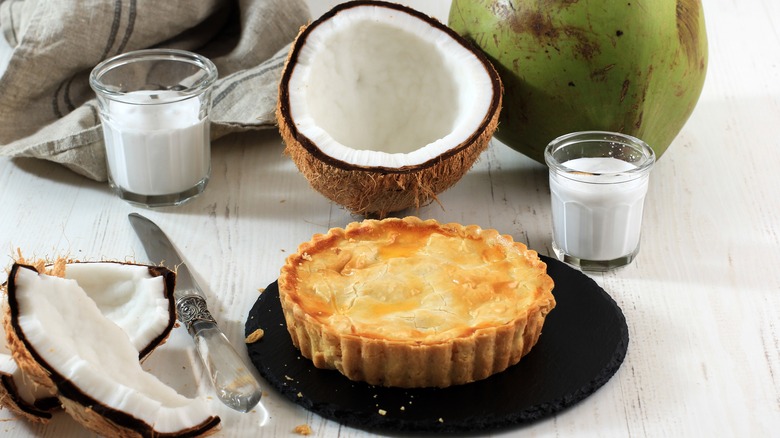
Buko pie filling can be enriched in several ways. You can use cream instead of milk, scatter in milk powder, or stir through condensed milk, which has the added benefit of containing sugar (if you want greater control over the sweetness of your pie, you can substitute the condensed milk for evaporated milk, which has a similar viscosity but is sugar-free). The condensed milk lends the finished pie a subtle caramel note and thickens its texture, too, giving it a richer character. You can also glaze the pastry lid with beaten egg to lend it a shiny appearance.
Buko ube pies are a twist on the classic buko pie as they feature a layer of mashed purple yams at the bottom. This violet-colored dessert is both striking and unusual while the consistency of the yams provides a contrast against the coconut flesh. British bakewell tart, pastafrola from Argentina, and Rijstevlaai hailing from the Netherlands are just a few other sweet pies from around the world that are worth giving a try. However, if you adore the flavor of Filipino cuisine in particular, check out these 10 must-try Filipino snacks, which include several sweet treats like suman and polvoron. You might also like to try turon, a Filipino street food dish that's made by encasing sliced bananas in a spring roll wrapper before deep frying them and coating them in caramel.