

A Fast, Easy Fix To Rescue Rubbery BBQ Chicken
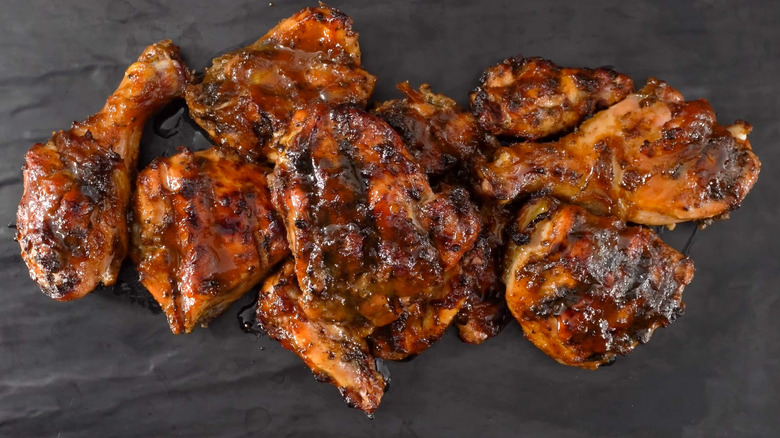
There's nothing as annoying as investing time in firing up the barbecue, marinating your protein, and prepping several side dishes to find that your barbecue chicken has developed an unpalatable, rubbery texture. While you could chew your way through that unappetizingly bouncy chicken, it might not be the best idea if you're serving it to several hungry guests. A quick and easy way to fix BBQ chicken that has an unusual mouthfeel is to shred it up and coat it in a dash of store-bought or home-made barbecue sauce. While this remedy will turn your smoky portions of chicken into an altogether different meal, you'll also rescue them safely from the depths of the rubbery realm.
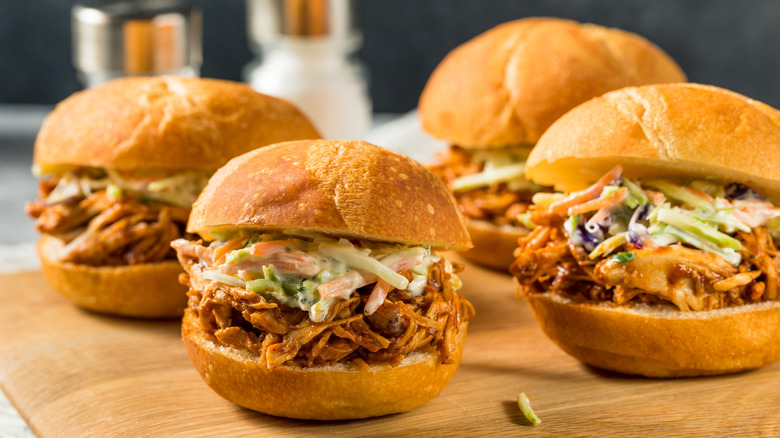
Separating your chicken thighs, wings, and breasts into fine shreds physically breaks up their protein fibers, giving them a better mouthfeel. Secondly, the extra squirt of barbecue sauce mixed through the chicken replenishes any lost moisture and amps up its flavor. And finally, the naturally sweet-smokiness of the barbecue sauce complements the charred and caramelized edges of the chicken, doubling down on its grilled vibe. Your shredded chicken can be used as a characterful topping over a leafy green salad, stuffed into bread rolls to make sliders, or piled over nachos with a scattering of melted cheese to make a sharing platter. You might also consider stirring your shredded chicken into bow tie noodles to make a pasta salad or layering it up with béchamel and cheese for a twist on a classic lasagna recipe.
Why does BBQ chicken become rubbery?
Overcooking your best barbecue chicken recipe is the most likely reason it has developed a rubbery consistency; when boneless or bone-in cuts sit longer on the grill, they lose moisture, resulting in a drier texture. Even though a punchy coating or glaze will imbue your chook with flavor as it chars, it won't prevent the flesh from drying out. Having said that, some chicken breasts can have a naturally rubbery texture to begin with, even before they've touched the grill. Known as "woody chicken," this phenomenon occurs when chickens are reared at speed, causing stress on their physiology. This causes changes in their protein composition, fat, and muscle arrangement, resulting in white breast meat that has tough fibers that feel hard, unusually chewy, or rubbery.
The good news is that you can assess if chicken breasts are woody when they're in their raw state by pressing them with a finger and checking if they feel hard to the touch. In this case, you can make a pre-emptive move and fix your woody chicken by marinating it in buttermilk or soaking it in a brine overnight to help it become tender once cooked. Steaming or slow-cooking your chicken is another way to help it retain its succulence.