

This British Technique Leads To The Crispiest Roasted Potatoes
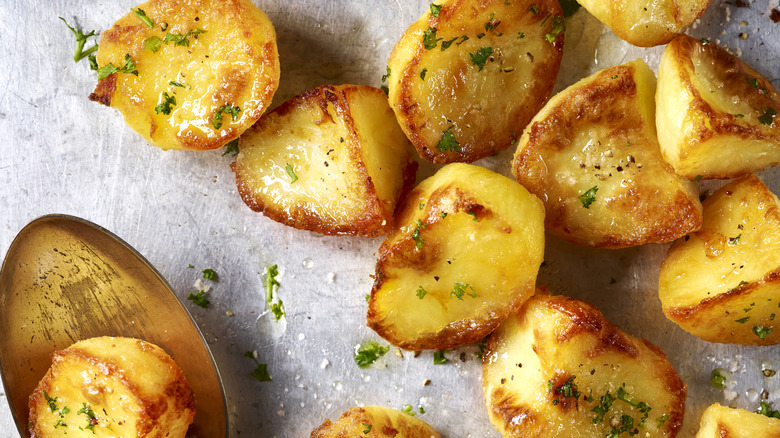
If you ever meet a British person who doesn't claim to make great roast potatoes, you should ask to see their birth certificate. Even for those who can barely cook, roasties are a point of pride. This is true from John O' Groats to Land's End; in the U.K. the roast dinner dad is at least as common an occurrence as the grill dad is in the U.S. (you know, the dad who doesn't even know where the chopping boards are kept, but dons a novelty apron and grabs the tongs as soon as a cookout is even whispered about).
While every Brit has their own list of tips and tricks for the best way to roast potatoes, most of us use a technique beloved by U.K. celebrities from Jamie Oliver to Emily Blunt to get an incredibly crispy shell on every potato, while retaining fluffy centers (like the perfect French fry, but bigger). The Brits are aware that the key is parboiling. After this step, you simply shake them around in the pan or colander to create rough edges. After a good shake, your potatoes should be coated in a light paste, depending on the kind of potato you use and how completely you like to boil them. Usually, Brits use potatoes that are floury and not waxy for roasting. This helps achieve the soft, creamy center that characterizes a classic roastie. Yukon Golds and russets work great and are readily available in almost every grocery store.
Why the British rough up potatoes
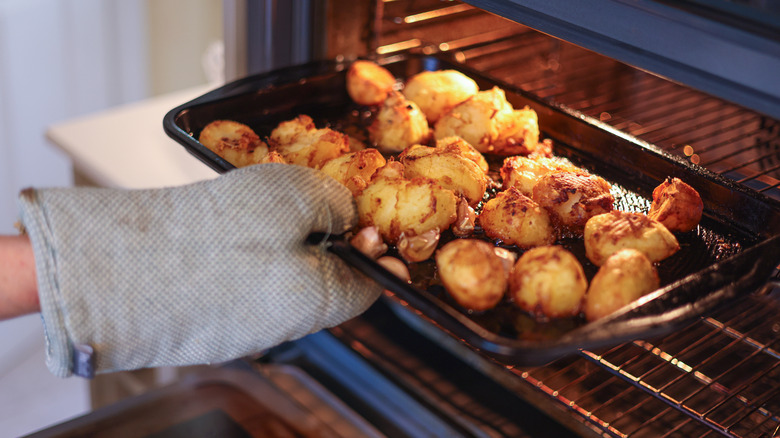
Potatoes that have been shaken and roughed up rather than left smooth have more surface area, which means more crispy bits. If you leave them to cool a little and release steam, they also end up dry on the outside, which means more hot oil will be absorbed. This achieves a thicker, crispier crust. A good shake will achieve crisp edges on delicious, golden pieces of potato, almost like crunched-up mash.
Another secret to great roast potatoes beloved by Brits? Get your fat really hot before you add your tatties, and baste them as they cook. That creates that insulating crust that keeps the heat inside. Flip and baste at least once during cooking, but not too early! Use a thin spatula to test one potato; if it turns easily and has a nice brown crust, then they're all ready for flipping and basting. Be careful when you do this because that fat is really hot. The last time you baste your potatoes, you can add hardy herbs like rosemary, which is fantastic with roast potatoes. You can add more salt if needed, and chuck in some garlic. Inexperienced potato roasters often add their aromatics too early, so when in doubt, wait.
Serve your perfect potatoes with crispy roast chicken, roast pork, or simple baked salmon. In the U.K., cauliflower cheese is a common component of a roast dinner. As a little twist, you could whip up a cauliflower mac and cheese if you're not afraid of some double-carb action and want a veggie meal.