

The Old-School Pastry Steelworkers Ate That Still Holds Up
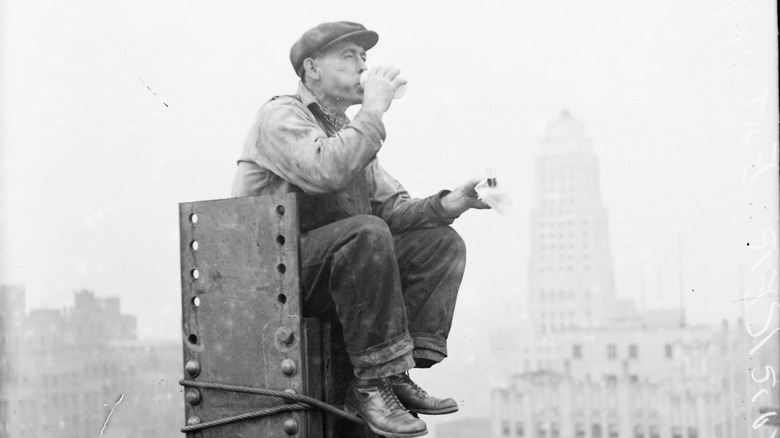
Steel working was no walk in the park in the past. Long shifts in the mills or on construction sites called for filling, calorie-dense meals to keep workers going, 10 of which we covered in our list of foods steelworkers ate back in the day. But a hard day's work asks for soul-warming sweets, which the workers brought regularly, and some of them still exist today. One pastry that was particularly popular among the workers and has stood the test of time is the nut or poppyseed roll, a yeasted pastry filled with ground walnuts or poppy seeds, rolled into a log and sliced to reveal a spiral of filling. The pastry is just sweet enough to pair well alongside a cup of coffee.
The treat's staying power has a lot to do with the generations of Eastern European families who brought these recipes with them to America's industrial towns. In the 19th and the beginning of the 20th century, as immigrants from Eastern Europe settled in Rust Belt states like Pennsylvania, Indiana, Minnesota, and Ohio, they brought the baking traditions of their homelands, including recipes passed down for decades.
Workers from different backgrounds lived and worked side by side, and shared food as well as traditions. Nut and poppyseed rolls eventually became known beyond the immigrant communities. Church kitchens helped to spread the popularity of the pastry. Parishioners still bake them in large batches for holiday sales and fundraisers, sometimes using recipes that have been in their families for generations.
A dessert with many names and many traditions
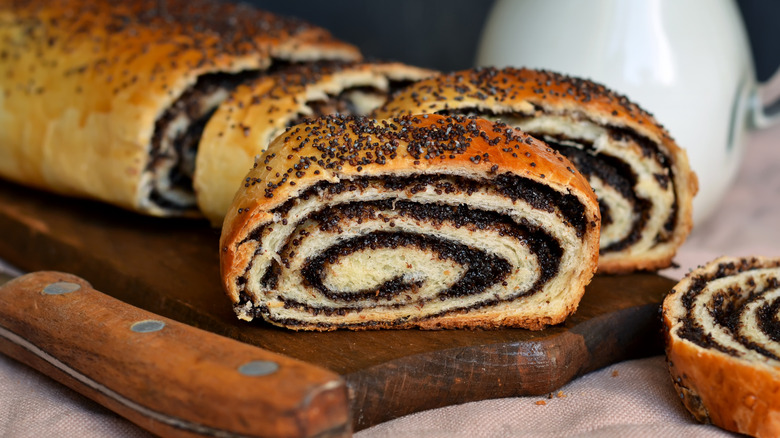
In the dessert's Eastern European homeland, several countries have their own versions with different fillings and names, often eaten at special occasions like Christmas and Easter. In Poland, the rolled yeast pastry is filled with poppy seeds, raisins, and nuts and is called makowiec. Further south in the Balkans, Croatia has two popular versions of the pastry, each with their own name. One is orahnjača, a walnut-filled roll, and the other, makovnjača, is filled with poppy seeds. Neighboring Slovenia has its own version, potica, which is often filled with walnuts, though other fillings are used as well. Meanwhile, the Hungarian nut roll beigli is made with yeasted dough filled with ground walnuts or poppy seeds, then rolled into a log and baked.
Modern recipes have taken these rolls in a few new directions. Alongside the traditional walnut and poppy seed versions, there are recipes with dried cranberries, chocolate, or a mix of nuts. Some bakers add sour cream to the dough for a softer crumb, while others make the pastry thinner and compensate with more filling. Whichever versions the steelworkers of the old days brought with them on their grueling shifts, they were likely delicious and comforting reminders of home.