

The Telltale Sign Your Vintage Pyrex Isn't Microwave Safe
We may receive a commission on purchases made from links.
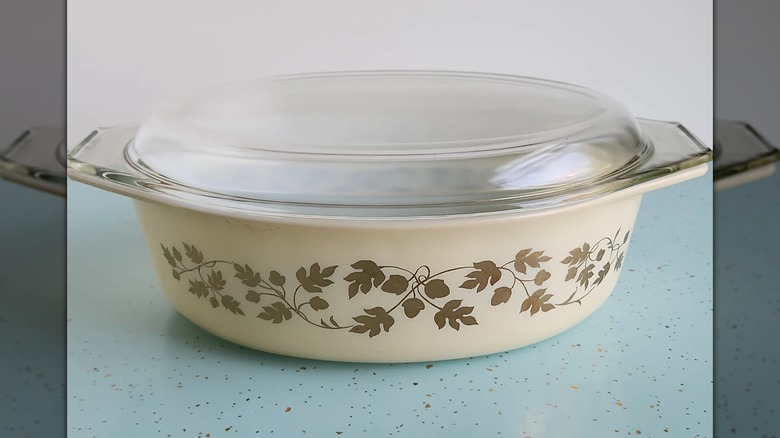
Thrifting Pyrex cookware that's still in mint condition is a great way to save a few bucks on kitting out your kitchen. You might even be able to find a few colorful vintage Pyrex pieces that feature kitsch designs that work as attractive showpieces. Just bear in mind that some of these retro patterns might make your Pyrex unsuitable for the microwave. The telltale sign to look out for is the presence of metallic accents on the surface, which could contain small amounts of gold leaf.
Food heats up in a microwave when water molecules absorb electromagnetic waves, start to move around, and eventually generate heat via friction. In contrast, the metallic elements found on the surface of some Pyrex items deflect (instead of absorb) the waves inside a microwave, causing them to bounce around inside the appliance — which can result in damage, sparks, and popping. In some cases, the way that these metals interact with the waves can even trigger a rise in temperature and cause a fire.
Pyrex created cookware in different colors featuring metallic designs in the 1940s, which became coveted over time for their unique appearance and nostalgic vibe (such as the Cinderella and golden birds casserole dishes, now selling for thousands to mid-century collectors). Meanwhile, the pink Duchess casserole dish (featuring a pattern made with 22-karat gold) is another rare vintage Pyrex dish that sells for over $2,000. Unfortunately, these dishes should probably only be used as decoration and kept far away from a microwave.
Pyrex made metallic pieces before the microwave existed
Nowadays, Pyrex is lauded for its versatility, and its tempered glass pieces can be used in the freezer, oven, dishwasher, and microwave. So, the question arises, why did Pyrex create an earlier line of dishes that weren't microwave-safe? Back in the 1940s, when these pieces were first designed, the microwave was a brand new invention and therefore wasn't a mainstay in the home as it is today. It was only years later in 1967 that microwaves became available for use in domestic kitchens — and, even then, they cost $500, which equates to over $5,000 today. The earlier metallic designs simply weren't intended to be used in microwaves because consumers didn't have them.
If you do happen to pick up some vintage Pyrex cookware with metallic accents on your next trip to the thrift store, you should also avoid placing it in the dishwasher. While most Pyrex products are dishwasher-safe, it's best to handwash items with decorative finishes or embellishments to safeguard the quality of the design. Dish soap is gentler than dishwasher detergents, and you can also monitor the temperature of the water more easily. Meanwhile, chipped Pyrex dishes aren't worth buying at thrift stores (even if they do have a nostalgic metallic design), as they can shatter more easily when exposed to temperature change.