

Stale Bagels Are More Dangerous Than You'd Think — Here's Why
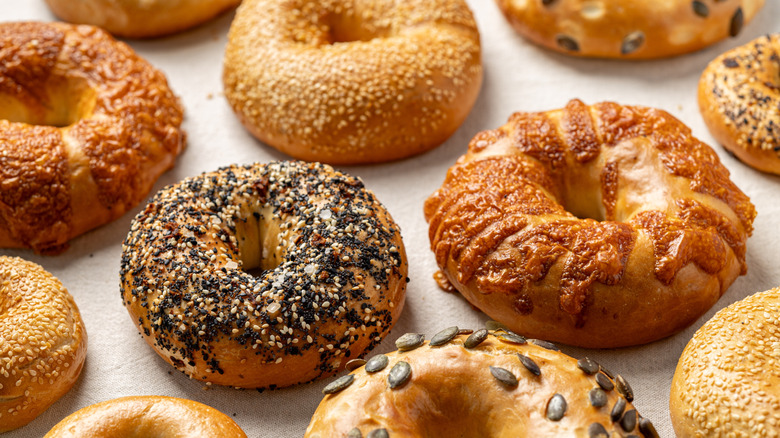
You probably don't think of a bagel as a dangerous food, but a stale bagel can land you in the emergency room․ The longer a bagel sits, the more it hardens, and cutting through a tough exterior may require additional pressure. Any food can become dangerous if not handled safely, and bagel injuries aren't uncommon. Hundreds of Americans make emergency room visits annually for bagel-related injuries.
Stale bagels are harder to slice and can make the simple task much more difficult than expected. Adding elements such as cold or frozen bagels can make slicing even more difficult. Bagel-slicing injuries are a frequent reason that patients seek emergency care․ Most bagel injuries occur when patients hold the bagel in their hand and slice toward their palm․ How you cut your bagel can reduce the risk of injury.
It is recommended that you lay the bagel flat on a cutting board. Once the bagel is flat, hold the top with your palm facing down, cut halfway through the bagel, then rotate and cut the other side. A dull knife can slide along the bread's crusty surface, so use a sharp knife and don't force the blade.
Give a stale bagel a fresh start
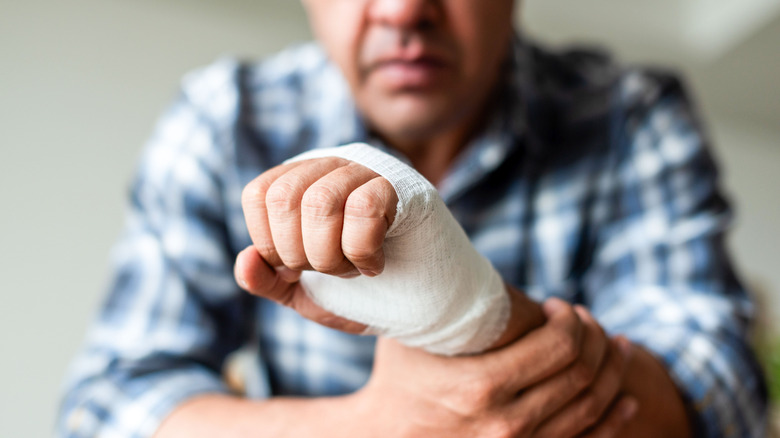
If your bagel has turned from chewy to tough, it can be revived before slicing. Mist the bagel lightly with water and place it in a 350 degrees Fahrenheit oven for five minutes. The combination of heat and moisture is a good trick to revive a stale bagel. The bagel should be taken out of the oven and cut immediately․
Bagels stale faster than most other bread, due to the low moisture content of bagel dough. One trick is to slice the bagels as soon as you get them home. You can always freeze them after slicing. You can also use stale bagels to make croutons or bread pudding if you don't feel safe slicing them. Your delicious snack should end with a full belly and not a bandage on your hand.