

Martha Stewart's Simple Tip For Perfectly Sturdy Tarts
Martha Stewart has plenty of tips to make you a better baker, from employing an ice cream scoop to dole out identical amounts of cookie dough to making homemade buttermilk for cakes with a tender crumb. The cookbook author is also a fountain of knowledge for whipping up pastries and pie crusts that don't shrink and collapse as they bake. Her simple tip for making perfectly sturdy tarts? Fold the dough into the grooves of the pastry tin, as showcased in an episode of her TV series Martha Bakes.
A freeform pie crust that's made on a baking tray, like a French galette, is useful for novice bakers looking to make easy fruit tarts with a homespun appearance. However, if you want a tart that's sturdy and sliceable with a defined circumference, such as a tangy lemon tart or quiche, you need to use a pastry tin to achieve that distinctive fluted perimeter. It's also essential to blind bake the pastry first if you're planning on pouring in a filling that doesn't require a stint in the oven, such as a chocolate ganache or lemon curd. To ensure your finished tart is sturdy, drape the pastry over your tin and gently lift up the excess until it sinks into the bottom and is flush against the fluted edge. Then follow Stewart's advice and fold the pastry down and into the grooves to double up on its thickness, producing a crust that has stouter sides than its base.
Fold and press the pastry into the tin to achieve a professional appearance
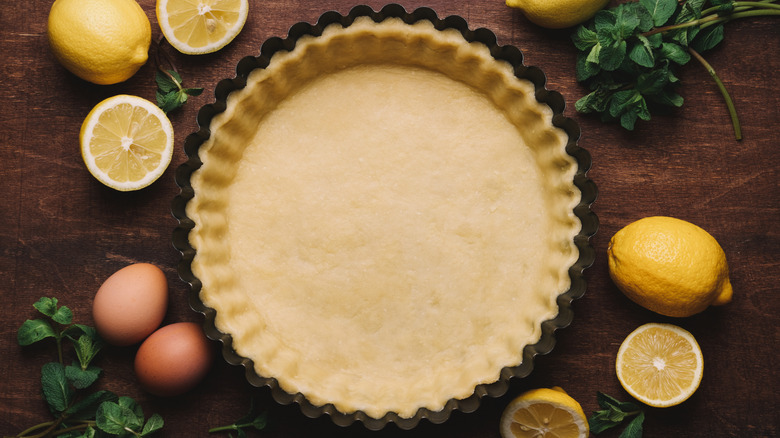
One mistake bakers make when preparing tarts is not pressing the pastry into the grooves properly. You must use your fingers to firmly push the pastry into the sides and base to create a neat and crisp crust that looks bakery-worthy when removed from the tin. This move is much easier to accomplish if you fold the pastry down, as Stewart advises, because you won't thin out the dough to make it fit. If you stretch out the pastry by accident, it will retract in the oven and shrink back, creating an uneven lower perimeter that doesn't align with the rim of the pastry tin. This in turn means you won't be able to fill up your blind-baked pastry crust to its maximum depth. If you're worried about shrinkage, you can bake the crust without cutting away the excess. Then once baked, trim it away with a sharp knife. That said, it looks much neater if you trim your pastry first, since the top edge will match the sides. Meanwhile, a Martha Stewart tip to ensure your pie is perfectly golden brown is to sprinkle the top with sugar. This technique also gives fruit pies a delicious crunch and an inviting color.