

The History Of Poached Eggs Dates Back To Medieval Times
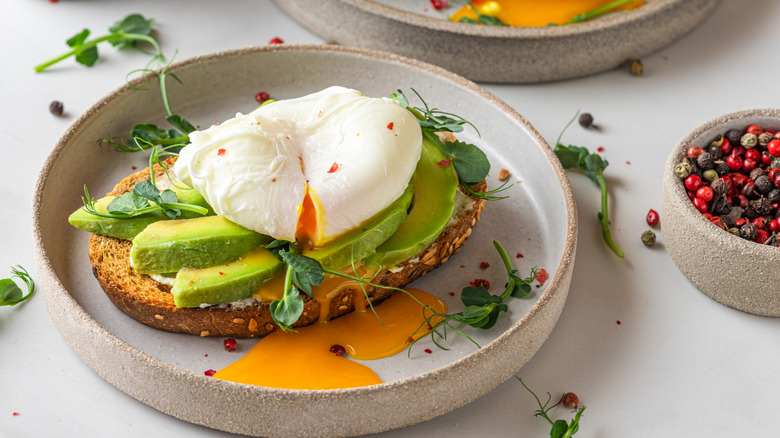
If you want to enjoy the taste of eggs in their most natural state, poaching them is your best bet. As this method only requires hot water, the rich and buttery flavor of the yolk can shine through while the white remains plump and tender. That said, you can jazz up your huevos with anything from a classic hollandaise, a spicy chili sauce, or even some salty bagel seasoning if the mood strikes. However you may choose to serve your poached eggs today, this simple, protein-rich dish actually dates back to medieval times, highlighting its lasting appeal among the generations.
There are several examples of poached egg recipes in medieval cookery books hailing from Europe. For instance, one of Britain's earliest known cookbooks called "The Forme of Cury," which was published in AD 1390 and compiled by Samuel Pegge, includes an egg recipe with an unusual finishing touch. Attributed to the chief Master Cooks of King Richard II, the method involved cracking the eggs into hot water until set and serving them with a spiced creamy sauce made of more eggs, milk, saffron, and ginger. In a separate 14th century cookery book called "Curye on Inglysch," a recipe known as eyren in bruet is listed, which calls for poaching the eggs in water with pepper, cheese, saffron, and milk. Meanwhile, in the medieval French cookbook "Le Viandier," the eggs are poached in oil.
Medieval poached eggs weren't just cooked in water
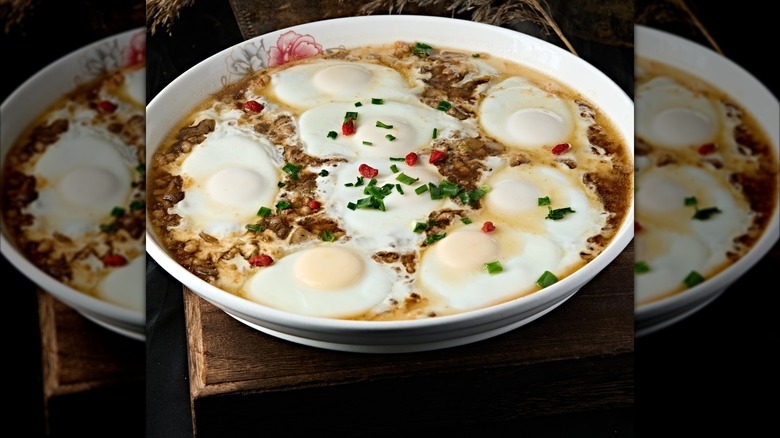
While poaching eggs in water is the norm nowadays, there is some evidence that medieval cooks simmered their eggs in other liquids, such as milk or wine. In one recipe from the Italian cookbook "Liber de Coquina," eggs are poached in a broth with chickpeas. Aside from lending the eggs flavor, these poaching liquids (the wine in particular) may have inadvertently served another purpose, too, by changing the pH level of the water (an acidic environment causes egg whites to firm up faster and preserves the softness of the yolk). This pH trick is still employed today, but achieved via other acidic ingredients, like lemon juice. For example, Gordon Ramsay swears by adding white wine vinegar to his poached eggs because it has a mild flavor that doesn't overpower the eggs.
The medieval period also gave rise to other dishes that are still popular today, such as carrot cake (the natural sweetness of this root vegetable was a boon for the lower classes who didn't have access to sugar). Pretzels have a medieval origin, too, and were believed to have been created by monks who baked bread daily. They offered the chewy snacks to children as a reward for their prayers and they even became tied to religious observances, like Lent.