

The Once-Popular Seafood Sandwich That Deserves A Revival
Think of a seafood sandwich, and it's likely a lobster roll that comes to mind. Prepared by stuffing chunks of mayo-dressed lobster meat into a tender split-top bun, this soft sammie is packed with flavor. However, if you prefer your hoagies to come with a little crunch, there's another once-popular seafood sandwich that will tick all your textural boxes. While it may have fallen out of favor over the years, we reckon the fried oyster sandwich deserves a revival.
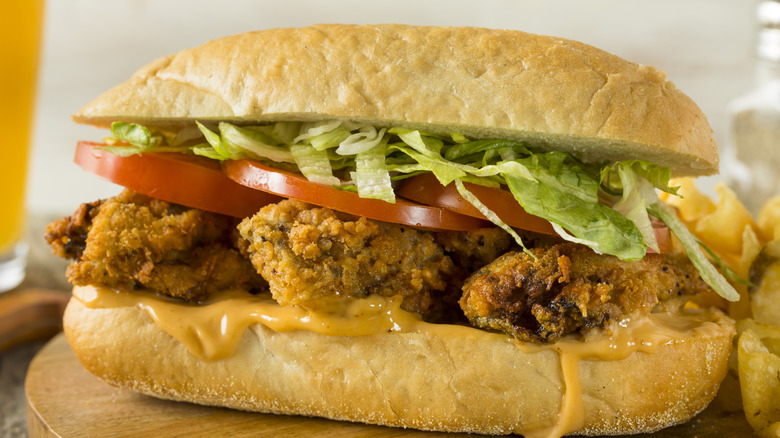
Back in the 19th century, oysters weren't considered the expensive delicacies that they are today. They grew in abundance, making them cheap and therefore highly popular among disadvantaged communities (they were even used to bulk out costly recipes like meat pies). Instead of serving them raw in a fancy restaurant, shucked oysters were dipped in beaten egg, coated in breadcrumbs, cornmeal, or crackers, and deep fried until golden and crispy on the outside. These crunchy little nuggets were then stuffed inside a roll or a couple of slices of bread along with lettuce, tomato, and mayo. You can still find iterations of the classic fried oyster sandwich in places like Louisiana, where they're known as po'boys. The mayo is sometimes spiced with seasonings or herbs to turn it into a flavorful remoulade, and extras like pickles or prepared horseradish can make an appearance too. However, the crispy oysters are always the same, featuring a hot and crunchy outer crust with a tender and salty center.
Why did fried oyster sandwiches fade away?
There were several factors that caused the fried oyster sandwich to slowly disappear over time. Firstly, the rich supply of these mollusks waned as over-harvesting took its toll (during the 1800s, New Yorkers alone ate a whopping 600 oysters per year!). Lower numbers of oysters made them more expensive, which hampered their appeal among poorer communities. To handle the demand that still existed, the local oystermen introduced foreign species to the waters, but this unfortunately caused environmental damage and triggered disease. There were also outbreaks of typhoid that were traced back to oysters that had been grown in unsanitary conditions, leading to consumer wariness around eating them. This combination of issues made oysters less attractive.
Nowadays, oysters are grown in clean conditions and laws have been passed to allow for conscientious commercial oyster farming that protects the underwater environment. While eating raw oysters does come with its perks (you get to slurp up all that oceanic flavor and fresh brininess in its most unadulterated form), deep frying them and turning them into a crispy and crunchy delight is the answer if you don't enjoy their slippery and silky vibe. You get the textural contrast against the soft bread, the crispy crunch of the lettuce, and the creamy quality of the mayo in every bite.