

The Old-School Stew That Made Hot Dogs The Star
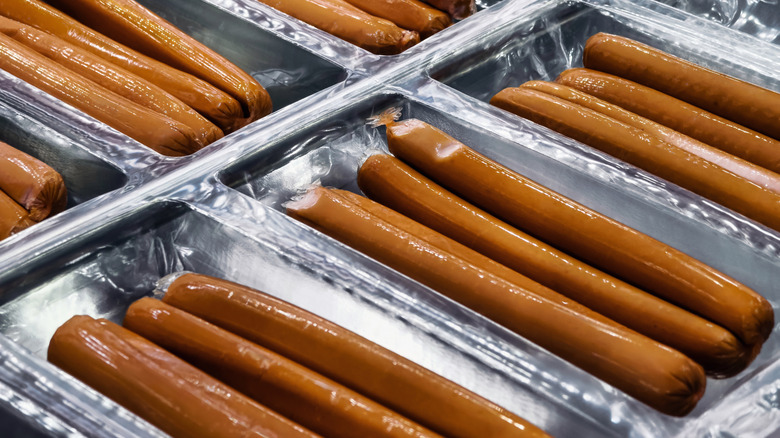
Hearty stews served with hunks of bread are the height of comfort food. These slow-simmered dishes are also cost-effective because they make use of cheap cuts of meat with lots of connective tissue. However, back in the Depression era, even these sinewy cuts were too pricey, which gave rise to an old-school dish, known as Hoover stew, that made use of cheap and cheerful hot dogs.
Hoover stew was a pasta-based dish that was made with ingredients that were inexpensive and readily available during the Depression era. Named after President Herbert Hoover, who was in power during the 1939 Wall Street crash, it featured canned tomatoes and corn (or beans) along with the pasta, making it one of the vintage meals that started with whatever was in the pantry. Sliced hot dogs were added to the simmering pot to imbue some of their smoky flavor into the noodles and boost the nutritional value of the pocket-friendly dish. The result was a staple meal that could be prepared at speed under challenging circumstances where many American families struggled to make ends meet.
On a Reddit thread discussing the origins of the dish, one commenter explained that Hoover stew was "... peak struggle food at the time. Americans who suddenly lost everything had to make do with what they could get their hands on for food and find ways of making the results edible and tasty. Hoover was blamed for not responding remotely adequately to the crisis, so everything ordinary Americans had to do to just survive got named after him."
Hoover stew is easy to customize
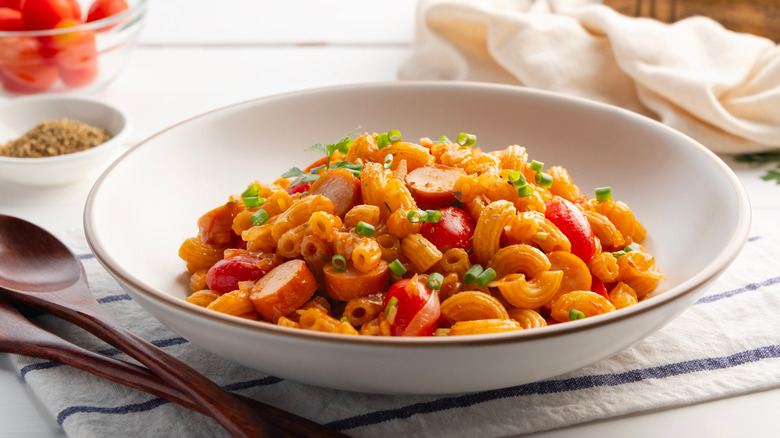
The overarching appeal of Hoover stew was that homemakers could switch up the recipe with what they had on hand. Canned goods were ideal because of their lengthy shelf life, and the curing agent (sodium nitrate) in the hot dogs acted as a preservative, preventing the 'furters from going rancid. Today, home cooks with greater financial flexibility and access to fresher ingredients can elevate the dish with garlicky Kielbasa instead of hot dogs, experiment with verdant herbs, or scatter in a measure of umami-rich Parmesan. However, if you want to stick with the hot dogs, consider searing the slices in a skillet with some foamy butter to crisp up the edges and bring out their savory flavor. You could also top the stew with panko breadcrumbs and more cheese to create a crispy casserole-style crust.
Some of the other foods that made their mark during the Great Depression include Dandelion salad, which was made with foraged greens, candies prepared with low-cost potatoes, and wacky cake that was made with tomato soup instead of buttermilk. Any dish that stretched limited resources was a boon for cash-strapped families. This meant that creating inventive recipes with available ingredients became the norm.