

Simply Delicious Korean Beef Begins With This Peppery Paste
We may receive a commission on purchases made from links.
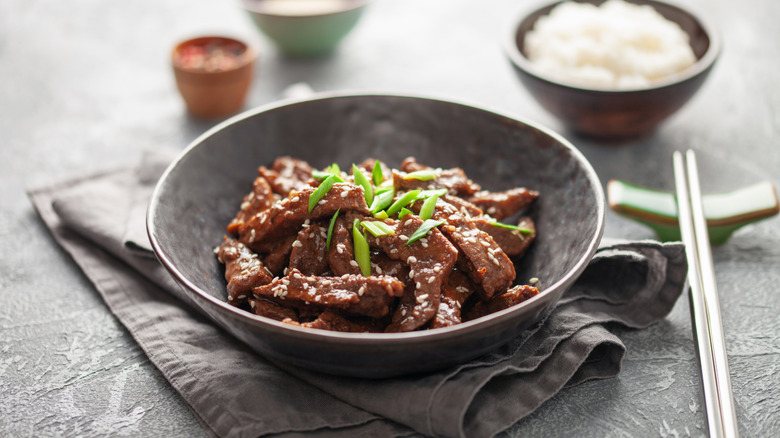
Keen to recreate the delicious character of the aromatic beef dish you sampled at your local Korean restaurant last week? The chef likely dressed it up with a dollop of a peppery, spicy paste known as gochujang. This indispensable ingredient is a powerhouse of flavor and lends beef-based meals a rounded quality, warming kick, and unique aroma.
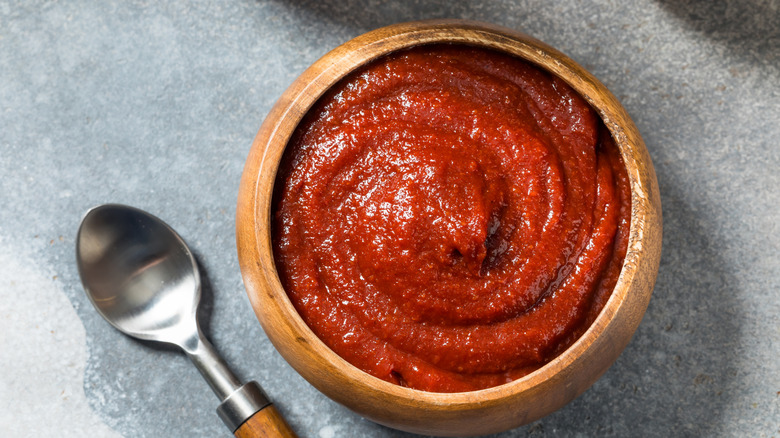
So what is gochujang and what does it taste like? Usually sold in plastic tubs, gochujang is a fermented spice paste with an arresting crimson color that has a hot, sweet, and savory flavor profile. A staple ingredient in Korean cuisine, it's made by combining a variety of red chili powder (known as gochugaru) with fermented soy beans, glutinous rice, and salt. Due to the fermentation process, the aroma of gochujang is pretty distinctive and is often described as being funky, earthy, and potent. It also has a texture that sits somewhere between a thick miso paste and a looser tomato puree. The concentrated nature of the gochujang and its spicy, umami quality make it perfect for mixing into marinades, beef stews, and noodles (it needs to be combined with other flavors to temper its powerful flavor and isn't a standalone ingredient). While this aromatic paste can be readily found in international supermarkets, you can also order Korean-made gochujang online from Amazon and stash it in the fridge to cut through the fattiness of beef dishes and maximize their savory character.
How to use gochujang in Korean beef dishes
Gochujang is usually turned into a marinade for beef by combining it with other liquid ingredients, such as soy sauce, honey, and a splash of water. For instance, you could add a spoonful to this Korean-style beef stir fry recipe to punch up its flavor. Alternatively, you can fry the beef first, pour in the sauce, and allow it to thicken up into a hot, spicy, and sweet coating that clings to the protein. Another option is to use gochujang in the braising liquid for slow-cooked beef short ribs.
A popular Korean stew that features gochujang is known as gochujang jigae. Here, the gochujang is added to a brothy base and acts as the seasoning before meats and veggies are added to the pot to simmer. While pork is traditionally used in this dish, you can easily substitute beef and supplement it with cubes of tofu and a handful of greens.
One of the easiest ways to use gochujang in beef recipes is to turn it into a sauce to drizzle over bibimbap rice bowls. All you need to do is mix the paste with sesame oil, caster sugar, and sesame seeds before thinning it down with water. Then you can either pour it over your prepared mixture or use it as a dipping sauce.