

Cooking Spray Vs Butter: Which Is Best For Baking?
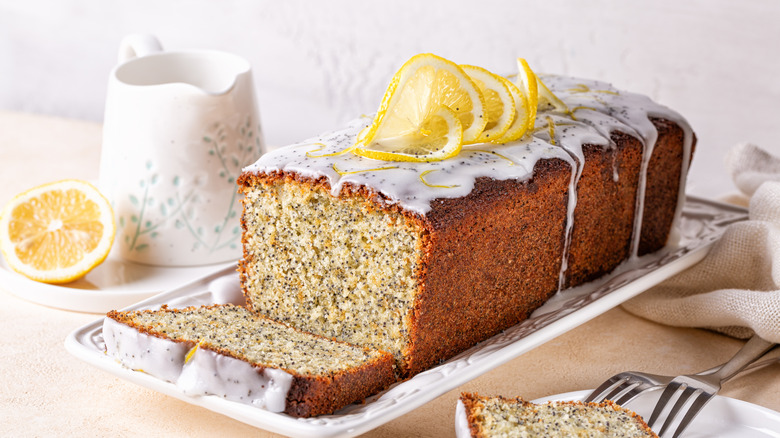
A bottle of cooking spray makes light work of greasing cake pans, but is it better than using good old-fashioned butter? The truth is, both of these ingredients are indispensable in the kitchen and have their own unique merits; it really comes down to what you're planning to bake, the final texture you want to achieve, and the cookware you're using.
There's no denying the non-stick release capability of a quality cooking spray is incredible. Quick and convenient, it can be whipped out at a moment's notice and used effortlessly straight from the can (this direct feature is also why cooking spray is the secret to making golden air fryer food). Plus, it's brilliant for greasing detailed cookware with fluted designs, like Bundt pans and Madeleine trays, because it can reach every nook and cranny. However, cooking spray can create a hard crust on the bottom and sides of baked goods that ought to have a tender surface, such as banana breads and muffins. Having said that, this might be the texture you want to achieve if you're baking a batch of financiers that traditionally have a crisp, almost shell-like, exterior and softer middle.
Butter, on the other hand, is less likely to make the outside of your cakes crisp because it has a higher water content. This water turns into steam in the oven, keeping the bottom and sides of baked goods slightly softer. But butter is also finicky and messy to spread into fluted pans.
Cooking spray shouldn't be used on non-stick cookware
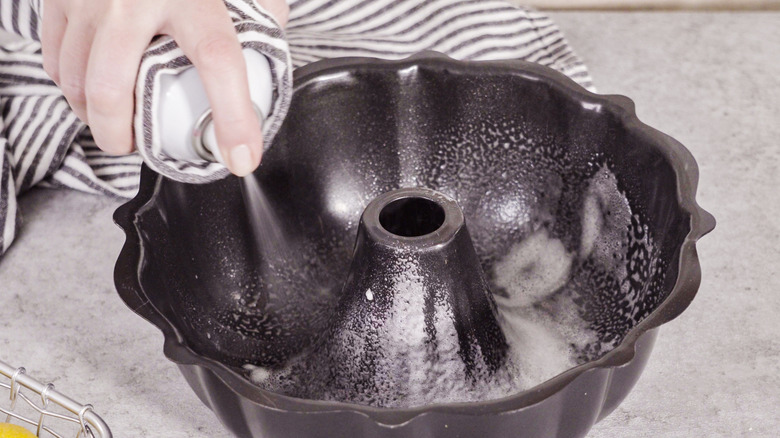
There's another limitation of cooking sprays you should be aware of that concerns the type of cookware you're using versus what you're baking. While it might sound counterintuitive, you shouldn't spritz cooking spray on non-stick pans because the additives (such as lecithin) and propellants inside the spray can leave a residue on the surface, which builds up over time and harms their protective coating. Cooking spray also has a lower smoke point, which means it can burn, again causing damage to the surface of non-stick baking pans and dishes that can adversely affect your baked goods. Butter contains only minimal ingredients — milk and perhaps a dash of salt — so it's free of unwanted additives. Moreover, it has its own rich character which imbues bakes with a nutty quality and inviting aroma, so it doesn't simply work as a lubricant but doubles as a flavor enhancer.
Now, that doesn't mean butter is always the best option. For instance, you should think twice before greasing your bread loaf tin with butter, as its high water content can cause the dough to stick. Shortening is a better option because it has a very low water content.