

Vanilla Bean Paste Vs Extract: When To Use Each In Your Baking
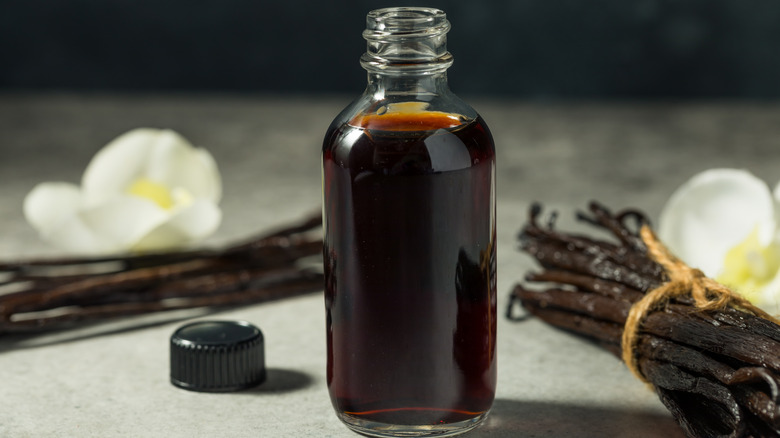
The baking aisle at the supermarket is packed with flavorings designed to take homemade cakes and cookies up a notch. From almond and coffee extract to lemon and peppermint, this abundance of flavorings is a culinary treasure trove for baking enthusiasts who like to tinker with their favorite recipes. Even the smallest splash of these miniature elixirs is packed with concentrated character and depth, but the king of them all has to be good old-fashioned vanilla. This mellow and fragrant flavoring is a true team player and can make a home for itself in traybakes and muffins, banana breads and pastries.
Universally beloved, vanilla extract has a subtle yet sweet flavor profile that sets it apart from more robust options, like the truly powerful peppermint, which means you don't have to be too meticulous when it comes to exact measurements. But usually nestled right beside the vanilla extract is vanilla bean paste, another variety of vanilla flavoring with a slightly different character and quality due to the way it's produced and packaged, which you might not be as familiar with. While both flavorings can be used interchangeably in a variety of recipes, they also have individual merits and features that make them more suited to particular bakes.
Vanilla extract is ideal for everyday bakes
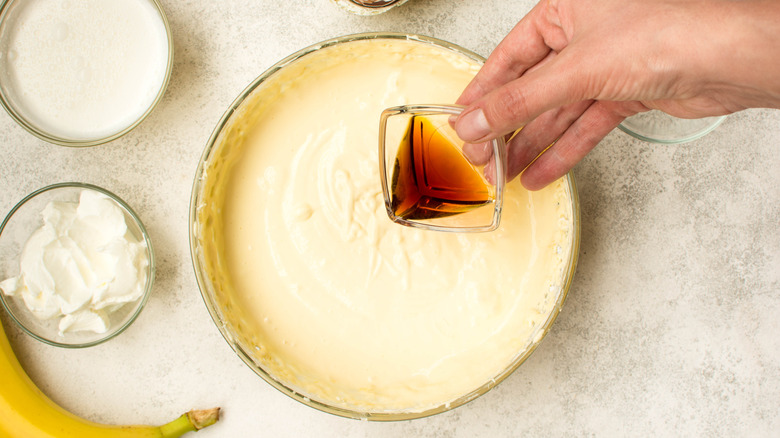
Vanilla extract is made by steeping vanilla beans in a mixture of alcohol and water. As the beans soak, they leave behind an aromatic amber liquid. Because vanilla extract doesn't contain scraped vanilla seeds, it's cheaper to produce and more budget-friendly than vanilla bean paste (professional bakers can't get enough of Costco's vanilla extract because of its affordable price point, size, and fragrance). This means it's best used in everyday bakes, like a pound cake or banana bread, where a hint of vanilla is required. It's also ideal for recipes that have a looser consistency, such as pancake batter, because it can be incorporated quickly and seamlessly. Imitation vanilla (or vanilla flavoring) is cheaper, but it's made with synthetic ingredients. Though it successfully mimics the characterful smell of vanilla extract, it isn't the genuine article. However, it can be a useful ingredient in recipes that are baked at higher temperatures because it's able to retain more of its flavor compounds than straight-up vanilla extract. Having said that, if you're after a bona fide hit of vanilla, then vanilla bean paste is right up your alley.
Vanilla bean paste is perfect for vanilla-forward deluxe desserts
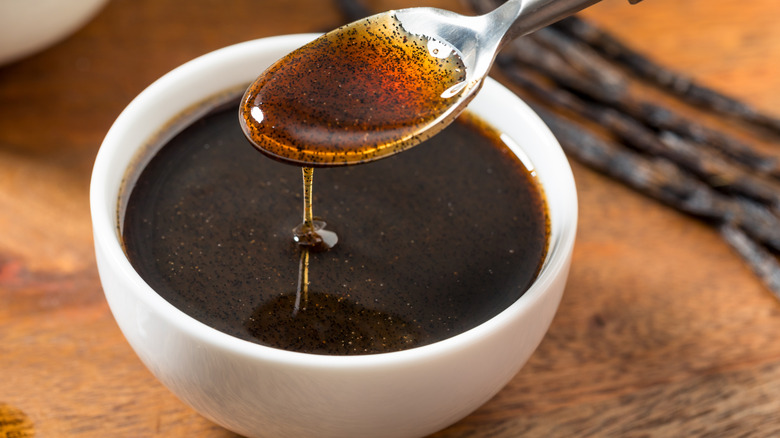
Vanilla bean paste is different from vanilla extract in two key ways. First, it contains vanilla bean seeds (which amps up its aroma and intensity), and second, it's thickened up to lend it a richer, almost syrupy viscosity that can be dribbled, rather than poured, directly into cake batters. These features make vanilla bean paste better for use in fancier baked goods, where the concentrated flavor and aroma of vanilla is billed as the star of the show. This might include the custard for a crème brulee, a luxurious vanilla frosting, or a high-quality shortbread that has a deluxe, buttery vibe. As vanilla bean paste has a thick, viscous texture, it can be used in a small measure, preventing it from negatively impacting the distinctive crumbly texture of shortbread or scones. Plus, the paste lends cookies, premium desserts, and lavish bakes an attractive speckled appearance, visual appeal, and next-level quality.
If you want to substitute vanilla extract or vanilla bean paste for no-alcohol bakes, you can use vanilla powder instead. Made from whole dried vanilla beans that have been ground into a powder, this ingredient is intensely aromatic and free from alcohol.