

New US Food Pyramid Recommends More Protein And Less Whole Grain
The U.S. Health & Human Services Department, which is led by Secretary Robert F. Kennedy Jr., released new dietary guidelines and a new food pyramid for Americans. The guideline emphasizes eating fewer whole grains and more meat. It also encourages adding more full-fat dairy, fruits, and vegetables to your diet, while cutting back on refined sugar and highly processed foods. During a White House press conference, RFK Jr. stated, "My message is clear, eat real food," per CNN. According to NBC, he also declared that these new guidelines will "revolutionize our nation's food culture and make America healthy."
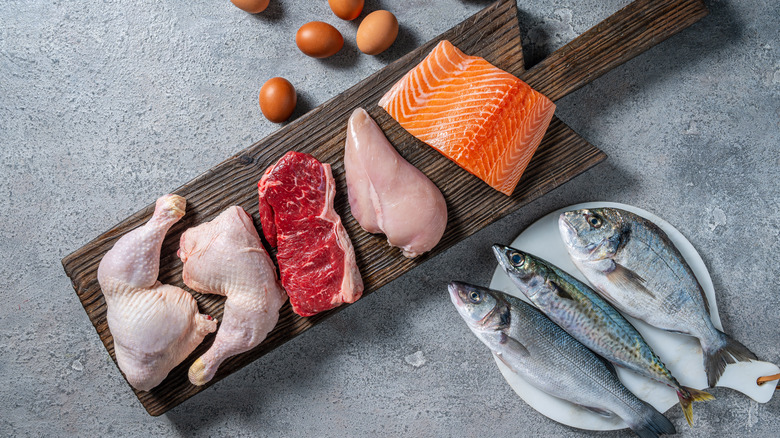
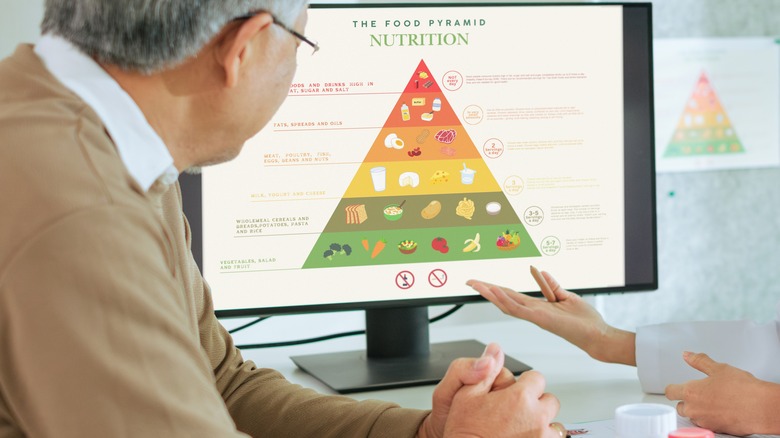
The new food pyramid looks starkly different from the previous MyPlate visual guide, which encouraged individuals to eat equal parts protein, grains, fruit, and veggies alongside a smaller portion of dairy. The new food pyramid depicts proteins (including steak, salmon, and chicken) at the top of the upside down pyramid alongside dairy and vegetables. Underneath that, there are healthy fats (such as avocado or olive oil), and fruit. Then, under a line, there are whole grains down at the bottom, at the narrowest point of the pyramid.
Specifically, the guidelines encourage Americans to eat protein at every meal. And while guide states that a variety of protein should be consumed — red meat and poultry, as well as plant-based sources — it also doubles the amount of recommended protein for individuals. Eating red meat often has its pros and cons. While it's good for building muscle and getting your body the iron it needs, it can also lead to an increased risk of heart disease and too much saturated fat.
Experts don't completely agree with the new guidelines
The new guidelines have resulted in mixed reactions from experts. The American Heart Association said in a statement, "We are concerned that recommendations regarding salt seasoning and red meat consumption could inadvertently lead consumers to exceed recommended limits for sodium and saturated fats, which are primary drivers of cardiovascular disease. While the guidelines highlight whole-fat dairy, the Heart Association encourages consumption of low-fat and fat-free dairy products, which can be beneficial to heart health." However, it did also state that it commends the guidelines of recommending less sugar and processed foods, as well as the encouragement to eat more fruit and veggies.
Similarly, New York University professor of nutrition, food studies and public health, Marion Nestle, also complimented the emphasis on eating fewer processed foods. However, she told NBC News, "Everything else is weaker or has no scientific justification." Further, Nestle doesn't think that Americans need more encouragement to eat more meat or full-fat dairy — eating large amounts of both will lead to high amounts of saturated fats. (And if you need a refresher on the difference between saturated and unsaturated fats, you can read our guide).
However, the reaction from The American Medical Association was mostly positive. The AMA president, Dr. Bobby Mukkamala, said in a statement (via NBC), "The American Medical Association applauds the Administration's new Dietary Guidelines for spotlighting the highly processed foods, sugar-sweetened beverages, and excess sodium that fuel heart disease, diabetes, obesity. ... The Guidelines affirm that food is medicine and offer clear direction patients and physicians can use to improve health."