Nov 26, 2012 @ 4:17 PM
-
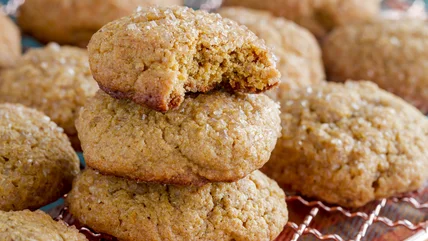
If the butter ever begins to separate or turn into soup on you, throw everything into the fridge for 5 minutes, let the butter firm up, and try again. You can think of this process in terms of how a croissant bakes: Butter is made up of fat, milk solids, and water. As a croissant bakes, the water content in the butter steams the delicate layers of the croissant apart, creating air pockets and a flaky dough. Without the bond between the butter and the flour, there would be no structure to hold the dough around the air pockets. So works the bond between butter and sugar in the creaming process. The eggs are the insurance for the butter-sugar bond. In the oven, the butter-sugar bond rises and crisps up, rendering the outside of your cookie delicately crunchy in texture. But if creaming is not executed properly, unbound sugars bake into a dense, sandy cookie, where excess butter without a bond and without a home seeps out onto your pan instead of baking into your cookie.
Signs things are going right:
-
The butter mixture is a very pale yellow (with a hint of brown if brown sugar is in the mix).
-
The mixture has doubled in size and looks like a cloud: puffy and voluminous, with soft peaks.
-
The mixture is slightly shiny and homogenous, with just a little grit from the sugar crystals.
-
Take this process seriously. Magic doesn't just bake itself in an oven. You can certainly make delicious cookies even without a mixer, melting the butter and mixing the dough with a wooden spoon. But not these cookies.
Click here to see Momofuku Milk Bar's Corn Cookies Recipe
Christina Tosi and David Chang, pastry chef and chef of Momofuku Milk Bar and authors of the cookbook Momofuku Milk Bar.
Reprinted with permission from Momofuku Milk Bar by Christina Tosi, copyright © 2011. Published by Ten Speed Press, a division of Random House, Inc.
How to Sear Fish