

Kitsune Udon
Kitsune Udon
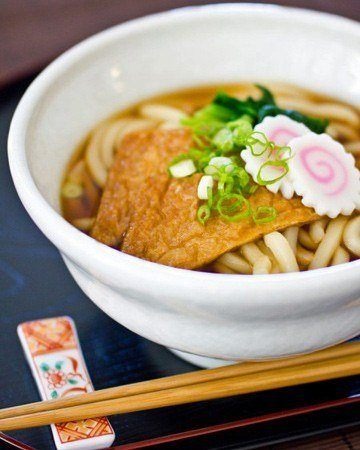
Kitsune udon literally means "fox udon." What a silly name, right? The name came from a folktale about a fox that enjoyed aburaage (fried tofu), the main topping.The udon broth is made from scratch instead of using the packets that come with the udon. The process starts with making dashi stock. I think some of you (or many of you) may not be familiar with Japanese broth. Japanese cooking relies heavily on dashi stock, made from dried bonito flakes and kombu seaweed. It’s definitely the key to making good Japanese food. Some people use hondashi powder (you can even buy it in regular supermarkets now), but if you have a Japanese or Chinese grocery store nearby, you should be able to find dashi packets. It’s not as authentic as making dashi stock from scratch but it’s easy and close enough to the authentic taste. It only takes a few minutes to make dashi stock and this is a very important broth for cooking all kinds of Japanese food, including miso soup. Now, let’s make udon.
Servings
2
servings
Ingredients
- 4 water
- one 1/3-ounce dashi packet
- two 9-ounce packages frozen udon, preferably sanuki udon*
- 2 soy sauce
- 2 mirin
- 2 sugar
- 1/4 plus pinch of salt
- 1 spinach (optional)
- 4 slices inariage**
- 4 thin slices narutomaki (japanese fish cake) (optional)
- 1 scallion, chopped finely (optional)
Directions
- In a medium-sized pot, combine the water and dashi packet and bring to a boil over high heat. Reduce heat to medium and cook for 7 minutes. Discard the dashi packet. Add the soy sauce, mirin, sugar, and ¼ teaspoon salt and return to a simmer.
- Meanwhile, place the udon in a bowl and loosen it up by running warm water over it. Once the broth has returned to a simmer, add the udon and cook for 3-5 minutes.
- If using the spinach, bring a pot of water to boil over high heat and add a pinch of salt. Set up an ice bath with a colander. Add the spinach stem first to the boiling water. Cook for 1 minute. Immediately transfer the spinach to the ice bath and drain. Collect the spinach from the bowl and squeeze the water out. Chop up the spinach and set aside.
- Serve the udon in a bowl and top with inariage and additional toppings of your choice.